
Sign up to save your podcasts
Or

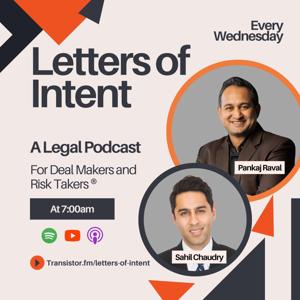

Founders spend countless hours perfecting their products, sales funnels, and marketing campaigns—but sometimes the most valuable decision isn't what you are building, it's how you structure the company that builds it. In this episode of Letters of Intent, Pankaj Raval and Sahil Chaudry tackle the complex and high-stakes world of corporate structuring, focusing on the critical transition from an S-Corp to a C-Corp.
Pankaj and Sahil break down the exact scenarios where a growing business will hit a wall with an S-Corp, specifically when trying to raise outside institutional capital or preparing for a major exit. They introduce the "F-Reorg"—a sophisticated legal maneuver that allows founders to transition their entity to accept venture capital and unlock millions in tax-free gains through the QSBS (Qualified Small Business Stock) exemption.
Takeaways
Soundbites
Keywords
S-Corp, C-Corp, F-Reorg, Corporate Structuring, Qualified Small Business Stock (QSBS), Venture Capital, Angel Investors, Mergers and Acquisitions, Capital Gains Tax, Business Strategy, Carbon Law Group
🔗 Learn More
Website: carbonlg.com
Connect with Pankaj: https://www.linkedin.com/in/pankaj-raval/
Connect with Sahil: https://www.linkedin.com/in/sahil-chaudry-6047305/
Click Here To Schedule A Call With Us
 View all episodes
 By Pankaj Raval
5
22 ratings
Founders spend countless hours perfecting their products, sales funnels, and marketing campaigns—but sometimes the most valuable decision isn't what you are building, it's how you structure the company that builds it. In this episode of Letters of Intent, Pankaj Raval and Sahil Chaudry tackle the complex and high-stakes world of corporate structuring, focusing on the critical transition from an S-Corp to a C-Corp.
Pankaj and Sahil break down the exact scenarios where a growing business will hit a wall with an S-Corp, specifically when trying to raise outside institutional capital or preparing for a major exit. They introduce the "F-Reorg"—a sophisticated legal maneuver that allows founders to transition their entity to accept venture capital and unlock millions in tax-free gains through the QSBS (Qualified Small Business Stock) exemption.
Takeaways
Soundbites
Keywords
S-Corp, C-Corp, F-Reorg, Corporate Structuring, Qualified Small Business Stock (QSBS), Venture Capital, Angel Investors, Mergers and Acquisitions, Capital Gains Tax, Business Strategy, Carbon Law Group
🔗 Learn More
Website: carbonlg.com
Connect with Pankaj: https://www.linkedin.com/in/pankaj-raval/
Connect with Sahil: https://www.linkedin.com/in/sahil-chaudry-6047305/
Click Here To Schedule A Call With Us