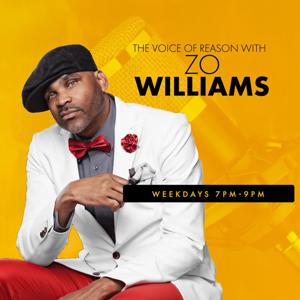
Tonight’s conversation walks straight into a relational nerve most people would rather medicate with gender slogans, therapy language, or moral superiority: what happens when a man becomes happy without needing a woman to authorize, regulate, rescue, validate, inspire, approve, or emotionally complete that happiness? Alison Armstrong’s provocation does not merely ask whether women “attack happy men.” That phrasing gives the room something to argue about. The deeper wound asks whether some women feel unconsciously displaced when male happiness no longer orbits around female emotional centrality. If his striving once proved devotion, if his need once confirmed her importance, if his instability once gave her a role, if his pursuit once made the relationship feel alive, then his peace may not register as health. It may register as loss of influence, loss of necessity, loss of proof. This is not an indictment of women. It is an indictment of unconscious dependency contracts hiding inside intimacy. Men do it too. Parents do it. Lovers do it. Communities do it. Entire cultures train people to confuse being needed with being loved. But tonight we place the spotlight where the clip places it: on the possibility that certain women may unconsciously experience a self-sourced man as less reachable, less governable, less emotionally available, or less relationally useful precisely because he no longer needs suffering to prove connection. The psychological question becomes brutal: do we love people, or do we love the role their incompleteness gives us? The spiritual question cuts deeper: can love survive when it no longer feeds the ego’s need to matter? And the cultural question may disturb everybody: if modern intimacy has been built on pursuit, proof, emotional labor, and mutual insecurity, what happens when one person finally becomes free? That is tonight’s investigation: when happiness stops needing permission, who loses power? Allison’s Bio: Alison Armstrong is a relationship educator and workshop facilitator who studies relationship patterns between men and women through observation and lived experience—not through clinical psychology or psychiatry. She does not present herself as a psychologist, therapist, neuroscientist, or academic researcher. Her work focuses on how men and women often misinterpret each other’s emotional signals, communication styles, and expressions of connection. Her perspective is phenomenological and experiential rather than clinical doctrine.



 View all episodes