
Sign up to save your podcasts
Or

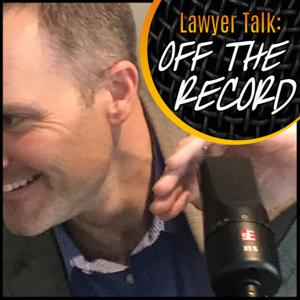

When Can Police Question You Without a Lawyer? – Moran v. Burbine Explained
Welcome back to Lawyer Talk! In this deep-dive episode, host Steve Palmer and law student Troy unpack the realities of a suspect’s right to counsel during police interrogations. Contrasting popular TV drama depictions with what really happens when the police want to question someone in custody.
What Really Happens When the Police Want to Question You?If you—or someone you care about—gets arrested, you might imagine a lawyer dramatically bursting into the police interrogation room to rescue the day. But as Steve Palmer and Troy explain starting at 00:02, reality is much different. Lawyers are routinely denied access to individuals in custody before formal charges are filed, no matter how many times family members call or how urgently attorneys demand to be present.
Moran v. Burbine: The Case That Changed EverythingMuch of the law on this issue stems from the 1986 U.S. Supreme Court case Moran v. Burbine (01:06). Steve Palmer and Troy break down the facts: Burbine was picked up for a breaking and entering, but police suspected him of murder. His sister, unaware of the murder investigation, contacted the public defender’s office, who then called the police to say “Don’t question him, he’s got a lawyer” (02:14). The police lied, saying they wouldn’t interrogate Burbine until the next day. Instead, they immediately questioned him, obtained a waiver of Miranda rights, and got three separate confessions.
Unbeknownst to Burbine, an attorney was trying to intervene on his behalf the entire time. According to Steve Palmer, this led to a key ruling: the Sixth Amendment right to counsel does not attach until formal adversarial proceedings begin—typically at arraignment or when formal charges are filed (04:07). As long as police aren’t violating Miranda requirements and the suspect hasn’t affirmatively requested an attorney, questioning can proceed—with or without lawyer intervention (04:36).
The Real Limits of Your RightsWhat about asking for “someone” or saying you “should probably talk to somebody” before answering questions? As Troy and Steve Palmer clarify, that’s NOT enough (07:10). You must clearly state, “I want a lawyer.” Only then are police legally required to stop questioning (08:50).
Even if police violate Miranda, the remedy is limited: your statements get suppressed and can’t be used in the prosecution’s case-in-chief. However, cops can use what you tell them to hunt for other evidence—and if you take the stand at trial and your story changes, those suppressed statements can sometimes be used to impeach you (06:03, 06:51).
After Formal Charges: A Different BallgameOnce formal charges have been filed, and a lawyer enters an appearance, everything changes (10:23). Any further police attempts to talk to the suspect—about the crime in question—violate the Sixth Amendment and result in evidence suppression, regardless of a Miranda waiver.
TakeawaysGot a question you want answered on the podcast? Call 614-859-2119 and leave us a voicemail. Steve will answer your question on the next podcast!
Submit your questions to www.lawyertalkpodcast.com.
Recorded at Channel 511.
Stephen E. Palmer, Esq. has been practicing criminal defense almost exclusively since 1995. He has represented people in federal, state, and local courts in Ohio and elsewhere.
Though he focuses on all areas of criminal defense, he particularly enjoys complex cases in state and federal courts.
He has unique experience handling and assembling top defense teams of attorneys and experts in cases involving allegations of child abuse (false sexual allegations, false physical abuse allegations), complex scientific cases involving allegations of DUI and vehicular homicide cases with blood alcohol tests, and any other criminal cases that demand jury trial experience.
Steve has unique experience handling numerous high-publicity cases that have garnered national attention.
For more information about Steve and his law firm, visit Palmer Legal Defense.
Copyright 2026 Stephen E. Palmer - Attorney At Law
Mentioned in this episode:
Circle 270 Media Podcast Consultants
Circle 270 Media® is a podcast consulting firm based in Columbus, Ohio, specializing in helping businesses develop, launch, and optimize podcasts as part of their marketing strategy. The firm emphasizes the importance of storytelling through podcasting to differentiate businesses and engage with their audiences effectively. www.circle270media.com
 View all episodes
 By Stephen E. Palmer - Attorney At Law

4.7
5151 ratings
When Can Police Question You Without a Lawyer? – Moran v. Burbine Explained
Welcome back to Lawyer Talk! In this deep-dive episode, host Steve Palmer and law student Troy unpack the realities of a suspect’s right to counsel during police interrogations. Contrasting popular TV drama depictions with what really happens when the police want to question someone in custody.
What Really Happens When the Police Want to Question You?If you—or someone you care about—gets arrested, you might imagine a lawyer dramatically bursting into the police interrogation room to rescue the day. But as Steve Palmer and Troy explain starting at 00:02, reality is much different. Lawyers are routinely denied access to individuals in custody before formal charges are filed, no matter how many times family members call or how urgently attorneys demand to be present.
Moran v. Burbine: The Case That Changed EverythingMuch of the law on this issue stems from the 1986 U.S. Supreme Court case Moran v. Burbine (01:06). Steve Palmer and Troy break down the facts: Burbine was picked up for a breaking and entering, but police suspected him of murder. His sister, unaware of the murder investigation, contacted the public defender’s office, who then called the police to say “Don’t question him, he’s got a lawyer” (02:14). The police lied, saying they wouldn’t interrogate Burbine until the next day. Instead, they immediately questioned him, obtained a waiver of Miranda rights, and got three separate confessions.
Unbeknownst to Burbine, an attorney was trying to intervene on his behalf the entire time. According to Steve Palmer, this led to a key ruling: the Sixth Amendment right to counsel does not attach until formal adversarial proceedings begin—typically at arraignment or when formal charges are filed (04:07). As long as police aren’t violating Miranda requirements and the suspect hasn’t affirmatively requested an attorney, questioning can proceed—with or without lawyer intervention (04:36).
The Real Limits of Your RightsWhat about asking for “someone” or saying you “should probably talk to somebody” before answering questions? As Troy and Steve Palmer clarify, that’s NOT enough (07:10). You must clearly state, “I want a lawyer.” Only then are police legally required to stop questioning (08:50).
Even if police violate Miranda, the remedy is limited: your statements get suppressed and can’t be used in the prosecution’s case-in-chief. However, cops can use what you tell them to hunt for other evidence—and if you take the stand at trial and your story changes, those suppressed statements can sometimes be used to impeach you (06:03, 06:51).
After Formal Charges: A Different BallgameOnce formal charges have been filed, and a lawyer enters an appearance, everything changes (10:23). Any further police attempts to talk to the suspect—about the crime in question—violate the Sixth Amendment and result in evidence suppression, regardless of a Miranda waiver.
TakeawaysGot a question you want answered on the podcast? Call 614-859-2119 and leave us a voicemail. Steve will answer your question on the next podcast!
Submit your questions to www.lawyertalkpodcast.com.
Recorded at Channel 511.
Stephen E. Palmer, Esq. has been practicing criminal defense almost exclusively since 1995. He has represented people in federal, state, and local courts in Ohio and elsewhere.
Though he focuses on all areas of criminal defense, he particularly enjoys complex cases in state and federal courts.
He has unique experience handling and assembling top defense teams of attorneys and experts in cases involving allegations of child abuse (false sexual allegations, false physical abuse allegations), complex scientific cases involving allegations of DUI and vehicular homicide cases with blood alcohol tests, and any other criminal cases that demand jury trial experience.
Steve has unique experience handling numerous high-publicity cases that have garnered national attention.
For more information about Steve and his law firm, visit Palmer Legal Defense.
Copyright 2026 Stephen E. Palmer - Attorney At Law
Mentioned in this episode:
Circle 270 Media Podcast Consultants
Circle 270 Media® is a podcast consulting firm based in Columbus, Ohio, specializing in helping businesses develop, launch, and optimize podcasts as part of their marketing strategy. The firm emphasizes the importance of storytelling through podcasting to differentiate businesses and engage with their audiences effectively. www.circle270media.com
78,636 Listeners

228,383 Listeners

30,666 Listeners

56,508 Listeners

4,802 Listeners
45,948 Listeners
43,834 Listeners

19,524 Listeners
0 Listeners