
Sign up to save your podcasts
Or



Welcome back to the final episode of WDIG for this year, and we are ending with a BIG one as I sit down with the author, activist, podcaster and all round legend that is: Elliott Rae.
As the visionary behind Parenting Out Loud, the bestselling book DAD, and the groundbreaking BBC documentary Becoming Dad, Elliott has forced the UK to confront a glaring blind spot: Dads are parents too, and it’s time workplaces, media, and society treated them that way.
Elliott’s work is dismantling outdated stereotypes, pushing employers to create truly inclusive cultures, and giving dads permission to show up as their full selves…without apology.
His Parenting Out Loud campaign has become a blueprint for workplace equity, his documentary Becoming Dad sparked a national reckoning, and his book DAD has given voice to a generation of fathers who’ve felt invisible for too long.
In this episode, we’ll explore:
If you’ve ever wondered why dads are still treated as an afterthought, or how to fix it, this is the episode you’ve been waiting for.
ENJOY!
Anna Pawlowicz's life looked like so many others: a fulfilling career, a happy family, one son at home and another on the way. Then her second son, Matias, was born with an ultra-rare genetic condition causing lifelong disability, followed later by an autism diagnosis. Everything changed.
Anna quickly learned that parenting a child with complex needs reshapes every corner of your life: your identity, your marriage, your friendships, your career. She became case manager, researcher, advocate and round-the-clock caregiver — while somehow still showing up professionally. It's a form of invisible labor that transforms everything.
But Anna's journey didn't stop there. It became a profound reckoning with her own fears about disability and the deep stigma it holds in society. That transformation led her to found HumanKind, a Copenhagen-based consultancy redefining what inclusion actually means, not just for disabled employees, but for the growing community of parents navigating life with children who have additional needs.
In this episode, we explore what it really means to parent a child with complex needs, how that experience reshapes everything, and why this rising generation of parents is forcing workplaces to reckon with a community they've long overlooked.
I’m so honoured to have Anna here today to share her story. If you’re raising a family with additional needs, or simply want to better understand the reality of people who are, this episode is for you.
1) Instagram profiles of content creators educating about disability in a fun and approachable way:
Hey — grab a cuppa and settle in. This episode is a heartwarming, kick-in-the-pants reminder that motherhood doesn’t have to mean the end of you. Zoe and Claire, founders of The Bored Mums Club, walk us through how two friends turned a midlife identity slump into a joyful, messy, welcoming community at the skate park.
We talk loneliness, matrescence (that endless process of becoming and re-becoming yourself), and how playfulness can heal and reconnect us to who we once were — and who we still want to be. These women show up each week at the skatepark with a group of other mums, armed with scraped shins, wobbly knees, and huge cheer squads, proving that trying something new is an act of radical self-kindness.
If you’ve ever thought, “I could never,” you’ll love the practical, gentle encouragement here: bring a friend, join a club, or DM someone online. Do the thing that makes your heart sing! Most clubs are full of beginners, and honestly, everyone’s too busy enjoying themselves to notice you fumble — and if they do, they’ll probably help you up.
This episode is both a warm hug and a dare — to reclaim fun, build a modern village of women across ages and stages, and model curiosity for the kids watching. It’s about permission: you can be playful, take up space, learn new things, and reinvent yourself at any age.
By the end you’ll feel seen, a little braver, and ready to try something that scares you — because the reward isn’t perfection, it’s the friends, confidence, and surprise joy you find along the way.
AHHH this is a big one!! In this week's episode, I sit down with the legend herself, Joeli Brearley, founder of Pregnant Then Screwed and now Growth Spurt, one of the UK's most relentless advocates for parents in the workplace. After being fired by voicemail two days after announcing her pregnancy, Joeli turned her personal story into a movement, one that has changed laws, secured billions in government investment, and supported hundreds of thousands of mothers.
This conversation isn't just about documenting the problem—it's about the solutions. From why parental leave is the single biggest lever we have to change everything, to why companies that hide caregiving are shooting themselves in the foot, to what Growth Spurt is doing to support the return-to-work transition that breaks so many of us.
This is essential listening for every working mother who's been told she should just accept less.
As working mothers, we're told that flexible working is the solution. Work from home two days a week. Do compressed hours. Start at 10am instead of 9am. But if these solutions actually worked, why do we still feel like we're constantly drowning? Why are we still apologizing for our lives? Why does the motherhood penalty persist?
Flexible working has been around for more than 70 years, yet employment gaps for mothers aren't closing. We're not failing...the system is.
Lizzie introduces the concept of "work style"—NOT flexible working, but a fundamental reimagining of how we measure value, productivity, and contribution in the workplace. She explains why mothers are actually the most productive workers (yes, there's data!), why you shouldn't have to apologise for going to your child's school play, and how the complexity of our lives is our superpower, not our weakness.
This conversation will change how you think about your worth at work and give you the language and permission to start advocating for what you actually need to thrive, not just survive, as a working mother.
How do we raise kind, thoughtful boys in a world that still tells them they have to be tough? What happens when we realise the systems we’ve grown up in don’t serve any of us... including our children?
In this episode, I sit down with the brilliant Lauren Currie, author, advocate, founder of UPFRONT, and mum to a young son. Lauren’s new children’s book, Taylor Meets The Trick, gives families a simple, hopeful way to spot gender stereotypes (“the trick”) and have real conversations about fairness, kindness, and confidence.
We explore:
Lauren also shares how she’s raising her son to question stereotypes without shame, what she’s had to unlearn herself, and how parents can make these conversations part of everyday life without it feeling heavy.
Whether you’re a parent, caregiver, teacher, or simply someone who wants to help create a fairer, softer future, this episode will give you ideas, language, and a lovely story to share with the children in your life.
Resources & links
Taylor Meets The Trick – Order the book here
Connect with Lauren on Instagram and LinkedIn
Learn more about UPFRONT: weareupfront.com
Motherhood is full of contradictions. You’re never truly alone -- kids, partners, colleagues are always nearby -- yet it can feel like one of the loneliest seasons of life.
In this conversation, I sit down with Kate Westlund Tovsen, communications consultant and founder of The Society of Working Moms (SOWM), to talk about why working motherhood so often feels isolating and what it takes to build the kind of community we all crave.
Kate shares the story behind creating SOWM, an online Slack-based community designed to be a real village for women navigating both careers and motherhood. We dig into the surprising ways digital connections can become lifelines, how to overcome the hesitation of engaging in online spaces, and why vulnerability is the secret ingredient to building real support.
We also explore:
If you’ve ever felt like your “village” is missing, this episode is for you. Whether online or offline, connection is possible, and it often starts with one brave step.
Links and resources:
Learn more about The Society of Working Moms: working-moms.com
Hello and welcome back to the penultimate episode of Season 1 of WDIG?
Alison shares her own wake-up story and explains why normalising constant overwhelm is exactly what keeps people stuck.
If you want practical, doable tools (not more toxic productivity pep talks), you’ll love the micro-habits Alison walks through in this episode.
This is a conversation about naming the load instead of carrying it alone. Permission to stop pushing through, to ask for help, and to carve out space for yourself. If you’re drowning in the idea that you must do it all, this episode gently reminds you: you’re not failing, you’re being let down by unsustainable expectations. It might not always feel this way, but you DO have choices and there ARE manageable ways to stay unburnt.
Want to go deeper? Alison’s work is at getunburnt.com and she shares practical tips on LinkedIn under Alison Campbell.
Now, take a breath, and let's get into it.
Just as you begin to reclaim your identity post-motherhood, sneaky symptoms like brain fog, hot flashes, and anxiety start knocking on your door. Is it hormone havoc, burnout, fatigue, or...perimenopause?
Join me for a candid chat with the lovely Emma Thomas, who's on a mission to unravel the mysteries of the messy middle of life for women everywhere. Emma, founder of The Triple Shift and host of the Middling Along podcast, has pivoted in her career to become a menopause educator, helping women regain control and clarity through the middle bit of life.
Why should you listen to this episode?
Because no one really prepares us for the hormonal rollercoaster that can hit just as we’re trying to get our footing back after having kids. This conversation will help you understand what’s going on in your body, what to look out for, and how to get the support you need. It’s practical, reassuring, and full of the kind of insight that helps you take your power back.
TW: A quick note before we begin, this episode includes a conversation about suicide and maternal mental health, so if you're in a vulnerable place, please take good care of yourself while listening and take a look in the show notes for some links to places where you can get some support if and when you need it.
Rich tragically lost his wife Alex to postpartum psychosis just a few weeks after their second daughter was born. In this conversation, he shares what happened, what the warning signs were and what he wishes he’d known at the time. We also talk about what it means to grieve while raising young children, how he’s rebuilt a life he never asked for, and why he’s now working to make sure other families don’t slip through the cracks.
Postpartum psychosis affects 1–2 in every 1,000 new mums. It can come on suddenly, even if there’s no history of mental illness, but it is treatable, if acted on fast enough.
This is a conversation about maternal mental health, yes, for sure, but it's also a conversation about fatherhood, about friendship, about resilience, and above all about love. It's absolutely heartbreaking, but it's also strangely hopeful because what Rich shows us is that even in the darkest of times, it is possible to keep going, to keep showing up, to hold space for what was, while also making space for what comes next.
If you’re pregnant, postpartum, or supporting someone who is, please give it a listen. It might just save a life.
Resources and Support
If you or someone you love might be experiencing symptoms of postpartum psychosis, it is a medical emergency. Don’t wait. Go straight to A&E (UK) or the Emergency Room (US). The sooner help is given, the better the outcome.
UK Resources
US Resources
From the publisher's feed
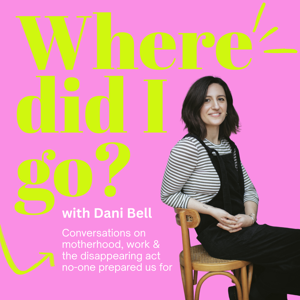
Where Did I Go? is about the quiet identity crisis that so often comes with motherhood—and the slow, beautiful, messy process of finding your way back to yourself. Whether you’re in the thick of…