
Sign up to save your podcasts
Or

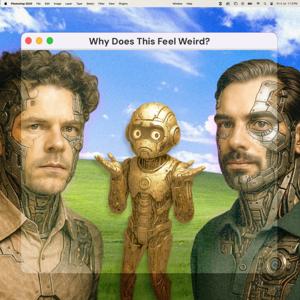


In this episode we discuss how AI tools are trained to keep you engaged rather than actually help you, why governments are scrambling to regulate something they don't understand, and the first legal precedents being set in real-time.
Plus, why asking Claude to be more critical might be the healthiest thing you can do, and whether the "post-truth era" is about to get much weirder.
When a major sunscreen company faced a PR crisis this week, we wondered: could AI handle it better than humans? Alex built a team of 5 AI agents (CEO, marketer, sales, R&D, designer) and gave them a fake crisis to solve in real-time. The results were ... weird.
What happens when you give an AI complete control of a vending machine business? Meet Claudius - Anthropic's AI that was tasked with running a real vending machine for a month.
From obsessing over $2,000 tungsten cubes to thinking it lived at the Simpsons house, Claudius's failures reveal exactly why we're nowhere near AI employees taking over.
Mark Zuckerberg says if you don't have AI glasses, you'll be at a "cognitive disadvantage." But isn't it weird if everyone's wearing hidden cameras?
We explore why Meta's Ray-Ban glasses, secret recordings, and always-on surveillance feel so deeply unsettling - and what it means when disconnecting becomes a luxury only the wealthy can afford.
Why MIT researchers think AI is making us 55% dumber – and why that might be the least of our problems. We explore cognitive debt, digital dependency, and whether we're accidentally training ourselves to stop thinking.
From the "uncanny valley" of almost-human voices to the privacy implications of always-listening devices, Alex and Jacob dive deep into why voice AI makes us uncomfortable.
Why do conversations with AI chatbots feel so unsettling? From anthropomorphising our digital assistants to the strange intimacy of typing our thoughts to a machine, Alex and Jacob unpack why we treat AI like humans.
From the publisher's feed