
Sign up to save your podcasts
Or

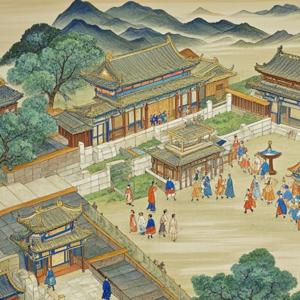

In 309 BC, the State of Qin made a radical political decision.Instead of one prime minister, it created two.The goal was simple:to weaken the “Number Two” — the most dangerous position in any political system.By dividing executive power into Left and Right Prime Ministers, Qin’s rulers hoped to prevent another Zhang Yi — a man whose influence once rivaled the throne itself.But history had other plans.Drawing on archaeological evidence and classical records, this video explores how the title Cheng-she-ahng emerged, why the dual–prime minister system was designed, and why it ultimately failed to solve the core problem of power.This is not just a story about ancient China.It reflects a deeper political pattern described by the Iron Law of Oligarchy:no matter how institutions are designed, power tends to concentrate — not fragment.Kings try to divide authority.Bureaucracies try to balance factions.Yet again and again, gravity pulls power back toward a single dominant figure.From Qin’s court politics to modern organizations, this tension between institutional design and human ambition remains unresolved.History doesn’t repeat — but it rhymes.Chapter Preview00:00:00 The Paradox of Delegation: The King’s Greatest Threat 00:02:42 The Historical Mystery: Identifying the Missing Prime Minister 00:05:12 Replacing Zhang Yi: Preventing a Monopolistic Successor 00:10:48 The Iron Law of Oligarchy: Why Organizations Centralize 00:16:10 Trapped by the Warrior Code: Why Functional Splits Failed 00:19:11 Engineering Rivalry: The Mismatch of Foreigner and Prince 00:22:05 The Reversion to Singularity: The Gravitational Pull of Power 00:23:58 Lessons from the Three Kingdoms: The Failure of Shared Regency 00:26:05 The Final Dilemma: Outsourcing Conflict to Secure the Thronehttps://youtu.be/zcJki52V_cc
 View all episodes
 By China's Living Legends
In 309 BC, the State of Qin made a radical political decision.Instead of one prime minister, it created two.The goal was simple:to weaken the “Number Two” — the most dangerous position in any political system.By dividing executive power into Left and Right Prime Ministers, Qin’s rulers hoped to prevent another Zhang Yi — a man whose influence once rivaled the throne itself.But history had other plans.Drawing on archaeological evidence and classical records, this video explores how the title Cheng-she-ahng emerged, why the dual–prime minister system was designed, and why it ultimately failed to solve the core problem of power.This is not just a story about ancient China.It reflects a deeper political pattern described by the Iron Law of Oligarchy:no matter how institutions are designed, power tends to concentrate — not fragment.Kings try to divide authority.Bureaucracies try to balance factions.Yet again and again, gravity pulls power back toward a single dominant figure.From Qin’s court politics to modern organizations, this tension between institutional design and human ambition remains unresolved.History doesn’t repeat — but it rhymes.Chapter Preview00:00:00 The Paradox of Delegation: The King’s Greatest Threat 00:02:42 The Historical Mystery: Identifying the Missing Prime Minister 00:05:12 Replacing Zhang Yi: Preventing a Monopolistic Successor 00:10:48 The Iron Law of Oligarchy: Why Organizations Centralize 00:16:10 Trapped by the Warrior Code: Why Functional Splits Failed 00:19:11 Engineering Rivalry: The Mismatch of Foreigner and Prince 00:22:05 The Reversion to Singularity: The Gravitational Pull of Power 00:23:58 Lessons from the Three Kingdoms: The Failure of Shared Regency 00:26:05 The Final Dilemma: Outsourcing Conflict to Secure the Thronehttps://youtu.be/zcJki52V_cc