
Sign up to save your podcasts
Or

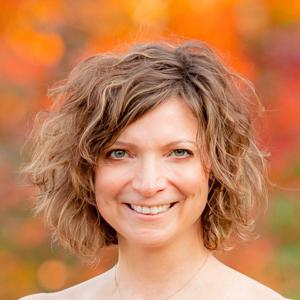


Episode 30: With Dr. Saloni Sharma on Solutions for back pain
I was so excited to talk to Dr. Sharma about back pain. Back pain is one of the most common problems of humans in general, and it does frequently bother patients with fibromyalgia. Dr. Sharma is a dual certified in Physical Medicine and rehabilitation (PM&R) and Pain management. She is medical director of the Orthopedic Integrative Health Center at Rohmans Orthopedics and specializes in the NON-operative care of musculoskeletal pain and dysfunction. She recently wrote and published a BOOK on back pain called THE PAIN SOLUTION and she CAME TO MY PODCAST TO TALK ABOUT IT! You are in for a treat.
In addition to the above qualifications, she studied Lifestyle medicine, Functional medicine and Integrative medicine through the Andrew Weill program at the Univ of Az. She had studied yoga and meditation, mindfulness and acupuncture!
We talked about:
https://www.amazon.com/Pain-Solution-Relieve-Prevent-Medication/dp/1608687937
https://www.salonisharmamd.com/
https://www.instagram.com/salonisharmamd/
https://rothmanortho.com/oihc
Episode 29: why losing hope can torpedo your efforts at reducing pain from fibromyalgia
Well hello there my friends!
It has been a few weeks since I talked to you from my office in person I brought several guests to you and I hope you loved the episodes.
Today I want to touch upon something that has been weighing on my mind last few days. I had a patient told me recently: “Doctor Z, I already DID ALL OF THAT. I tried EVERYTHING. I already did meditation, physical therapy, and more meditation and I am not better!”. This happened when I explained the neuroplasticity concept and how nervous system and our magnificent brain can produce pain. She has had fibromyalgia for over 25 years and also suffers from chronic low back pain.
I know it was frustration speaking. And also – to me anyway, it sounded like she may have started losing hope. Hope that her pain can get better. She had already tried all of the meds that are out there for fibromyalgia. Many of you may have already. They gave her side effects or did not help. Water aerobics have been beneficial but her pool is currently closed so she did not feel she could do that.
Here is what I want to tell you. The words matter. Language we talk to ourselves matters. And I have a science-y explanation for you, it is not just motivational speak that I am here to tell you
There is a small structure, or should I say, a conglomerate of cells in the brain stem/right underneath the brain and at the top of the spinal cord referred to as RETICULAR ACTIVATION SYSTEM. Its sole job is to filter through millions bites of information our nervous system registers every second and only deliver to our cortex of our brain the relevant “stuff”. And how is it related to what I am talking here?
The cells of this reticular activation system (or simply RAS) comb through an ocean of information our nervous system is flood with. And by nervous system I mean input from eyes, mouth, touch and ears (the input from our smell goes somewhere else). What information gets to our conscious mind rests solely on this RAS guy! RAS regulates our wakefulness, flight or fight AND focus.
If the message we send to our brain (aka, the thought we think and words we say) is: I have already tried everything, this is pointless, nothing is working”, the RAS will look for information that confirms this thought. It will find all the ways we have already tried and failed in our efforts. It will emphasize how our pool is closed and will not let us think about other options. It will allow us to think that not moving is the best course of action, day after day, because what’s the point.
Please know I do not argue resting when it is warranted and when the body needs it. I do just that when I need it, when my body needs it. I absolutely 100 percent endorse the idea of listening to our body. What I am talking about here is indulging our primitive brain into thinking that we cannot do something or should not do something because it is not safe.
Our brains want to keep us safe. That’s their primary role. So if we feel we already tried everything, movement is not safe, there is no point in not trying anything else, the brain will say of course, don’t do anything new, stay where you are because you already know it is safe (eventhough you are miserable). A good day in the office, from brain perspective, is to stay dormant, and save energy.
If on the other hand, our thought is: ”Well this sounds weird and interesting at the same time, I wonder what is up with this neuroplasticity theory”, or “well this sounds interesting, I am not super excited but I am curious”, the RAS will filter through and lets in information that allows your curiosity and willingness to learn be satisfied.
So, to go along with the scenario I presented, the patient might say to herself: ”let me read the book the Dr. Recommended or let me try this somatic tracking thing – I am going to give it a try, it can’t hurt since I already tired other things!”.
Basically when the predominant feeling is curiosity, chemical and electrical changes happen in the brain, starting at the RAS level, that lead to different actions than the I give up approach. In our patient’s scenario, she might consider other pools acceptable options, or might try tai-chi and yoga instead.
One way how to get to change the default reaction of our brain, is to try the approach championed by Katie Byron. If you have a thought that suggests you already tried everything, you can ask ‘is it true” and answer it. Then ask “is it really true”? I don’t know about you but when the question is like that, I almost always say, well maybe not, maybe there are some holes in my theory. Next up is: ‘if you had a stroke and only the part of your brain with that though would be removed, who would you be without that thought?”. When I first heard that question as I was working with my limiting belief (of not being good enough), I literally cried, because if the negative belief is eliminated, we can be almost limitless. So who are you without the thought that everything was already tried?
And the last piece of tackling unhelpful thoughts is: how can you turn it around?
SO in this case, we could say: the pain has already tried everything. Now let me see what I can do to pain
Episode 28: Recovering from Traumatic brain injury (TBI) and chronic pain with dr. Susan Hughes
Dr. Susan Hughes is a board certified currently non-practicing family medicine physician who survived and recovered from traumatic brain and other body injuries 8 years ago. She reveals:
- how it was to get through trauma of a car accidents, subsequent fall out including difficulty reading, speaking and remembering things and people and inability to continue practice medicine.
- Recovery is not linear
- She was not being the person whse wanted to be so At one point she had to make a decision to grow into a person she wanted to be – she poured herself into professional development
Website bouncehighest.com
Today I am bringing to you Dr. Nissa Keyashian, an adult psychiatrist practicing and living in San Jose, CA. Her generosity in sharing her expertise may prove to be the most consequential of my guest episodes. We talk about mindfulness and stillness - the basics of what it means and how to start practicing.
STudies have shown that pain responds to stillness because that's when the "healing response" and parasympathetic nervous system are activated. Practicing stillness helps our mind, mood, immune system, sleep, and physical body in general.
Nissa shares the following gems:
- the 7 principles of mindfulness (and yes, she had to repeat it twice for me and I did not delete it from the episode :))
- The basics of practicing stillness
- Benefits of yoga
- Importance of forgiveness
- What was helpful the most to her as she started her mindfulness journey years ago.
- How to move through grief.
SHe can be found on AMindfulMD.com
SHe has a beautiful book out and you can pre-order it here:https://www.amazon.com/dp/1638077983?utm_source=Facebook&fbclid=IwAR1g2KDbwnTqLavgZ7vocDcDEXsTIUW-Il8-WloKzFC1Ekj7cZXYTXmeU7o
Episode 26: When sleep is a problem
Dr. Afolabi-Brown is a board-certified sleep medicine physician and pediatric pulmonologist, founder of Restful sleep MD. She empowers busy moms prioritize their sleep.
The struggle is real – pain and lack of refreshing sleep go hand in hand. We talked all things sleep:
Insomnia means having difficulty falling and staying asleep or early morning awakenings.
In the second part of the interview, Dr. Clauw discusses use of opioids, CBD and THC in fibromyalgia, as well as exciting new avenues the research is heading (study of psychodelics and calorie restriction).
As always don't hesitate to contact me at [email protected]
or find me on facebook under Dr. Martina Ziegenbein Fibromyalgia Pain coaching!
Dr. Daniel Clauw is the leading researcher in the field of fibromyalgia and chronic pain at University of Michigan. HIs group was the first one to show that the pain of fibromyalgia was real. By using functional MRI of the brain (fMRI). We chatted about many things and today I am bringing you part 1 of the 2 part interview.
Part 1 brings the following:
- how it all came to be that he was leading the group in studying fMRIs in patient with fibromyalgia (his group got funding for studying various symptoms in Gulf of War veterans and used fibromyalgia patients as positive controls)
- What this meant for pain classification (entirely new group of pain type was created as a result of the study results - neuroplastic or nociplastic pain!)
- I asked whether you can actually see the fMRI "lighted up" images in real life (no, you cant :-()
- what the term neuroplasticity actually means (yes, the brain is trying to "shrink" certain regions and augments other regions!)
- is the cause of wide spread pain actually known?
- Children develop sleep problems and memory issues before they develop multisite pain
- Importance of correcting sleep (seriously)
- Effectiveness of NON-Pharmacological treatments as effective if not more than pharmacological treatments
- We did get to chat about pain reprocessing therapy and the approach that emphasizes focusing on prior trauma and psychological issues.
His group offers free guide for patients called Painguide:
https://painguide.com
As always you can find me at: www.winningatfibromyalgia.com or on Apple Podcasts Winning at Fibromyalgia and I love if you can leave a 5 star review :-)
Welcome to part of my conversation with Dr. Lissa Rankin, a board certified Ob/Gyn who is now focusing most of her energy on healing work and just recently completed work on her newest book Sacred medicine (it can be pre-ordered on https://www.amazon.com/dp/B096NHG3M8/ref=dp-kindle-redirect?_encoding=UTF8&btkr=1).
In the part two of our conversation, we talk about:
- cancer (and any chronic ailment) can be a a result of chronic overdoing/not caring for ourselves properly (and Dr. Rankin is careful to point out that she understands that it does not pertain to all cancer) 2:09
- 7:05 Sacred Medicine is a sequel to Mind over Medicine (2013, 2020). She has researched the stories of miraculous recovery/cure when we cannot clearly put a finger on it. Dr. Jeffrey Rediger chronicled cca 20 cases of miraculous recoveries in his book CURED
- Lissa's research led her to believe healing past traumas is incredibly important but there is NO ONE way to do it. The right "tool" or method is different for everyone, it is a matter of trial and error, doing the NEXT BEST STEP.
12:49 leaning into our 4 intelligences (mental, spiritual, emotional and somatic) will help us discover this next best step.
14:00 we discuss polyvagal theory (existence of sympathetic and parasympathetic nervous systems where the latter is divided into the ventral vagal system (the relaxation healing response) and dorsal vagal system the state of extreme threat). For some people with serious early trauma, only gentle somatic work can work. For others, IFS (internal family system) is the best next step/tool.
21:55 listen to what she thinks about what is the best place to start/how to choose what works for each of us :-)
Connect with Lissa at:
face book: LIssa Rankin
LissaRankin.com
HealAtLast.org
IN today's episode, I am reminded of how many chronic pain sufferers do not know what kind of pain they have when they first start off with having pain. I have been participating in a book club of WAY OUT authored by Alan Gordon (through Tell me about your pain community on FB) and through talking to other attendees with chronic pain I was startled by the finding that it takes a long time for humans to find out what kind of pain they have. Finding a provider who can explain pain is #1 to getting better.
I also review a few features of how to distinguish the brain pain (neuroplastic pain) from regular pain (structural pain).
Enjoy :-)
You can find me on facebook under Martina Lenartova or Dr. Martina Ziegenbein and of course as always I welcome your feedback at [email protected] or website www.winningatfibromyalgia.com
Cheers
Martina
From the publisher's feed