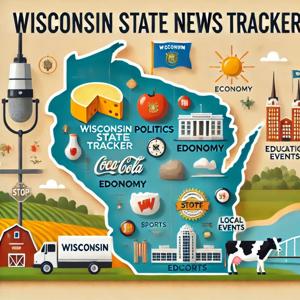
Wisconsin is poised for significant changes and developments across various sectors. In government and politics, Governor Tony Evers has unveiled a $535.5 million plan to overhaul the state's prison system, aiming to expand early release opportunities, revamp the oldest prison in Waupun, and close the second-oldest facility in Green Bay by 2029[1]. This plan is contingent on GOP lawmakers agreeing to all proposed provisions.
In the state legislature, the narrowest Republican majorities since 2011 are expected to foster more bipartisan cooperation. Both parties are eyeing the $4 billion budget surplus, with debates over how to allocate these funds driving the next two-year budget discussions[2].
On the economic front, Wisconsin is experiencing significant momentum, particularly in the Southeast Wisconsin Corridor, which is emerging as a hub for growth due to its integration of manufacturing and technology[3]. The state's abundance of resources, including land, water, and energy, makes it an attractive location for large-scale operations.
In education, Wisconsin students continue to lag behind in math and reading, with average student achievement remaining months behind pre-pandemic levels[1]. The state ranks 16th in math recovery and 30th in reading recovery nationally.
Environmental concerns are also on the horizon, as Wisconsin prepares for potential climate migration surges. The state is considered a "climate haven" due to its cool climate and abundance of water, but it faces challenges such as heavy precipitation and high temperatures, which have significantly affected its climate in recent decades[4].
Looking Ahead:
- The spring primary election on February 18 will see State Superintendent of Public Instruction Jill Underly facing two challengers in a bid for a second term[1].
- The Wisconsin Legislature will continue to debate the allocation of the $4 billion budget surplus, with potential implications for various state programs and initiatives[2].
- The state's economic growth, particularly in the Southeast Wisconsin Corridor, is expected to continue, driven by its unique blend of manufacturing and technology[3].
- Environmental challenges, including heavy precipitation and high temperatures, will remain a focus as Wisconsin prepares for potential climate migration surges[4].
This content was created in partnership and with the help of Artificial Intelligence AI.