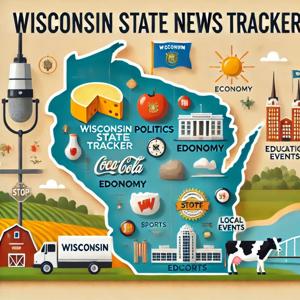
Wisconsin, located in the north-central United States in the Great Lakes and Midwest regions, is a state rich in diversity, from its large urban centers like Milwaukee and Madison to its sprawling rural and wilderness areas. It has a significant impact on various sectors including agriculture, industry, and education, continually influencing broader economic and social spheres in the region.
A major highlight in Wisconsin is its agricultural sector. Known as "America's Dairyland," Wisconsin leads the United States in cheese production, accounting for about 25% of the nation's total cheese. This dairy prominence supports not only local farmers but also contributes significantly to the state’s economy. The state's environment, characterized by its temperate climate and rich, fertile soil, is ideal for dairy farming, which has encouraged the development of related industries such as food processing and farm machinery manufacturing.
Industry in Wisconsin is another vital component of its economy with major contributions from manufacturing. The state is a significant producer of machinery, equipment, and products related to transportation, such as engines and power transmission equipment. The manufacturing sector benefits from the state’s robust work ethic and strong educational system that provides a skilled workforce essential for the high-technology needs of modern manufacturing.
Education in Wisconsin is supported by some of the leading universities in the United States, including the University of Wisconsin System, which is noted for its research contributions and high academic standards. The University of Wisconsin-Madison, in particular, is renowned for its research in medical sciences, engineering, and agriculture. These educational institutions not only prepare students to enter various professional fields but also contribute significantly to the state’s research output which influences global science and technology landscapes.
Politically, Wisconsin stands out as a key swing state in national elections, reflecting a politically active and diverse electorate. The state's political climate is often seen as a microcosm of the entire United States, with urban areas generally leaning towards liberal politics while rural areas tend to be more conservative. This diversity makes Wisconsin a significant focal point during presidential campaigns, with candidates often addressing issues such as industrial growth, agricultural policies, and educational funding, which resonate strongly with local concerns.
Culturally, Wisconsin offers a rich mixture of heritages with sizable communities of German, Polish, Scandinavian, and other European descents, which are reflected in the state’s festivals, food, and daily life. Events like the annual Summerfest music festival in Milwaukee, which claims to be the world's largest music festival, and numerous other cultural celebrations, highlight the state’s vibrant community life and diverse heritage.
Environment
This content was created in partnership and with the help of Artificial Intelligence AI.