
Sign up to save your podcasts
Or



Want to ask a question or suggest a topic? Send us a text here
In our last episode, Peta and Thea talked about Vera's practitioner training, and why no one should have to do this work alone. This week, we're introducing you to one of the women who reminds us of that every day.
Lauren Williams has been a midwife for most of her life. She'll tell you it's part of the thread of who she is. She's worked in birth suite, led research that changed how a large hospital cares for women in early labour, and built a new model of care from the ground up. By most measures, she'd made it.
And then her body started telling her something she couldn't ignore any longer.
In this episode, Lauren sits down with Dr Peta (one of her closest friends) and Sam to talk about the moment she chose her body wisdom over the executive ladder.
She shares what it took to walk away, what she learnt about herself as a mother, and why she now feels like she's meeting herself for the first time.
In this episode, we explore:
This episode is for you if:
You're standing at a crossroads in your work or your life, and you already know the answer but you're scared to act on it. Or you're a mother who's felt stretched too thin to be present. Or you're a practitioner wondering whether there's another way to do the work you love.
About Lauren
Lauren is our midwife at Vera Wellness and a private endorsed midwife. She offers pregnancy and postnatal care, including home visits, and runs her own practice, Tapestry of Life, where you'll also find her retreats for midwives and her Matrescence Matters T-shirts.
You can visit her website here: www.tapestryoflife.com.au
______________________
DISCLAIMER:
This podcast is for information and educational purposes only and is not intended as a substitute for medical advice, diagnosis, or treatment.
Want to ask a question or suggest a topic? Send us a text here
A quick note: this is a conversation about our practitioner training, so we're talking clinician to clinician at times. But if you're living with pelvic pain, we hope it's a comfort to hear that there are practitioners out there learning to slow down, listen and work this way.
If you've ever sat across from a woman in pain, done everything you were trained to do, and still gone home feeling it wasn't enough, we know that feeling well.
It's why we created our Transformational Medicine program – to help practitioners meet women in pain in a whole new way, starting with themselves.
In this episode, Sam Lindsay-German sits down with Dr Peta Wright and Dr Thea Bowler as our very first Transformational Medicine cohort comes to a close.
We talk about why we built this training with women's health physiotherapist Paula Hindle, and what it felt like to finally teach the way we practise.
We also talk about why so much of the program begins with you as the clinician – your own nervous system, your body and your cycles – before it ever turns to the person in front of you.
We can't offer someone a sense of safety we haven't found in ourselves first. That's where this work starts.
In this episode, we explore:
This episode is for you if:
You work with women with pelvic pain – as a gynaecologist, GP, physio, psychologist, naturopath, health coach or anything in between – and you sense there's more to it than what you were trained to look for.
Or you're tired of carrying the pressure to fix, and you're ready to show up differently: present, regulated and a little lighter.
For practitioners: join our next cohort
Our next Transformational Medicine cohort begins in early 2027. If this conversation stirred something in you, register your interest and we'll let you know as soon as dates are confirmed.
Graduates get a certificate of completion and can join our new membership for ongoing check-ins, case discussions and community.
Our program is currently CPD approved with RACGP and RANZCOG: 24.5 hours with RACGP for the online program, 14.5 hours for the retreat, and 24 hours with RANZCOG.
______________________
DISCLAIMER:
This podcast is for information and educational purposes only and is not intended as a substitute for medical advice, diagnosis, or treatment.
Want to ask a question or suggest a topic? Send us a text here
Winsome was 13 when she was first put on the pill for debilitating period pain. By 16, she'd been diagnosed with endometriosis, had her first laparoscopy, and began what felt like an inevitable cycle: surgery, temporary relief, pain returns, repeat.
The diagnosis brought validation – finally, a reason for her suffering that people understood.
But years later, facing her third surgery with the same gynecologist telling her this would be her reality forever, something shifted.
"I thought, well, no. That can't be my life. That's not living."
In this deeply honest conversation with Dr Peta Wright and physiotherapist Paula Hindle, Winsome shares her journey from feeling dismissed and powerless to discovering a completely different approach to pelvic pain.
One that honoured her whole body, her nervous system, her story, and her power to heal.
This episode isn't about rejecting medicine or claiming there's only one right way to heal. It's about what becomes possible when we listen to the body, tend to the nervous system, and ask what pain might be communicating beneath the surface.
In this episode, we explore:
For women navigating pelvic pain:
If Winsome's story resonates, you might be ready to explore a different approach to healing – one that treats the whole woman, not just the symptoms.
Our Heal Your Pelvic Pain program is a comprehensive 10-week online course led by Dr Peta Wright, Dr Thea Bowler, and Paula Hindle. It's an experiential, embodied approach that helps you understand your nervous system, reconnect with your body, and reclaim your power.
Learn more about Heal Your Pelvic Pain here.
For practitioners:
If you're craving a more grounded, nervous-system-led approach to pelvic pain care – one that supports your patients without burning you out – join us for Transformational Medicine: Alchemising Pain into Power.
This isn't just about learning new techniques. It's about your own embodiment, regulation, and transformation – because you can't hold space for healing if you're disconnected from your own body.
Two pathways available in 2026:
Explore the Practitioner Program here.
______________________
For more information about us, visit VeraWellness.com.au.
We’d love to continue the conversation with you on Instagram @verawellness.com.au.
______________________
DISCLAIMER:
This podcast is for information and educational purposes only and is not intended as a substitute for medical advice, diagnosis, or treatment.
Want to ask a question or suggest a topic? Send us a text here
Please note: Due to technical recording issues, the audio quality varies in parts of this episode but we felt Cara's story was too important not to share.
In this deeply moving episode, Cara shares her powerful story of living with chronic pelvic pain – and the transformation that came when someone finally listened.
For years, Cara cycled through emergency departments, scans, procedures and specialists, only to be told "there's nothing wrong" despite debilitating pain.
The medical system left her feeling gaslit, hopeless, and deeply disconnected from her own body. She hated her body. She couldn't look in the mirror. And she believed no one would ever be able to help her.
Then everything changed.
In this honest conversation with Dr Peta Wright and Paula Hindle, Cara reflects on the turning point in her healing – and the practices that helped her reclaim safety, agency, and even love for her body.
In this episode:
This episode is for you if:
You're living with pelvic pain and feeling alone, unheard, or stuck in cycles of medical appointments that aren't helping.
Or if you're a practitioner who wants to understand what truly supports women on their healing journey – beyond protocols and prescriptions.
Cara's story is a testament to the power of being believed and listened to, the importance of addressing the whole person, and the courage it takes to do the deeper work of healing.
Trigger note: This episode includes discussion of medical trauma, pelvic pain, mental health challenges, and past trauma. Please listen with care.
____________________________
Find out more about our Heal Your Pelvic Pain online program here: https://courses.verawellness.com.au/heal-your-pelvic-pain.
If you're a practitioner, you can find out more and register for our upcoming Transformational Medicine Program and Retreat here: https://www.verawellness.com.au/practitioner-program-intensive.
______________________
DISCLAIMER:
This podcast is for information and educational purposes only and is not intended as a substitute for medical advice, diagnosis, or treatment.
Want to ask a question or suggest a topic? Send us a text here
What if the disconnection you feel from your body isn't because something's wrong with you – but because you've forgotten you're divine?
In this episode, we explore the power of recognising the goddess within – not as a spiritual concept you have to strive for, but as the truth of what you already are.
We talk about why goddess energy has been suppressed, shamed, and severed from our collective consciousness – and what happens when we reclaim it. This isn't about rejecting the masculine or declaring one better than the other. It's about remembering that the feminine divine deserves reverence, and that every woman is a living expression of the goddess in all her forms.
If you've ever felt shame about your body, your cycle, your darkness, or your changing form – this conversation is an invitation to see yourself differently.
In this episode, we explore:
Your goddess practice:
Dress as a goddess every day for 40 days. Not for anyone else – for you. Adorn yourself. Notice what shifts.
Tag us on Instagram @verawellness.com.au in your goddess pictures – we'd love to see you reclaim your divinity.
Resources mentioned:
📚 The Other Goddess by Joanna Kujawa – exploring feminine divinity and sexuality
📚 Mary Magdalene books by Meggan Watterson – feminist theology and the sacred feminine
📚 Sharon Blackie's books – fables, archetypes, and goddess stories
🃏 Goddess oracle cards by various authors
Upcoming event:
Join us for a special goddess gathering with Dr Joanna Kujawa on Friday, 13 March 2026 at Vera Wellness.
🎟️ Get your tickets here and dress like a goddess. 🌿
______________________
DISCLAIMER:
This podcast is for information and educational purposes only and is not intended as a substitute for medical advice, diagnosis, or treatment.
Want to ask a question or suggest a topic? Send us a text here
A quick note: We recorded this at our practitioner event, so we're talking clinician-to-clinician in parts. But if you're navigating pelvic pain yourself, you might find it really validating to hear how we think about symptoms, nervous system states, and what actually drives lasting change.
If you're a practitioner working with pelvic pain, you've probably felt the pressure to fix, the complexity of trauma and chronic symptoms, and the frustration of treatments that don't create lasting change.
In this episode, we share the foundations of the Vera Wellness approach to pelvic pain – an evidence-informed, nervous-system-led framework that shifts care away from symptom whack-a-mole and toward genuine transformation.
Recorded live at our online practitioner event on 30 October, this conversation includes practical tools, a powerful case study, and a clear reframe that changes everything: pain isn't the problem to eliminate – it's information.
And the nervous system is the foundation of both patient outcomes and practitioner sustainability.
If you're craving a more grounded, embodied approach to pelvic pain care – one that supports your patients without burning you out – this episode is for you.
In this episode, we explore:
For practitioners:
If today's conversation resonates, you may be feeling the same shift we're seeing across women's health – a desire for care that is more embodied, integrative and nervous-system-led.
In 2026, Dr Peta Wright, Dr Thea Bowler and holistic physiotherapist Paula Hindle are hosting Transformational Medicine: Alchemising Pain into Power with two pathways:
Explore the program here: https://www.verawellness.com.au/practitioner-program-intensive
______________________
For more information about us, visit VeraWellness.com.au.
We’d love to continue the conversation with you on Instagram @verawellness.com.au
______________________
DISCLAIMER:
This podcast is for information and educational purposes only and is not intended as a substitute for medical advice, diagnosis, or treatment.
Want to ask a question or suggest a topic? Send us a text here
Today’s conversation is a little different.
Dr Thea and Vera physiotherapist Paula Hindle take you inside the sauna at the end of a long clinic day – a place where their most honest reflections tend to unfold.
This episode opens a deeper look at what it really means to hold space for suffering in women’s health.
Not with a rush to fix, but from a grounded, embodied place where practitioners learn to regulate their own nervous systems while sitting alongside their patients’ pain.
Paula and Thea explore the subtle but profound shift that happens when clinicians start listening with curiosity.
This is a conversation about attunement, presence and the reality that true transformation rarely begins with a medical intervention – it begins with being witnessed.
If you’re a practitioner who feels called toward a more heart-centred, embodied, nervous-system-led approach to pelvic pain, this episode is for you.
In this episode, we talk about:
The truth is, real healing often begins long before hands-on treatment.
It begins in the pause – the moment we sit with discomfort, listen deeply, and allow a patient’s story to unfold without rushing toward certainty or control.
When practitioners regulate themselves, the whole room changes.
Safety expands. Insight emerges.
And the patient’s own wisdom becomes a central part of the therapeutic process.
______________________
For practitioners: Transformational Medicine – Alchemising Pain into Power
If today’s conversation resonates, you may be feeling the same shift we’re seeing across women’s health – a desire for more embodied, integrative, nervous-system-based care.
In April 2026, Dr Peta Wright, Dr Thea Bowler and Paula Hindle will be hosting a 4-day immersive retreat and practitioner program designed to help clinicians:
You can find all the details here: https://www.verawellness.com.au/practitioner-program-intensive.
Early bird pricing ends on 31 December 2025 and payment plans are available.
______________________
For more information about us, visit VeraWellness.com.au.
We’d love to continue the conversation with you on Instagram @verawellness.com.au
______________________
DISCLAIMER:
This podcast is for information and educational purposes only and is not intended as a substitute for medical advice, diagnosis, or treatment.
Want to ask a question or suggest a topic? Send us a text here
After a long pause, Women of the Well is back.
In this conversation, Dr Peta, Dr Thea and Sam sit together in a very real season of life transition – talking about menopause, ageing, endings and the one thing most of us are trying to avoid thinking about: death.
In this episode, we talk about:
A reflective invitation as you listen to this episode:
Resources mentioned:
Stay connected – the conversation doesn’t end here.
If this episode brought up reflections, questions or stories of your own menopause experience, the Women of the Well team would love to hear from you. Share your thoughts or topic requests for future episodes via email to [email protected] and let us know:
What are you noticing in your own season of change – and what might your body be trying to tell you?
______________________
DISCLAIMER:
This podcast is for information and educational purposes only and is not intended as a substitute for medical advice, diagnosis, or treatment.
Want to ask a question or suggest a topic? Send us a text here
We didn’t plan for this to happen… but when we sat down to talk, something shifted.
This week's episode is not a conversation about a particular health topic or a deep dive into hormones or cycles…
It’s an honest reflection on where we’re at, and an invitation to pause.
After more than 30 episodes, we’ve arrived at a natural winter – a moment to slow down, reassess, and honour the cycle of this podcast project.
We didn’t plan this in advance.
But when we sat down to record and felt our energy shift, we realised it was time to listen to our bodies and our inner knowing, just as we always invite you to do.
This may not be a forever goodbye… but it is a “pause for now.”
🎙️ In this final episode for now, we reflect on:
🌿 Why it’s okay to rest, and how we can honour the natural seasons and cycles of life
🌿 The truth behind why we started this podcast (and what we never wanted it to become)
🌿 How constantly striving to optimise our health can become another form of self-judgement
🌿 Why letting go, embracing stillness, and trusting our own inner knowing is the most powerful healing we can do
Whether this is a short pause or a more permanent ending, we’re so grateful you’ve been with us.
The full library of episodes will remain available, so you can return to them whenever you need support, insight, or a gentle reminder to come back to yourself.
💬 If this podcast has impacted you, we’d honestly love to hear from you. Send us a message on Instagram @verawellness.com.au or email [email protected].
Thank you for being here.
Thank you for listening.
And thank you for honouring your own rhythms, too.
______________________
Additional resources to support you:
🧘♀️ Heal Your Pelvic Pain – Our live online program delivered by leading women's health experts to help you alchemise your pain, reconnect with your body, and reclaim your life.
🌕 Unlocking the Power of Your Cycle – a self-paced course to help you understand and work with the phases of your cycle for more vitality and clarity.
📖 Healing Pelvic Pain by Dr Peta Wright – A comprehensive guide on managing pelvic pain.
______________________
DISCLAIMER:
This podcast is for information and educational purposes only and is not intended as a substitute for medical advice, diagnosis, or treatment.
Want to ask a question or suggest a topic? Send us a text here
This week, we’re continuing the powerful conversation we started in Episode 32 about victim consciousness – and how it shows up in our lives in ways we might not expect.
But this time, we go even deeper.
Dr Peta and Sam explore the unconscious patterns that keep us stuck – from our beliefs about who we are to the stories we tell ourselves (and others) about our pain.
Together, they unpack:
🌿 Why victim, rescuer and perpetrator roles always co-exist – and how we can move beyond this triangle
🌿 The subtle ways women are taught to bond over suffering (and what to do instead)
🌿 How shame, superiority and saviour-complex behaviour keep us disempowered
🌿 Why our language matters (and how to stop casting spells like “I have to…”)
🌿 How our beliefs about our body, our past, and our identity shape our suffering
This episode isn’t about blame or denial – it’s an invitation to start recognising your own patterns and beliefs, and gently shifting them so you can experience more joy, peace, and presence.
🎧 Listen now to part 2 of this raw, transformative series – and let us know how it lands for you.
Resources mentioned:
Questions and topics:
Do you have a question about this episode or a topic you want us to explore on the podcast? Send us a text (link above episode description), a message on Instagram or email us at [email protected].
______________________
For more information about us, visit VeraWellness.com.au.
We’d love to continue the conversation with you on Instagram @verawellness.com.au
To stay in the loop with every new episode of Women of the Well and gain first access to special resources and events – join our Podcast VIP Club here.
______________________
DISCLAIMER:
This podcast is for information and educational purposes only and is not intended as a substitute for medical advice, diagnosis, or treatment.
From the publisher's feed
Most women's health care starts by looking for something broken. This one starts by listening.
Women of the Well is a podcast about what medicine looks like when it takes…
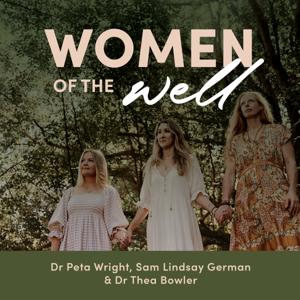
Hosted by integrative gynaecologists Dr Peta Wright and Dr Thea Bowler with holistic counsellor Sam Lindsay-German, each episode explores a women's health topic from an integrative, nervous system informed perspective, alongside guests including physiotherapists, psychologists, researchers, healers and clinicians who are practising differently.
If you've been told your pain is normal, your tests are fine and there's nothing more to be done, this is a podcast that will make you feel seen and give you somewhere to go next.
If you're a practitioner who senses the standard approach isn't serving your patients, you'll find the thinking here that underpins how we work at Vera Wellness – and the training we run for clinicians who want to work this way too.
This podcast is for information and educational purposes only and is not intended as a substitute for medical advice, diagnosis or treatment.
Topics we cover:
Recorded and produced by the team at Vera Wellness – verawellness.com.au.
Follow @verawellness.com.au on Instagram, and find our courses for women and our training for practitioners at verawellness.com.au