
Sign up to save your podcasts
Or



This podcast is very different and so you have a choice.
There is a library based video website called Kanopy. I found a very interesting video on spinning throughout the world. I wanted other spinners to see it too, but they may not have access unless their library card (and their library system) grants access to Kanopy. The reason I do not include a link here, is because it is best to access it from your library's website.
So first, if you have a current library card,go to their website and look for Kanopy, click through to it and set up a free account. Then search and watch the video World Spinning Techniques. If you do watch the video, you really do not need to listen to the podcast. If you can not access the video, then there is a detailed, albeit,verbal description from when I watched the video.
Or do both, I would love to have you listen in to my reactions to all the amazing things I saw in the video.
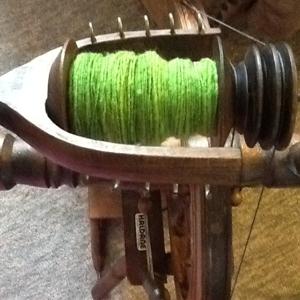
The picture connected with this podcast has just slight relevance, it is three sample skeins of the alpaca fiber I have been spinning lately. Alpaca is the first fiber talked about in the video.
I was able to do so much during this Tour de Fleece, it took two podcasts to tell you all about it. See the previous podcast for part one of this two part series.
The first fiber I talk about spinning is called Fake Cashmere, due to it softness. It is however, 100% nylon. I bought my fiber from a dyer whose business is Jazz Turtle.
It seems most people like to spin this fiber blended with other fibers, but I enjoyed spinning it on it's own. Another source for the fiber is Paradise Fibers
The next fiber I worked with was a dyed merino silk batt in the colors purple and green. Listen as I explain how I made color sequencing work for the 2 ply yarn.
On the TdF challenge day, I got out the book charka, not something I have much skill with. I was able to set it up and spin some single on it for my challenge.
I spent many days during the Tdf dyeing fiber, both in locks and in big pots full of fiber. I had the amazing once in a life time experience of dyeing a color I will never be able to repeat, calico locks. This podcast tells you how that happened.
Finally for the state fair entries, I needed an art yarn and chose to spin locks into a yarn. It was a learning experience and I share all I learned to make this yarn.
At the beginning of the podcast I talk about how there will be no Spinzilla this year, but TNNA has provided these two links for spinning fund raisers: Britspin also Spin Her Free and The owner of Purple Lamb Fibers is doing a Spin Together Oct 6 through Oct 12, 2019
Lots and lots of information in this podcast, grab a big chunk of fiber, your spinning tool of choice, and join me.
This is the first of a two part podcast, because I had so many projects to tell you about for the Tour de Fleece.
In this podcast I talk about spinning cotton sliver on the Majacraft Aura, not a very traditional way to spin cotton. My challenge day project was finally achieving those beautiful tight rolags on my blending board.
I also completed two skeins. The first was a dyed polworth from Yarn Hollow
The second skein was a gray Horned Dorset fiber, which I got from Dyed in the Wool. I talk a little about the breed too.
I suggest checking out Hilltop Cloud, to get an idea of the type of rolags I was making on the blending board, but when I checked the website they are not currently in stock. A quick search of Etsy brought up these, and these.
Here is the first of the book review only podcasts I mentioned in a previous podcast. After years of podcasting, I realized that the book reviews will be easier to find if in their own individual podcast.
This podcast reviews the book Spindle Spinning from Novice to Expert by Connie Delaney.
Links to possible sources for this book can be found on Abe Books
Also seen listed on Ebay here
In both cases, the exact listings may no longer be available, but it serves for you to see the book and description, and know how to search for it in those websites.
One last link is to the fiber I talk about in the review, kenaf. The Wiki page for it is here.
It's that time of year, and the tents are up and the vendors hopeful as the cycle of yearly fiber fairs continue. I mention in the podcast my 'blue sky' dream of hitting them nationwide some year. A van full of fiber to sell, and be replaced by purchases, sounds just right!
The photo for this podcast shows the Pegosa alpaca fiber I am currently spinning by the lock on my Roberta.
There are lots of links for the podcast, for everyone that I mentioned, be sure to check out the webpages.
The Woolery, which you can find at fiber fairs and their storefront.
Dyed in the Wool. I owe Sandy Ferguson an apology for not mentioning in the podcast, her as an owner of this business too!
The Alien Encounter sock pattern can be found on Ravelry, here.
The Stoltman Family farm only has a FaceBook page, here.
Ohio Valley Natural Fibers is the fiber processing mill I talk about.
Yarn Geek Fibers has this page of dyed yarn and fibers for sale.
Punkin Patch is Equinox Farm home of the crazy sheep lady. There's a good blog on that website, where you can get you fill of photos and good writing. This is the farm from whom I purchased Bullwinkle's fleece.
This blog had one post that showed Bullwinkle, he's the white sheep.
This farm is also part of the breed conservancy program, Shave 'em to Save 'em, for rare breed sheep.
I realize that is an unusual subtitle for a postcast. I recently had a total knee replacement surgery, and for the first 15 minutes or so of this podcast, I do talk about how the healing process delayed my spinning and fiber work for several weeks.
But once the spinning wheels got going again, I had two WIP to talk about, the Pegosa alpaca project was continued and I finished spinning two fibers I had used for a project back in Sept. a babydoll Southdown and a Polworth.
As promised I did one book review at the end of this podcast. It is Creative Spinning, a creative combination of two authors, Alison Daykin and Jane Deane.
The Polworth fiber I spun is from MohairandMore.
The episode of this podcast where I review the breed Babydoll Southdown is here, episode 37.
Please see a separate non podcast page on the blog for a listing of episodes of this podcast that contain book reviews. That way I can list the episode number, and the book title, and keep it updated.
Photo shown with this episode is of the southdown/polworth skeins I finished and talked about in the podcast.
It's official! I have joined the ranks of retirees. Now it is time to 'spend' my stash, or as I have decided to call it, my retirement 'fund'.
We start this with a very large blanket of alpaca fiber from an alpaca named Pegosa. The first pound is washed, but not completely processed as I am using it to test various processing methods. This podcast talks about combing with handheld combs, and the yarn that I spun from that top.
Needless to say there will be plenty more to podcast about Pegosa's fiber in the next few months. However I have talked about alpaca in past podcasts too. If you are interested, here is a list of episodes with links:
Episode 35 Washing alpaca
Episode 101 Machine washing alpaca
Episode 102 Spinning alpaca
Episode 108 Dyeing alpaca
Episode 123 Alpaca in the dyepots
One other spinning project completed since the last podcast was fiber from Homestead Hobbyist, a lovely polworth/silk blend.
Happy New Year! It is always full of thoughts and plans for the spinning projects ahead. In today's podcast I talk about maintaining watch on the drafting zone to make your yarn more intentional. Watching the drafting zone will help you break out of making the same WPI yarn all the time to making art yarns that feature thick and thin singles. All of this is the topic of this podcast.
I have done previous podcasts on drafting if you care to find those and listen to them. Just click on the links to go to them. Episode 26 (woolen and worsted spinning) episode 40 (spinning intentional yarn) and episode 67 (woolen spinning).
Links to things I also mention in the podcast are:
Book of Days, something I came across while looking up distaff day.
Fellviewfibres
The source of the punis I spun, made from wool and silk.
The videos I viewed while researching spinning thick and thin can be found on Youtube by searching the topic.
Links to vendors mentioned in the podcast:
Stitches events in general Atlanta Ga event May 30-June 2 2019 Stitches United is on that page too.
Youghiogheny Yarns Keri Fosbrink dyer
Fiberlady bamboo fiber
Buffalo Wool Co Buffalo wool yarn and fiber
Franklin Habit
Shirsty Cat Designs Merino silk fiber
2 Guys Yarn Company
Soak Flatter spray
Lost City knits Denise Bell Applecross Highland shawl Ravelry pattern
Knitted Knockers
knitbahpurl
Stevenbe
Vintage Lace book by Gladys Amedro
The video blogger I mentioned is Quayln Stark and he blogs on youtube. The stitches midwest podcast can be found here
I talk about a fiber processor but failed to mention the name. The farm business is called Alpaca Pines and their website can be found here.
There was a what I called a wood ball winder that I was unable to find online to show you. I have found out since that this item has another use, which is to hold the ball of yarn wound on to it as you knit. So the concept for it I think is to wind the yarn on it from a skein and then let it sit near you as you knit, it will rotate release the yarn. No balls of yarn rolling away from you.
I was not able to find any 1500 yard one dye lot skeins of yarn online, like I saw in the market. I think this concept is a custom dye project, so if interested contact your favorite dyer, see if they can purchase the yarn in the large skein and dye it for you.
In this discussion of what I did during the 2018 Tour de Fleece, I talk about the wool breed Zwartbles, spinning buffalo fiber on a drop spindle and finally a very rare breed of wool, Dor Galen.
The buffalo fiber was included in the Clouds of Luxury from the Etsy store Sericin
The Dor Galen fiber was purchased at a fiber festival several years ago from Sandy Ferguson's Dyed in the Wool
Dor Galen is no longer available, the horned dorset at the bottom of the above linked page is probably a good close substitute.
From the publisher's feed
6 Listeners