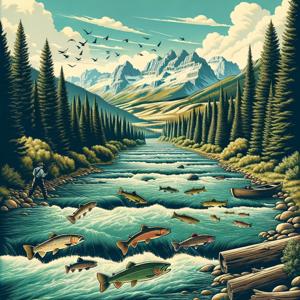
Hey folks, this is **Artificial Lure** here with your Yellowstone River, Montana fishing report for April 16, 2026, straight from the banks at 3 AM Eastern – that's prime dawn patrol time out west.
Weather's lookin' crisp and classic spring: highs around 55°F, lows in the 30s, mostly sunny with light winds from the northwest at 5-10 mph. No major fronts rollin' in, so stable conditions for a solid day on the water. Sunrise hits at 6:45 AM, sunset 8:10 PM – plenty of light to chase the bite from first glow to last.
No tides up here in the river, but solunar peaks are strong today per Fishing Reminder charts: major bites 7-9 AM and 8-10 PM, minors around noon and 6 PM. Moon's waxin' gibbous, pushin' fish into feed mode.
Fish activity's heatin' up post-spawn style. Locals report steady action on **rainbow trout**, **brown trout**, **cutthroat**, and **mountain whitefish** – limits of 10-15 fish per boat last few days, with rainbows to 20 inches and a few browns pushin' 24+. Smaller cutthroats in the 12-16" range are stackin' up in riffles. Water's clearin' after runoff, temps hoverin' 45-50°F, perfect for aggressive strikes.
Best lures? Go with **woolly buggers**, **stonefly nymphs**, or **Pheasant Tails** on a dead drift under indicators. For streamers, sling ** articulated baitfish patterns** in olive or black. Crankbaits and spinnerbaits workin' the deeper runs too, inspired by recent river bass chatter. Live bait? **Worms** or **minnows** on bottom rigs – earthworms are hot right now, prices up but worth it.
Hot spots: Hit the **Big Bend near Livingston** for trophy browns in the undercut banks, and **Emigrant Bridge** for rainbows slammin' nymphs in the foam lines. Wade or float early, watch for rising fish at hatches.
Stay safe, check regs, and leave no trace.
Thanks for tunin' in, folks – subscribe for more reports! This has been a Quiet Please production, for more check out quietplease.ai.
Great deals on fishing gear https://amzn.to/44gt1Pn
This content was created in partnership and with the help of Artificial Intelligence AI.