
Sign up to save your podcasts
Or

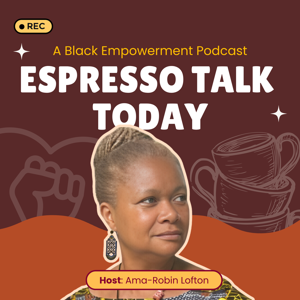


In this Comforting Moment episode, host and sistah-guide Ama-Robin Lofton invites you to sit on the porch with a glass of sweet tea at dusk. Together, we slow down, breathe, and remember what it feels like to belong.
Through gentle storytelling and guided reflection, Ama-Robin reminds us that safety isn't always found in crowds or conversation, but in quiet company—the kind that sees you without words.
This moment of rest and presence is part of the You Ain't Imagining This! sanctuary series, offering peace, grounding, and connection for Black listeners navigating a noisy world.
Take a few minutes to exhale. To feel held. To remember that you are never alone.
So pour yourself something warm, exhale, and come take your seat.
Because on this porch, the light stays on for you.
The porch. The veranda. The stoop. Whatever you call it, it's the space where we learn, rest, and remember who we are.
In this story, five children visit five porches—each one offering its own lesson: how to listen, how to love in truth, how to be still, how to come home, and how to stay strong when the world refuses to see your light. They return feeling safe, cherished, and forever changed.
The porch is more than a step outside your door—it's a safe zone, a classroom, and a reminder that peace and power belong to you. But we have to claim it. We have to be mindful of where we sit, who sits with us, and what we allow to follow us home.
So come sit with me. Let's breathe, reflect, and remember the spaces that keep us whole.
Pull up a chair for a soulful conversation about food, culture, and community!
For us, food has never been just food. It's memory. It's resistance. It's joy. It's how we have loved, organized, healed, and built community — even in the hardest times.
From the cookfires of the enslaved to the cafés of the Harlem Renaissance to today's kitchen tables, our meals have carried the stories of who we are and what we've survived. But in a world that glorifies hustle, isolation, and convenience, many of us have lost the table — that sacred space where culture and connection live.
Ama-Robin brings it all home with truth and tenderness, exploring how we can reclaim the table as a revolutionary act of care and collective power. You'll hear about the history of Black food gathering spaces, the challenges of modern disconnection, and what it means to cook and eat from our roots again.
And because reflection must lead to action, she offers ten concrete ways to reclaim the table — from small daily rituals to community-building gatherings that feed both body and spirit.
Food connects us. Food reminds us. And when we come together around it, we are unstoppable.
Listen and learn:
Why food is a form of resistance, not just nourishment
How communal meals build strength, belonging, and joy
What we lose when we abandon our cultural tables
Ten practical ways to reclaim food as a tool of liberation and love
Pull up your chair. Pour your tea. Grab your plate. This isn't just a talk about food — it's a call to remember that together, we are the table.
While I'm traveling this week, I'm bringing back a listener favorite: You're Never Alone in a Black Bookstore.
This isn't just about books. It's about belonging!
I'm Ama-Robin, your guide on this storytelling journey.
Black bookstores are more than shops—they are sanctuaries, places where we're seen, celebrated, and reminded that our stories matter. This YAIT Story takes you inside one of those spaces.
In this immersive Village episode of You Ain't Imagining This!, I will guide y'all inside a Black-owned bookstore—a space where history lives, wisdom flows, and the Black community thrives. Through storytelling, reflection, and real conversation, we will explore how these bookstores are more than stores—they're classrooms, healing grounds, memory keepers, and hubs of joy.
This YAIT Story is a glimpse of what that space will feel like: safe, welcoming, and filled with voices that remind us we are never alone.
And yes, when YAIT Town opens very soon, there will be a Black Bookstore waiting for you there.
This YAIT Story is a glimpse of what that space will feel like: safe, welcoming, and filled with voices that remind us we are never alone.
And yes, when YAIT Town opens this month, there will be a Black Bookstore waiting for you there!
As you listen, I'd love to know: What's a Black book, author, or bookstore that has held you, taught you, or carried you through? Share your reflections with me on [Substack link] or [Instagram link] so we can keep building our library of love and resistance together.
📚 Got a favorite Black bookstore or book? Share it!
💬 Let's talk about the spaces that hold us—and how we can protect, support, and remember them.
Follow @AmaRobinTells on Instagram so you don't miss what's next: YAIT Town!
You're never alone in a Black bookstore.
You ain't imagining this.
Coping can keep us alive — but it also can come at a terrible cost.
In this Believe Black People episode, Ama-Robin shares a personal story of survival coping, connects it to the weight that we as Black people have carried for generations, and names the truth: resilience is not permission, and survival is not freedom.
Together, we'll move from survival coping to empowered personal and collective coping. You'll hear truth-telling, an empowering meditation, and practical steps to release the burdens we were never meant to carry.
Because coping is not consent.
And you ain't imagining this.
How to Carry Less and Live More: A Black Empowerment Choice
This episode is a modern folktale that asks: What are we carrying, and what might it feel like to finally set it down?
I'm Ama-Robin, your storyteller and guide at You Ain't Imagining This — the sanctuary where we name the chaos of living Black in white spaces and remember that we don't have to carry it alone.
It's a story meant for reflection and meditation, with river sounds and a calm, steady pace — an invitation to rest your body, quiet your mind, and imagine release. Afterward, we'll explore what this means for how we cope, both individually and as a community.
And stay tuned — this story is also a doorway into the coming of YAIT Town, a sanctuary of porches, gardens, rivers, and libraries where we learn to carry less and live more.
Because coping is survival. But survival isn't the end of our story.
I'm Ama-Robin, host of You Ain't Imagining This — the storytelling sanctuary where we name the chaos of living Black in white spaces and remember that we don't have to carry it alone.
In this episode, we sit on the porch with the fictional character, Mrs. Alberta Jenkins, a retired teacher and elder in our community, as she names something many of us know but rarely say out loud: the coping tax.
The coping tax is the high-effort coping we pay every day just to exist in spaces that weren't built for us. It's the price that shows up in our bodies, our spirits, and our peace of mind.
You'll hear stories, reflections, and a simple ritual for shaking a little of it off. Together, we'll explore how to recognize unhealthy coping — and begin reclaiming the practices that restore us instead of draining us.
In this episode, we talk about:
What the "coping tax" is and how it shows up in daily Black life.
Real examples of high-effort coping:
Working twice as hard for half the recognition.
Smiling or laughing when something isn't funny to avoid being labeled "angry."
Pushing through illness or exhaustion to prove you're reliable.
Code-switching until you barely recognize yourself.
The illusion of "paying the tax" — and the true cost to our health, rest, and family.
A small ritual from Mrs. Jenkins' porch to help you release some of the day's weight.
And this is just the beginning. Starting next month, we'll step fully into YAIT Town — a sanctuary of porches, gardens, rivers, and libraries where our stories and healing practices live. In this episode, you'll catch the first glimpse of that place.
Because coping is survival. But survival isn't the end of our story.
This final episode of the Black Summer Healing Session is a sacred invitation to pause. Across seven weeks, we've released burdens, reclaimed joy, and restored balance. Now, Ama-Robin presents this episode, While I Rest. This meditative episode offers a soft place to breathe and remember.
✨ You'll receive seven remembrances—one from each session—to guide your reflection. ✨ You'll hear a closing folktale that reminds us why rest is holy. ✨ You'll be invited into a gentle ritual of gratitude and self-affirmation.
Rest is not weakness. Rest is healing. Rest is liberation.
Asante sana for journeying through this Black Summer Healing Session. If this episode spoke to you, please like or share it with someone who needs a moment of rest today.
In this Espresso Talk, storyteller Ama-Robin names "the Hustle" for what it is—a survival pattern of overwork and over-achievement born from our history. It is stealing our rest, our joy, and even our health. From the based-in-truth story of Miss Josie Mae to the groundbreaking research of Dr. Sherman James, we explore how constant high-effort coping wears us down and how we can choose freedom instead. You'll walk away with tools to slow down, reclaim your breath, and live in alignment with your body, spirit, and community.
You'll get in this episode:
Real-life examples of physical, mental, emotional, and spiritual hustle
How hustle culture damages our health and spirit
Practical steps to slow down and protect your well-being
Bonus: Grounding Ritual for Release
Sit in a comfortable position. Close your eyes if it feels safe.
Place your hands over your heart.
Inhale deeply for a count of 4. Hold for 2. Exhale for 6. Repeat three times.
Whisper or think: "I am more than what I do. I am enough as I am."
Imagine placing the weight you've been carrying into the earth beneath you, knowing it can hold it.
Open your eyes when you're ready, carrying only what's yours to carry.
Learn More & Support Black Scholars
In this episode, we mentioned the powerful work of several Black researchers, writers, and organizations who are helping us live longer, healthier, and more liberated lives. Their work supports us—let's support them back.
Dr. Sherman James – Epidemiologist and creator of the John Henryism Active Coping Scale, a tool for understanding how high-effort coping affects health, especially in Black communities. Learn more about his research and take the scale here.
Tricia Hersey – Founder of The Nap Ministry and author of Rest is Resistance: A Manifesto. Her work reclaims rest as a form of resistance and a healing right for Black people. Learn more here.
The Association of Black Psychologists (ABPsi) – An organization dedicated to advancing Black-centered psychology, mental health, and community well-being. They remind us that our history and culture are core to our psychology. Learn more and support their work here.
We've worn emotional armor to survive—from slavery to segregation to being "the first" in white spaces. But healing means knowing when (and how) to set that armor down.
In this Comforting Moment, we honor what protected us and gently choose rest. Through breath, reflection, and a powerful gratitude meditation, we invite the safety of community, culture, and ancestral strength.
💛 In this episode, you'll receive:
A grounding visualization for emotional release
A cultural reminder that you are never alone in your healing
A soft but powerful meditation to thank your armor—and prepare for freedom
✨ Don't miss the Gratitude Ritual Gift in the show notes.
You don't have to carry it alone. Not today.
🌿 Gratitude Ritual: Laying Down the Armor
You'll need:
A quiet space
A comfortable seat
A small object that represents protection (e.g. a scarf, stone, bracelet, or even your hand on your chest)
A candle or soft light (optional)
Step 1: Settle and Breathe
Sit in stillness. Place your hands over your heart or on your chosen object. Take three deep, slow breaths. On each exhale, gently release some of the tension you've been carrying.
Step 2: Acknowledge the Armor
Close your eyes and name the armor you've worn:
Perfection
Silence
Always being "the strong one"
Smiling when you're hurting
Preparing for harm, even when it doesn't come
Say softly (or in your heart):
"I see you. I know why you were needed. Thank you for protecting me."
Step 3: Honor Your Lineage
Speak to those who came before you:
"Thank you to the ones who wore this armor before me. Thank you for surviving, resisting, and preparing the way."
Name one ancestor, mentor, or community member who carried armor so you didn't have to.
Step 4: Release With Intention
Now, hold your object or place your hand on your chest and say:
"I am safe enough to set you down—for now." "I release what I no longer need to carry." "I am not alone."
Visualize the armor gently loosening, sliding off, or being laid beside you like a beloved coat that you'll only wear when needed.
Step 5: A Blessing Forward
Place your hand over your heart and speak this aloud:
"May I move through the world with tenderness and strength." "May I trust that I am protected by love, community, and wisdom." "May I prepare the way for those who come next."
End with a soft, full breath.
💫 Return to this ritual whenever the armor feels too heavy.
You're allowed to rest. You're allowed to heal. You're allowed to lay it down.