
Sign up to save your podcasts
Or

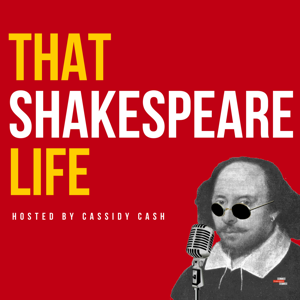

In Shakespeare's play Henry IV, Part 1, Falstaff declares on more than one occasion, "I am a rogue." Several exchanges between Falstaff, Henry V, and others like Hostess Quickly and Doll Tearsheet, see characters throwing the word "rogue" back and forth as both an insult and a badge of honor.
The term connects to a real form of slang underworld language known as rogue cant. Which was a secret, cryptic lexicon, spoken and understood only by criminals. Falstaff and his companions are the closest depictions of criminals in Shakespeare's works. Their roguish behavior includes gathering at the Boar's Head in Eastcheap to plan their crimes and divide their spoils. By choosing to use the word "rogue," Shakespeare was deliberately connecting his characters to the real criminal underworld of 16th-century England that trafficked in this mysterious and coded language.
To introduce us to this rogue cant, and to help us unlock the hidden meanings of these words so that we can better understand the culture that produced them, we are excited to welcome Ari Friedlander back to the show.
Ari joins us today to take a closer look at rogue cant: where the words came from, how they were used, and what they reveal about Shakespeare's world.
Hosted on Acast. See acast.com/privacy for more information.
 View all episodes
 By Cassidy Cash

4.9
5454 ratings
In Shakespeare's play Henry IV, Part 1, Falstaff declares on more than one occasion, "I am a rogue." Several exchanges between Falstaff, Henry V, and others like Hostess Quickly and Doll Tearsheet, see characters throwing the word "rogue" back and forth as both an insult and a badge of honor.
The term connects to a real form of slang underworld language known as rogue cant. Which was a secret, cryptic lexicon, spoken and understood only by criminals. Falstaff and his companions are the closest depictions of criminals in Shakespeare's works. Their roguish behavior includes gathering at the Boar's Head in Eastcheap to plan their crimes and divide their spoils. By choosing to use the word "rogue," Shakespeare was deliberately connecting his characters to the real criminal underworld of 16th-century England that trafficked in this mysterious and coded language.
To introduce us to this rogue cant, and to help us unlock the hidden meanings of these words so that we can better understand the culture that produced them, we are excited to welcome Ari Friedlander back to the show.
Ari joins us today to take a closer look at rogue cant: where the words came from, how they were used, and what they reveal about Shakespeare's world.
Hosted on Acast. See acast.com/privacy for more information.

3,223 Listeners

104 Listeners

824 Listeners

2,252 Listeners

230 Listeners

753 Listeners
480 Listeners
3,370 Listeners

15,592 Listeners

1,895 Listeners
2,062 Listeners

578 Listeners
2,857 Listeners
1,394 Listeners

228 Listeners