
Sign up to save your podcasts
Or

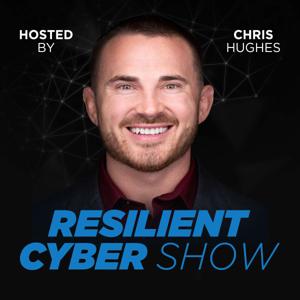

Niels Provos on why you don't need a frontier model to find zero days, why the Vulnpocalypse is overstated, and how security invariants change the game.
Description
Niels Provos has spent twenty-five years in security, from writing bcrypt to running security at Google and Stripe, and he came on to push back on the panic around AI and vulnerabilities. He explains why finding zero days is an orchestration problem rather than a frontier-model problem, using his Iron Curtain runtime and an open-weight model to surface net-new bugs for the cost of a cheap scan. We get into security invariants and egress control, why remediation is the real bottleneck, why AI coding tools ignore the security abstractions you build, and why someone this technical keeps coming back to incentives over technology.
Key takeaways
 View all episodes
 By Chris Hughes

4.9
1616 ratings
Niels Provos on why you don't need a frontier model to find zero days, why the Vulnpocalypse is overstated, and how security invariants change the game.
Description
Niels Provos has spent twenty-five years in security, from writing bcrypt to running security at Google and Stripe, and he came on to push back on the panic around AI and vulnerabilities. He explains why finding zero days is an orchestration problem rather than a frontier-model problem, using his Iron Curtain runtime and an open-weight model to surface net-new bugs for the cost of a cheap scan. We get into security invariants and egress control, why remediation is the real bottleneck, why AI coding tools ignore the security abstractions you build, and why someone this technical keeps coming back to incentives over technology.
Key takeaways

375 Listeners

83 Listeners
648 Listeners
1,030 Listeners
57 Listeners

136 Listeners

5 Listeners