
Sign up to save your podcasts
Or



Send us Fan Mail
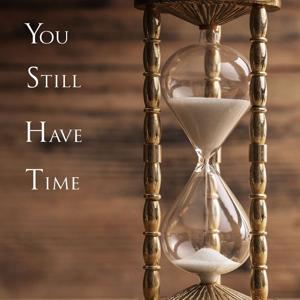
Does time seem to speed up the older you get? Hope and Harold dig into why the years feel shorter, share a few ways to slow things down, and look at how different cultures see the clock. Along the way you'll hear about hourglasses, toilet paper rolls, a tooth extraction, and a very large family cruise.
Hope and Harold want to hear from you: does time seem to go fast for you, and what do you do about it?
Episode Website: https://youstillhavetimepodcast.buzzsprout.com
Have a question or comment or want to be notified when new episodes are released
Email Us
Leave a voice message:
https://www.speakpipe.com/YouStillHaveTime
Send us Fan Mail
Hope and Harold dig into the vault to revisit a previous episode:
Go Go, Slow Go, No Go. Retirement Stages
Go-Go years — roughly retirement age through mid-70s. Best physical health, most energy, when people tackle travel and hobbies. Emotionally, this stage has its own arc: a "honeymoon period" of euphoria at not having to work, followed by an identity crisis ("who am I if I'm not defined by my job?"), then eventual readjustment.
Slow-Go years — roughly 70s to 80s. People settle into a routine and pace themselves — no rush to check off every item on the list, more deliberate scheduling (e.g., avoiding weekend crowds or school-bus traffic), and a growing awareness that overexertion has next-day consequences.
No-Go years — marked mainly by mobility issues that shape decisions about travel, transportation, and driving. Financial considerations intensify here too — worrying about whether savings will last, especially for those who spent more heavily during the go-go years.
Go to Webpage
You can also listen and follow the podcast on Apple Music
Apple Music
Spotify or
YouTube
You can also follow us on Facebook or any of the following platforms;https://pod.link/1822612487:
We would love for you to join the You Still Have Time Family.And finally remember, we may have a lot of years behind us, but You Still Have Time.Hope & Harold |
Episode Website: https://youstillhavetimepodcast.buzzsprout.com
Have a question or comment or want to be notified when new episodes are released
Email Us
Leave a voice message:
https://www.speakpipe.com/YouStillHaveTime
Send us Fan Mail
“Age Defying Friendships” explores why friendship becomes increasingly important—and sometimes increasingly difficult—as people age. Hosts Hope and Harold encourage listeners, especially adults over 60, to maintain existing connections and build new friendships across age groups rather than limiting themselves to peers of the same generation.
Episode Overview
The hosts open by noting what they describe as a growing “crisis of friendship”: fewer adults report having many close friends, some have none, and the pandemic disrupted many social networks. They acknowledge that aging can bring the loss of long-standing friends, making intentional efforts to create and sustain relationships especially meaningful.
Their central idea is that intergenerational friendships—non-family friendships with someone roughly 15–20 years older or younger—can enrich both people’s lives. Rather than seeing a generational gap as a barrier, they frame it as a source of mutual learning, encouragement, and perspective.
Main themes
A focus on men’s friendships
Harold highlights a particular challenge many men face: forming and deepening friendships outside of school, work, teams, or their spouse’s social circle. He observes that men may be taught to avoid emotional openness because vulnerability is wrongly perceived as weakness.
The conversation introduces the idea of a “spouse cushion”: a situation in which a married man’s social life depends mainly on his wife’s friendships, rather than friendships he has built independently. The hosts argue that men benefit from developing genuine, trusted relationships of their own—not just social connections created through couples’ activities.
Practical takeaway
The episode encourages listeners to treat friendship-building with the same openness they may have had as children: start conversations, reconnect with people, participate in activities, and be receptive to friendships with people outside their usual age group.
Possible starting points include:
Bottom line
Hope and Harold’s message is that friendship is a lifelong need, not something people outgrow. Age-defying friendships can reduce isolation, broaden perspective, foster resilience, and remind people that they still have something to learn—and something valuable to offer—at every stage of life.
Episode Website: https://youstillhavetimepodcast.buzzsprout.com
Have a question or comment or want to be notified when new episodes are released
Email Us
Leave a voice message:
https://www.speakpipe.com/YouStillHaveTime
Send us Fan Mail
In this episode of You Still Have Time, Hope and Harold explore travel perks and discounts that older travelers may be able to access—if they know to ask. They discuss potentially unpublished senior airfares, companion gate passes, preboarding and seating accommodations, modified TSA screening for travelers age 75 and older, and additional savings through AARP, rail, bus, and car-rental programs.
The hosts also encourage listeners to share travel tips, topic ideas, guest suggestions, and feedback.
The Senior List: https://www.theseniorlist.com/
AARP Travel Center: https://www.aarp.org/membership/benefits/travel/
Episode Website: https://youstillhavetimepodcast.buzzsprout.com
Have a question or comment or want to be notified when new episodes are released
Email Us
Leave a voice message:
https://www.speakpipe.com/YouStillHaveTime
Send us Fan Mail
Hope and Harold discuss the daily challenge many older adults face: deciding what to eat for dinner. Although cooking for one or two people may seem simpler after children leave home or retirement begins, choices are complicated by appetite changes, dietary needs, food waste concerns, cost, convenience, and the effort of shopping and cooking.
They suggest several ways to make meals easier and more affordable:
Episode Website: https://youstillhavetimepodcast.buzzsprout.com
Have a question or comment or want to be notified when new episodes are released
Email Us
Leave a voice message:
https://www.speakpipe.com/YouStillHaveTime
Send us Fan Mail
In this episode of You Still Have Time, hosts Hope and Harold have an honest, encouraging conversation about the realities of aging and the importance of staying engaged rather than giving up when faced with physical and cognitive changes. While acknowledging that aging naturally brings challenges, they emphasize that growing older is a privilege and that there are many practical steps people can take to maintain their quality of life.
Hope and Harold discuss ways to support brain health through lifelong learning, puzzles, games such as Wordle and Sudoku, reading, learning new skills, maintaining social connections, getting quality sleep, exercising regularly, managing stress, and focusing on one task at a time instead of multitasking.
The second half of the episode focuses on physical health and mobility. The hosts explain how balance, strength, and flexibility naturally decline with age but stress that these abilities can often be improved through consistent practice. They introduce several simple self-assessments, including standing on one leg to test balance, getting on and off the floor without using hands, and the sit-to-stand chair test, while emphasizing the importance of performing these exercises safely.
Throughout the episode, Hope and Harold share personal stories, humor, and practical experiences, making the discussion both informative and relatable. Their central message is one of optimism: aging may bring inevitable changes, but it does not mean surrendering independence or purpose. By staying mentally active, physically engaged, and socially connected, older adults can continue to thrive.
The episode concludes with an invitation for listeners to share their experiences, comments, and questions, reinforcing the podcast's ongoing mission to encourage, educate, and remind everyone that you still have time to live a healthy, active, and fulfilling life.
Episode Website: https://youstillhavetimepodcast.buzzsprout.com
Have a question or comment or want to be notified when new episodes are released
Email Us
Leave a voice message:
https://www.speakpipe.com/YouStillHaveTime
Send us Fan Mail
Hosts Hope and Harold are celebrating the one-year anniversary of their podcast, You Still Have Time, marking a total of 25 episodes produced during their first year.
The core focus of the show is addressing topics specifically relevant to an older demographic.
A primary theme and mission of the podcast is filling a gap they identified in the current podcast landscape, ensuring older individuals have dedicated, relevant content tailored to their experiences and needs.
Episode Website: https://youstillhavetimepodcast.buzzsprout.com
Have a question or comment or want to be notified when new episodes are released
Email Us
Leave a voice message:
https://www.speakpipe.com/YouStillHaveTime
Send us Fan Mail
In this episode, hosts Hope and Harold introduce the the different stages of retirement, cleverly labeled "Go-Go, Slow-Go, No-Go." This concept, inspired by Robert's Active Retirement YouTube channel, aims to explore the emotional and practical shifts retirees experience as they navigate their later years.
Episode Website: https://youstillhavetimepodcast.buzzsprout.com
Have a question or comment or want to be notified when new episodes are released
Email Us
Leave a voice message:
https://www.speakpipe.com/YouStillHaveTime
Send us Fan Mail
In this thoughtful and practical episode of You Still Have Time, hosts Hope and Harold tackle an important topic that many people avoid discussing: preparing for the end of life and organizing personal affairs so loved ones are not left with confusion, stress, and financial complications after a death.
Using the example of "Aunt Fanny," who passes away without leaving clear instructions, the hosts illustrate how difficult it can be for family members to locate important documents, access accounts, understand final wishes, and settle an estate. They emphasize that taking steps now is one of the greatest gifts a person can give to those they leave behind.
Throughout the episode, Hope and Harold stress that they are not legal or financial experts. Instead, they offer a wake-up call and encourage listeners to begin thinking about these issues and seek professional guidance where appropriate.
Episode Website: https://youstillhavetimepodcast.buzzsprout.com
Have a question or comment or want to be notified when new episodes are released
Email Us
Leave a voice message:
https://www.speakpipe.com/YouStillHaveTime
Send us Fan Mail
In this thought-provoking episode of You Still Have Time, hosts Hope and Harold take a closer look at the labels society uses for older adults and ask a simple but important question: Who are you calling elderly?
Drawing on personal experiences, research, and a healthy dose of humor, they explore how terms like elderly, senior citizen, older adult, and even geezer shape the way people see themselves and are perceived by others. The conversation examines age stereotypes, the impact of language on confidence and behavior, and why many people reject labels that suggest frailty or decline.
Hope and Harold also discuss how different cultures view aging, often associating it with wisdom, respect, and life experience rather than limitation. Along the way, they challenge listeners to think about how society categorizes people by age and whether those labels help or harm.
Join the discussion as they explore the power of words, the realities of growing older, and why staying active, engaged, and relevant matters at every stage of life.
Key topics include:
Episode Website: https://youstillhavetimepodcast.buzzsprout.com
Have a question or comment or want to be notified when new episodes are released
Email Us
Leave a voice message:
https://www.speakpipe.com/YouStillHaveTime
From the publisher's feed
A podcast for older adults, dedicated to meaningful topics and motivating those who believe that getting older is a chance to keep growing.