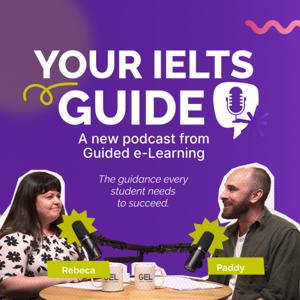
Learn IELTS Writing Task 2 with expert guidance from Paddy and Rebecca, experienced IELTS teachers at Guided E-Learning. This comprehensive guide reveals what examiners actually look for in your essays and the most common mistakes that cost students valuable band scores.🎯 WHAT YOU'LL LEARN
Discover the true purpose of IELTS Writing Task 2 and why it's not about showing off vocabulary or inventing statistics. We break down the essential skills examiners assess: expressing a clear position, organizing ideas logically, and using language effectively to communicate meaning.
📌 KEY TOPICS COVERED
- The real purpose of IELTS essays (and what they're NOT)
- Complete essay structure breakdown: introduction, body paragraphs, and conclusion
- How to write effective topic sentences and support your arguments
- Cohesion techniques: sequencers, result markers, and concession phrases
- All 5 IELTS Writing Task 2 essay types explained
- Language issues: punctuation, word class, prepositions, and verb tenses
- Synonyms and paraphrasing strategies for higher band scores
🔑 CRITICAL INSIGHTS FOR EACH ESSAY TYPE
- Problem and Solution Essays
- Discussion Essays
- Opinion Essays
- Two-Part Question Essays
- Advantages and Disadvantages Essays
Learn the specific approach for each type while maintaining the fundamental principle: express a clear position and explain it effectively.
💡 COMMON MISTAKES TO AVOID
✗ Using personal stories and anecdotes
✗ Deviating from the topic with irrelevant information
✗ Creating lists of unrelated points in one paragraph
✗ Showing off long words instead of prioritising clarity
✗ Including citations or invented statistics
✗ Writing without a clear plan🏗️ ESSAY STRUCTURE ESSENTIALS
Learn the art of writing focused body paragraphs with clear topic sentences, strong support through reasons and examples, and effective cohesion that guides your reader. Understand when to use concluding sentences and when they make your essay too formulaic.📝 Ready for your IELTS test? Register here. 🧪 Planning to take the IELTS soon? Join a free class or try a mini mock test to check your level. 00:00 – 👋 Introduction to the Video Series
00:58 – 🎯 What is the Real Purpose of an IELTS Essay?
01:40 – ✅ Criterion #1: Task Achievement
01:55 – 🗣️ Criterion #2: Coherence and Cohesion
02:51 – 📚 Criterion #3: Lexical Resource (Vocabulary)
03:17 – ⚖️ Criterion #4: Grammatical Range and Accuracy
03:42 – ❌ Why You Don't Need "PhD Level" Vocabulary
05:01 – 📊 Is it Okay to Invent Statistics and Facts?
05:58 – 💭 How to Express Opinions Correctly
06:44 – 📖 The Mistake of Using Personal Stories/Anecdotes
07:30 – 🤝 Does the Examiner Need to Agree With You?
09:20 – 🏗️ How to Structure Your Main Body Paragraphs
09:44 – 📍 The Importance of the Topic Sentence
11:10 – 💡 Supporting Your Main Idea With Examples
13:08 – 🏁 Using a Concluding Sentence Within a Paragraph
14:08 – 🛣️ Cohesion: Using Road Signs to Guide the Reader
15:07 – 🔗 Useful Transition Words (Sequencers, Results, Rephrasing)
16:18 – 🤝 How to Make a Concession in Your Argument
16:55 – ⚠️ Common Writing Mistakes and Bad Approaches
17:11 – 📉 The Danger of Irrelevance
19:50 – 🐢 Why "Lists" Instead of Development Hurt Your Score
20:53 – 👤 Handling Personal Information and Experience
22:15 – 🚀 Pro-Tip: How to Depersonalize Your Examples
24:18 – 🔡 Correcting Grammar and Punctuation
26:15 – ✏️ Tips for Improving Your Spelling
28:44 – 🔄 Paraphrasing and Using Synonyms Effectively
30:58 – 📑 Overview of the 5 IELTS Essay Types
35:34 – ✅ Final Advice and Wrap-up