
Sign up to save your podcasts
Or



The Thevenin Cipher is a new novella that sets up an immersive, real-world 17-stage analog game where readers solve ciphers, find clues, and step directly into the lore-based story. It links a nostalgic past with today’s need to ditch the screen and escape into the physical world. The past is the puzzle, the story is the key, the adventure is analog.
FROM THE COVER:
West Virginia, 1993. For college student Jimmy Thevenin, the past is about to become dangerously real. A mysterious attorney delivers a bequest from an estranged great-uncle: a chaotic archive of ciphers, maps, and riddles dating back to the American Revolution. The challenge? Retrace the steps of ancestor Henri Thevenin to uncover a truth hidden on the frontier for over two centuries.
Enlisting his brilliant friend Maggie, Jimmy dives into the hunt. But when the “attorney” vanishes without a trace, the game turns ominous. Armed with cryptic clues and 18th-century secrets, Jimmy must decode his family’s legacy before the past catches up with him.
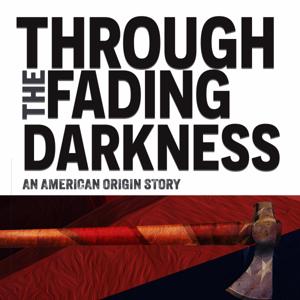
Enjoy this sneak peek of the acclaimed novel, Through the Fading Darkness on audiobook. Performed by accomplished voice actor, Scott Fleming, this sample will transport you back to the Virginia frontier just before the American Revolution.
Enjoy the full audiobook on Amazon and Audible today.
Through the Fading Darkness on Audible
From the Back Cover
American settlers face a series of brutal reprisals after outlaws murder a group of Shawnee Indians on the Virginia frontier in 1774. During the calamitous events that follow, British colonists, Shawnee warriors, a young slave girl, and an Irish indentured servant must find a way to survive a bloody war that threatens to destroy their entire way of life. Some discover an inner strength they did not think possible. Others sink to the deepest recesses of their humanity. In the end, no one is left unchanged.Based on actual events described in previously unpublished 18th century family records, Through the Fading Darkness captures the hope and tragedy of life on the frontier just before the American Revolution. Told through the eyes of John Dickinson, Chief Cornstalk, Lydia Townsend, Sylvie, Chief Logan, and dozens of traders, immigrants, and frontiersmen, Through the Fading Darkness is a true-to-life adventure story about the sacrifices people make to live free.
This is one of the most amazing audiobook performances you will ever hear. Seriously, it’s stunning. I wasn’t going to post another sneak peek of Beyond the Fading Darkness this week, but after listening to the latest batch of audio today, I couldn’t wait.
When I wrote this chapter, I was concerned that it would be next to impossible for a narrator to read aloud. The dialogue is a mixture of English, German, and French, and the scene is very, very violent. But Scott Fleming absolutely nails all three languages as he brings this disturbing scene from Beyond the Fading Darkness to life.
Get Beyond the Fading Darkness on Audible
The story of the Red Hawk, a Shawnee law-giver, is one the most compelling, tragic, and mesmerizing of the entire book. He is a good man trying to do the right thing in a terrible world. In this chapter, he stumbles upon a destroyed settlement in the Tygart Valley of Western Virginia in 1775. The story is based on actual events from that period and captures the complete and utter brutality of life on the frontier in Colonial America.
If you want to read how things turn out for Red Hawk, Chief Logan, and Nonhelema, Beyond the Fading Darkness is available today in paperback, hardcover, and Kindle. The audiobook that this chapter is taken from will be out this summer.
I also highly suggest you either listen to or read the first book in the series, Through the Fading Darkness. It will help round out the characters and transport you back to the American Frontier just before the American Revolution begins.
George Watson was an ordinary man who led a simple life. He was twenty-eight years old and had a lovely wife named Doris. Shortly after they were married, they adopted a dog and, given their affinity for American Literature, named him Bark Twain. George, Doris, and Bark lived in the suburbs in a little white house on Sawyer Lane. They attended St. John’s Methodist Church on Sundays. Bark remained at home.
Like Doris, George was educated but had trouble finding a suitable career. After several attempts at various jobs, George discovered he was naturally good at three things. He could write, he could see the tiniest flaws in works of art, and he could shoot. He discussed these skills with Doris over a dinner of pork chops, peas, and rice. They concluded there was no future in critiquing art or shooting. As such, he decided to build a career writing novels, memoirs, and news features for the local printed press.
He began submitting short articles to his local paper, The Morgan Messenger, in Berkeley Springs. The editor, Mr. Reginald Herrington, III, immediately recognized George’s talent and gave him regular work covering politics and business happenings around town. Impressed by George’s dedication and precision, Herrington offered him a full-time position for the respectable sum of $11.48 an hour. Doris and Bark were elated.
What’s next for George and Doris Watson? Don’t miss a chapter of their everyday American journey—subscribe for free updates..
It goes without saying that being a salaried newspaperman for The Morgan Messenger opened many doors to important men and women. This led to bigger opportunities beyond Berkeley Springs. Soon, George was doing freelance assignments for a variety of noteworthy newspapers and magazines in the nearby metropolis. In that capacity, he was able to interview senators, members of Congress, presidential candidates, and even generals from the Pentagon. Completing these assignments required him to travel more than he preferred, but Doris and Bark understood.
Over time, the manner of his work and frequent absences became the topic of conversation amongst neighbors on Sawyer Lane. Nefarious rumors circulated that George Watson was possibly engaged in deceitful practices. Some even accused him of being a spy for some unnamed government agency. He denied it, of course, and pointed to his many articles and disquisitions published by reputable newspapers as proof of his actual profession. But the worst of the rumormongers countered that denying he was a spy was exactly what a spy would do. Understanding George’s dilemma, Doris told him to let people believe what they wanted and continue with his writing. Bark Twain was indifferent.
Several months later, while working on a story about a particularly hideous murder of a political staffer in a downtown park, he interviewed three public servants in the same day and was shocked when they all used different combinations of the same words when answering his questions. The fact that they were all members of the same political faction did not escape George’s attention. He considered digging deeper, but a deadline loomed, and being the professional he was, George filed his copy to Reginald Herrington over the wires and boarded the evening train for the ride back to Berkley Springs.
Lying in bed that night, with Doris snuggled next to him and Bark lying comfortably in his bed beneath the window, George thought about the three officials he interviewed for the story. Their common responses to different questions nettled him. He was not naive enough to believe that extraordinary people in powerful positions would never lie, especially about murder, but the fact that three people had apparently coordinated a response to a criminal act told him that there was certainly more to the story. He decided to ask Mr. Herrington for permission to investigate the matter further. He approved.
After several months of fruitless inquiries, George became disillusioned. He conducted dozens of interviews with important people in the metropolis and could only come to one conclusion: most of them were corrupt. Unfortunately, he could find no direct proof confirming his suspicions that Reginald Herrington was willing to print. This vexed him to no end, but being the hard working, ordinary man he was, George accepted Herrington’s decision and continued his daily duties as a salaried newspaperman for The Morgan Messenger. But his enthusiasm for his work was irreparably damaged.
In late October of 1975, he sat down with Doris over a dinner of pork chops, rice, and peas, and together they decided it would be okay if he took a break from his full-time newspaper work and focused instead on writing his novel. Doris’ compensation as a Chartered Certified Accountant provided adequate income, and George assured her that Reginald Herrington, III would give him an occasional local assignment to help make ends meet. Doris agreed. That night, a reinvigorated George lovingly celebrated with Doris as only husbands and wives do.
Two weeks later, excited to begin his new chapter, both literally and figuratively, he stopped taking the train into Union Station in the metropolis and began work on his novel. He was content. Then, one fateful day in December, a knock on his door by a mysterious man set him on an unexpected path that would change George Watson’s life forever.
There’s More to the Story…
Dive into the continuing story of George and Doris Watson! Subscribe for free to keep up with the latest from their ordinary American lives.
They decided to continue south into the Utah desert when they were eating at a little roadside diner in Pocatello. The drive from Idaho to Moab took seven hours, and by the time the three vans pulled into the parking area of Canyonland’s Upheaval Dome trailhead, it was four o’clock in the afternoon. It was still hot, but the highest temperatures were fading, and the sun painted everything in a perpetual golden hour glow that accentuated the red and orange rocks.
Ryan was expecting a crowd but was relieved to find only four other cars in the parking lot, “Okay everyone, grab your packs and make sure you have snacks and both your water bottles,” he said, as the other vans’ passengers climbed out and gathered behind his vehicle.
Denise stepped forward and addressed the gaggle of fidgety students, “So, in the last twenty-four hours we’ve gone from hiking in mountains with snow on the ground in July, to this desert where even this late in the afternoon, it’s still over 105 degrees. Make sure you drink water and keep an eye on each other. If anyone starts to feel woozy or stops sweating let one of the adults know immediately. Try to drink at least one bottle of water before we leave out of here. There are snakes in the area, and a few poisonous insects. I doubt you’ll see any, but if you do, just step away and leave them alone. Stay away from the ledges. We don’t want anyone plunging over a cliff. A picture on social media isn’t worth your life, so don’t be stupid.”
Ryan looked to make sure the twenty-students were nodding their head, “Okay, as far as the chaperones go, Jason and Denise will bring up the rear, I’ll be in front with Phil. Kim and Heather will be in the middle. The trail is short, and we’ll be back before it gets dark, but you’ll see one of the most amazing overlooks in the entire state of Utah, so start drinking that bottle of water and let’s get going.”
The trail they took ran along the top of a massive bowl that was created by erosion and the impact of a large meteorite. Most of the trail was marked with cairns placed along the rock face that were connected by sandy patches of soil tucked between boulders where pinyon pine and juniper trees crowded together in short, dense clumps. The bright sun glowed through broken white clouds and highlighted the division between stone and earth. Shadows from the clouds dotted the cliffs and accentuated a large, white salt dome in the center of the crater several miles wide. Ryan briefly thought about telling the kids all of this, but he was sure none of them would care.
The hike to the overlook was uneventful and took a little over an hour. After posing for photos, the group started back to the parking area. They had walked less than a mile when they came to a small ravine where a man and woman stood, peering over the edge. Watching Ryan and the group approach, the man came up holding his cell phone.
“Do you have a cell signal mate? We need to make a call?” he asked in a heavy Australian accent.
Pulling his phone from his pocket, Ryan checked, “No, I’m sorry, the cell service out here stinks.”
“We just saw an old bloke stumble into the bushes in that ravine. He was saying something in French. We couldn’t make it out. I think he’s in trouble.”
Ryan and Phil walked over to the edge and listened for any movement but couldn’t hear anything, “How long ago did you see him?”
“Just a minute. He was stumblin’ round like he was lost or sumthin’.”
Ryan had spent time in the Army and understood how to navigate and survive in the desert. Jason flew helicopters in the Marines and had experience working with fire and rescue in the civilian world. His wife, Denise, was a nurse and worked in an emergency room back home. The decision to help find the old man was immediate.
But their priority was to make sure the students were safe. He looked at the other chaperones, “Phil, would you, Kim, and Heather care to take the kids back to the parking area while Jason, Denise, and I stay here to help search for the old man for a few minutes?”
“Not a problem,” Phil answered. “We’ll try to contact the rangers. Do you want me to leave Trent here? He’s experienced in the outdoors and big enough to help carry someone if it comes to that.”
Looking at Phil’s son, Ryan agreed. Trent was a good kid and looked like he could handle himself, “Okay, Trent stays with me. You, Kim, and Heather take everyone else back to the parking lot and wait there. Contact the park rangers and let them know what’s going on. Hopefully, they’ll send help.”
As the rest of the group headed back, Ryan walked over to where Denise and Jason stood alone, scanning the ravine, “Where’s the Australian guy?”
Jason looked back at the trail, “He said he was going to go find some help. Kinda weird how he just took off.”
“We could have used him. How do you think we should go about this with just the four of us?”
“Denise and I will move up here to our left and start working our way down to the bottom of the ravine to the right, you two stay here and guide us.”
Something moved in the bushes below them. A man with thick white hair, wearing a blue t-shirt, cargo shorts, and running shoes came stumbling out of the junipers and fell to the ground. They ran to him and rolled him over. Feeling his forehead and cheeks, Denise spoke to him in the same way she had countless others in the emergency room, “Hey there. How are you feeling? You’re lookin’ a little rough.”
“Lina, Lina, at bottom. Lina at the bottom,” the old man said in a heavy French accent.
“Lina is at the bottom?” Denise asked in a loud voice, “Who is Lina?”
“Yes, yes. My wife, Lina.”
“What is your name?”
Struggling to sit up he looked around as if he was just realizing where he was, “I am Arthur,” he answered after gulping down water from a canteen that Jason handed him, “Lina is at the bottom.”
Ryan and Jason looked at each other and walked over to the edge of the ravine, “She’s down there?” Ryan asked Arthur.
“At the bottom!”
Looking back and forth between Jason and Ryan, Denise stood above Arthur as he continued to drink, “He’s dehydrated and may be in mild shock. Do you think his wife is down there?”
“That’s what the man says,” Jason said as he scanned the sky and looked at his watch, “We need to go look before it starts to get dark. If she is hurt or something, she could develop hypothermia when the sun goes down.” Leaving Arthur with Ryan and Trent, Jason and Denise began sidestepping down into the ravine.
Pointing to a small pine near the trail, Ryan held Arthur’s right arm and started lifting him up, “Trent, help me move Arthur over to the shade.”
The old man was able to move mostly without assistance. The water was helping, but his skin was still clammy and pale. Ryan gave Arthur his last bottle of water and looked out across the desert. Dark storm clouds were forming in the distance but were still far enough away it was possible they would blow in a different direction. But the thought of being trapped on a bare rockface with a weakened old man and a sixteen-year-old kid in the middle of a lightning storm caused him to reconsider the current plan. Walking over to the ravine he shouted down to Jason.
“Jason, it looks like there might be a storm coming. We should probably get off this cliff.”
Jason stepped out from behind a juniper and Ryan could see him clearly about fifty feet below. “The trees and bushes down here are thick. There’s only so many places she could be. There’s no sign of her. We’re going to climb up the other side and walk down the opposite trail a bit.”
“Okay, hang on. I’ll tell Trent to take Arthur back to the parking area and I’ll go with you guys.”
Ryan walked back to where Trent was standing over Arthur, “Arthur, can you walk?”
Arthur shook his head and muttered his wife’s name, “Lina, Lina.”
Kneeling and making eye contact with the grieving man, Ryan pointed to the storm clouds in the distance, “Arthur, look at me. My friends and I are going to find Lina, but you see those black clouds out there? That’s a storm that could blow on top of us in just a few minutes. We can’t be sitting on a giant rock at the top of a canyon with no cover when that gets here. It’s not safe. Do you understand?”
Arthur nodded his head, “Lina.”
“Yes, my friends and I will look for Lina, but I need you to go with Trent. He will take you back to the parking area, okay?” Glancing at Trent and then back to Ryan, Arthur nodded.
Ryan helped him stand and looked at Trent, “So you know the way, right? It’s less than half a mile from here. Just follow the same path we took on our way out.”
Trent’s look was concerning but he agreed, “Yeah, I can do it.” He took Arthur by the arm and started walking up the rockface to a cairn that marked the trail. Ryan watched as Trent looked to his right and left, took one step back toward the overlook, paused, turned around, and then walked in the opposite direction before pausing again.
“Trent,” Ryan called out, “You have no idea how to get back, right?”
“No, sir,” Trent said, somewhat relieved his secret was so plainly obvious.
“Stay there.”
Ryan went back to the ravine. Jason and Denise had climbed out and were standing next to another trail on the far side, “Jason, change of plans. I’m going to take Arthur and Trent back to the parking area. I’ll grab more water and meet you two where you’re standing in one hour. If I’m not back by then, meet us back to the parking area before it gets dark.”
“Roger,” Jason shouted.
Ryan took the lead and started back. He could hear Arthur breathing heavily and every few steps, checked to make sure the old man and Trent were keeping up. They stopped a couple times to let Arthur catch his breath but made it back to the vehicles in less than twenty minutes. Without saying a word, Arthur walked to his car, collapsed into the driver’s seat, started the ignition, and cranked the air conditioner. Ryan thought it was odd that he didn’t check his phone or even ask what he could do to help find his wife.
Phil, Kim, and the students were huddled in a shelter by the vehicles, playing a game. Heather walked over to the van where Ryan was fumbling for his keys.
“I see you found the guy. What’s going on?” she asked as he opened the back door, pulled a water bottle out and started gulping it down.
“He says he left his wife at the bottom of the ravine.”
“What?”
“I know, right? Jason and Denise are out there looking for her now. It looked like there might be a storm blowing in and I thought it would be best to get Arthur and Trent back here. I need to collect as many full water bottles as I can and go back to help them. Did anyone contact the rangers?”
“We still don’t have cell service. Phil and Kim drove down to the nearest station, but there was no one there. The Australian man and woman said they’d go to the park headquarters.”
“Park headquarters is forty-five minutes away. So that’s an hour-and-a- half travel time to go there and get back. You must figure it will take the rangers at least twenty to thirty minutes to pull together a response team,” doing the quick math in his head, “that means it’ll be at least nine or nine-thirty before they get out here. We are going keep looking for the wife while it’s still light outside. The rangers may not get here until after sunset, and there’s no one else around to help. We can’t just leave her out there.”
“What about him?” Heather asked pointing to Arthur, “Is he going to be okay?”
“I think so.”
“Did he say anything more about what happened?”
“No, he just kept saying his wife is at the bottom.”
Heather watched Arthur as he sat motionless in his car with his eyes closed, “Are you just going to leave him here?”
“He’s in no shape to go back out there. Why?”
Heather stepped a little closer and spoke in a whisper, “What if he murdered his wife and left her in the desert? Do you think it’s a great idea to leave him here with us and a bunch of kids?”
Ryan looked around to make sure no one was watching, went up to the driver’s door, reached under the front seat, and pulled out a Glock 19 handgun. Checking to make sure it was loaded, he handed the weapon to Heather, “If he gives you any problem, either hold him a gunpoint until the rangers get here or shoot him.”
Heather took the gun and tucked it between her waistband and the small of her back, “Okay.” The issue was settled.
Ryan filled his pack with close to a gallon of water bottles and set off back down the trail to where Jason and Denise were supposed to be waiting. It was seven o’clock and the shadows were starting to extend further and further from the trees and cliff walls. The first part of the trail was the same one they had used going out and back from the overlook. But a short distance in, it forked, and one path went to the left of the ravine. He had never been on this trail, but he was hoping that it would lead him to Jason and Denise.
His mind was moving quickly, running through different scenarios, but his thoughts were not racing or imprecise. There was something about doing things of importance that have significance to other human beings that propelled him, aware that he was playing a role in a larger drama that might end in tragedy. This filled his mind with a certain sense of self-importance that, after thinking about it as he walked, conflicted with the moral purpose of trying to save Lina.
“Is it wrong of me to be enjoying this?” he thought, too embarrassed to say the words out loud, even when he was alone. “Because I do. I haven’t felt this alive in years, and it’s all because this woman is having what might just be the worst day of her life. And I’m enjoying it!”
Jason and Denise were waiting at the same spot on the far side of the ravine where he had left them. He handed them bottles of water from his pack and looked up to see where the sun was in the sky.
“Did you find anything?”
“Nothing, there is absolutely no sign of her. I don’t think she’s down there. Did you guys make it back to the parking area okay?”
“Yes, we had to stop a couple times to let him catch his breath, but he was fine. He was sitting in his car when I left. Let’s look little further down the trail to see if we can find anything.”
The three moved down the sandy path that curved around the base of a large wall and led to two giant boulders that had fallen together to form a narrow passageway. Removing their packs and carrying them by their sides, they slid through the narrows and emerged on the edge of a precipice that dropped beyond sight. The trail, shorn from the rocks on the side of the cliff wall, formed six switchbacks before leveling off. It was then that the truth dawned on them.
“Arthur wasn’t talking about the bottom of the ravine,” Ryan said, “He was talking about the bottom of the canyon.”
“Oh s--t. So, what do you want to do?” Jason asked, “There’s no way we can make it to the valley floor, look for the woman, and be back before dark. We don’t want to get stuck out here ourselves.”
Ryan checked his watch, “It’s seven thirty,” as he pulled his phone from his pocket to check for a signal, “maybe we should try to get a hold of 911 again?”
The three of them each looked at their phones and Jason held his up above his head, “It looks like I have one bar. Maybe I can text 911?” he said tapping away at his phone. A moment later, he received a response. “Woah, it worked! What do you want to tell them?”
“Tell them where we are, and that we’re going down into the canyon along the trail a little ways. Denise and I will go. You stay here at the top and maintain communication with them. We’ll shout updates up to you if we find any sign of Lina.”
“Don’t go too far. I’m serious man, we don’t want to get stranded or lost out here and become part of the problem.”
“We’ll climb down for about twenty minutes and then turn around. Now that we know the way, making it back to the parking area from up here in the dark won’t be a problem. It’s well marked, and I think we’ll have a full moon.”
Denise, followed by Ryan, carefully began working her way down the switchbacks. The first two-hundred yards were the most treacherous, where a trip could result in a deadly fall. But after ten minutes of careful steps, they reached a relatively flat spur that extended further down into the gorge at an easier slope. Ryan turned and shouted up the trail, listening to his voice echo against the rock wall behind him, “Jason, can you hear me!”
“Yes!”
“We’ve reached a flatter section that will make the going a little easier. Denise will stay here and relay messages up to you.”
“Okay, It’s going to be dark soon.”
Ignoring Jason’s second warning in fifteen minutes, Ryan checked his watch and looked at Denise, “I’m going to keep walking for another twenty minutes. I’ll give a shout every five to let you know I’m okay. If I’m not back in twenty, or if you don’t hear from me, climb back up to Jason and go back to the parking area. Sound like a plan?”
“It sounds like a plan but not a very good one. You shouldn’t even be thinking about staying out here after dark. You saw how steep that first section was. If you take one wrong step, you’ll probably die.”
I’m going whether you two like it or not. “I understand. I just need to find this woman. If it looks hopeless, I’ll call it off and we’ll climb out together. Agreed?”
“Okay. Be careful Ryan. Remember, don’t become part of the problem.”
Ryan nodded and started making his way down, stepping around large rocks that dotted the way, thankful the switchbacks were gone. Every fifty steps, he would stop and call out Lina’s name, but the only response was an echo reverberating throughout the canyon. Ten minutes later, he arrived at what he thought he was at the bottom, but it was just an extended plateau and there was still no response to his calls for Lina. Where are you woman? Where did you go?
The sun was beginning to turn the upper reaches of the cliff walls to bright orange as it dropped deeper in the western sky. With each step, Ryan became enclosed in a greyish light, but could still see a hundred yards in every direction. Turning around, he called out, “Denise, I’m going to keep looking. I’ll meet you and Jason at the top of the cliff, okay?” There was no response, but he kept going anyway. Lina had become his mission, and he was determined to find her, no matter the risks.
He continued his descent into the increasing darkness and came to another large drop off. Crawling on his hands and knees to the edge, he looked down and saw he was still at least eight-hundred feet from the floor of the gorge. D--- it, I thought I was close!
Sliding back from the ledge, he pulled his pack off, sat down on a flat rock and drank some water. He was now more than one-thousand feet below the canyon rim and the intensity of the sun on the highest walls was other-worldly. The rockface where they first encountered Arthur was glowing bright orange now, absorbing the brilliance of the sun. A line of unbroken shadows ran flat across the entire length of the canyon wall, making everything below subdued. The farther down he went, the darker everything became.
Stuffing the water bottle into his pack and slinging it across his back, Ryan stood and resumed his search. He soon reached a small patch of boulders, where he had to balance carefully while hopping from stone to stone. It was more difficult than it should have been. The stress and physical exertion of the day had taken hold and as he made the last jump, Ryan felt himself slip and fall sideways. He heard his head strike a sharp rock and felt something warm begin to stream down his face before everything went black. Oh my God, what… have… I….
When his eyes slowly came open, he did not move. The warmth of the orange cliff walls was gone, replaced by a cold bluish glow that gave everything an eerie luminescence. At first, he did not know where he was but realized that he had been lying there long enough for night to come. When most of the blurriness faded, he sat up and a surge of pain washed over him from every part of his body. Lifting his left arm to feel his throbbing head, he experienced a searing agony unlike anything he had felt before. His forearm was no longer strait and had assumed a grotesque inward angle, the shattered bones protruding through the skin about three inches above his wrist. Struggling to maintain consciousness, bile surged into his mouth and without even trying to roll away, he vomited into his lap.
Blood was still streaming from the left side of his head above the ear, but much of it had congealed into a gooey mass in his hair. Still trying to clear his head, he sat there for a moment gathering his thoughts. Use the IFAK in my bag. I gotta stop the bleeding.
Using his good arm, he unbuckled the quick release on the left shoulder strap of his pack and slung the bag to his right where he could get inside. Every movement made the pain worse. He pulled the individual first aid kit out, held it up to his mouth, unzipped it with his teeth, and removed a small green package that contained an Israeli bandage. Struggling with his one good hand and his teeth, he was able to loop the cloth through the tension clip and slide it over his head, placing the large gauze pad over the wound. Pulling it tight, he wrapped the rest of the fabric around his head several times and secured it with the Velcro at the end. Everything held in place, he appreciated the success and leaned back to rest for a moment. Little steps. Survival requires little steps.
He removed another bandage and a sling out of the IFAK and applied it to his forearm but did not pull the bandage tight. When he lifted his left arm to slide the sling underneath, Ryan thought he was going to pass out from the pain and leaned back against the rock and exhaled several times. After two more tries, he was able to get his arm into the pocket and raise the strap over his head to properly hold the injured arm in place, repositioning the bandage inside the pocket to properly cover the protruding bone. Satisfied with what he was able to accomplish, he took a drink of water and exhaled. I’m okay. I’m okay.
He pulled his phone from his pocket and for the first time, realized that he had been unconscious for close to an hour. There was still no cell service, and he began fighting against the emotions that were trying to force their way out. How did I get myself into this? Idiot! What were you thinking? I’m going to die out here. I’m going to die in the depths of this desert canyon trying to save a woman I don’t even know. What a waste! What a waste!
Everything about where he now existed, especially the complete and utter silence, created a place where he could not escape his thoughts, and as the moon rose higher a deep sense of humiliation welled in him. He was now in the same situation as Lina. He was now part of a problem that others must solve. Anyone who came upon him would look at him with shock and pity after seeing the poorly applied bandages, dried blood, bile stains, and layer of dirt and sweat covering his body. They would see him as a pathetic and weak fool, humbled and shamed by his own stupidity. The only way to avoid that was to continue; to find Lina and be seen as her wounded savior.
Ryan tried to stand, but the nausea and dizziness forced him to sit again. Pulling the next to last bottle of water from his bag, he drank and sat for another thirty-minutes. He took two deep breaths and pushed himself to his feet. Taking small, unsteady steps, he continued his decent into the darkness below.
Other than a few sections where the steepness forced him to steady himself with his good arm, the trail itself posed no further challenges. With each step, his mindset improved, and it became easier to work through the dizziness and pain. In the military, he learned just how far he could push himself and had known people who had been shot multiple times, suffered terrible injuries much worse than his, and continued to fight. Some even walked themselves to the medevac helicopter afterwards. A broken arm and a bump on the head would not keep him from reaching the bottom.
After another hour, he finally discovered the level ground of the canyon floor. The moon had risen near its apex and provided more than enough light to see except for the areas closest to the walls. In a weakened, dry voice that was barely strong enough to create an echo he called out, “Lina? Lina are you out there?” There was no response. The canyon dead-ended immediately to his left, so he went right for what seemed like a long time before he came to her.
Dressed in a bright green t-shirt, shorts, and running shoes, she sat motionless with her back against a small rock, slumped forward, her head hanging unsupported, chin against her chest. Ryan moved to her as quickly as he could and fell to his knees beside her, “Lina? Lina? Can you hear me?”, but she didn’t move. Using his good hand, he gently raised her head until it flopped backwards, the moon reflecting in her vacant, lifeless eyes, locked open and searching in death.
* * * * *
The compact blue rental car pulled into the busy parking lot around eight o’clock in the morning. Arthur and Lina looked at the trail map they had picked up at the park headquarters and considered their options.
“Which trail should we take, my love?” Lina asked.
“Not sure. The overlook?”
“That’s too short? I’d like to do something with a little more distance. We’ve been driving for hours.”
“How far do you want to go?”
“Here’s a trail that’s about eight miles. It’s a loop that starts here, goes around the base of the dome, and up the canyon. I bet we can do it in four or five hours.”
“This is the desert honey. It’s hot.”
“I know, but we will probably never see any place like this again, certainly not in France.”
“I’m not sure we have enough water.”
“There’s a machine right over there. We’ll buy a couple bottles. That should be fine.”
“Okay, darling.”
It was their first time in Canyonlands, and they came looking to experience the American West just like the cowboys of old. They had flown into Salt Lake City the day before and, eager to get started, driven to Moab that morning. Arthur was a fan of the western movie classics, and this place looked like something out of a favorite John Ford movie. It was perfect.
He and Lina were both accountants who worked in the same office building in Leon, France. They met each other late in life and took-up hiking five years before to spend time together away from the city. The trails in the high mountains of the French Pyrenees were a favorite. Once they crossed over into Spain to visit the amazing Bardenas Reales for a day. It was that visit that inspired their trip to the United States.
Two twenty-ounce bottles of water fell down the hollows of the machine and bounced in the dispenser below. Lacking a backpack or shoulder bag, Arthur stuck both in the cargo pockets of his shorts while Lina looked at the trail map to get her bearings.
“Have you chosen the way dear? Arthur asked as he watched her rotate the simple, hand-drawn document that was neither accurate nor to scale.
“I believe if we move up this trail here, and keep to our right, it will take us down to the bottom of the gorge. Once we’re there, a single trail will take us around the dome. It’s called the Syncline Loop. There’s no way we can get lost.”
“You always know the way,” he said and gave her a peck on her cheek.
The trail followed the canyon rim for close to three miles and was deceptively easy. Leaving their hats in the car, without noticing, the heat and bright midday sun started turning their foreheads and faces pink. Both were sweating profusely but did not notice as the dry air wicked it away, leaving white salt stains on their shirts. Enjoying the moment, they stopped from time to time and took in the view, drinking out of the first bottle of water with little concern.
As they continued on, the decent was much more difficult than anticipated, and they lost the trail several times. Nearly two more hours passed before they reached the canyon floor. Lina pulled the map from her pocket and looked around, trying to find their exact location. They had finished the first bottle of water several hours before and took turns taking regular drinks from the second.
“I think we are about here,” Lina said, pointing to featureless spot on the map.
Having always relied on her for navigation, Arthur leaned over to see, not really knowing what to look for, “How far do you think we have gone?”
“According to the distances on this, it looks like we have about three miles more to go.”
“This is taking a lot longer than what we thought.”
“Yes, but we are well past halfway. The shortest distance back is forward.”
Looking at the now half-empty bottle of water they had left, Arthur was concerned but did not say anything, “Okay dear, lead on.”
The path through the canyon was even more difficult and confusing to follow. Several times, Lina mistook dry creek beds for the trail, taking them through meandering detours that required backtracking and long searches for the correct way. In one instance, they walked more than a mile in the wrong direction before coming to a dead end. By the time they found their way back to the trail it was almost three o’clock in the afternoon and the water was completely gone.
They walked on, silently, feet dragging and stumbling over small rocks and dips in the trail. Lina had stopped sweating hours before, and even with the sunburn, Arthur saw that her face was starting to turn pale. When they arrived at the base of a cliff where the trail ascended out of sight, Lina stood perfectly still, staring up at the wall. Taking a labored step forward, her legs wobbled, and she collapsed to the ground.
Arthur came and leaned her against a nearby rock, tossing several stones away so she could sit more comfortably, “How much further do you think we have?”
Barely able to speak, Lina pointed up the cliff, “I don’t know dear. It’s that way.”
Arthur looked up the canyon wall and held Lina’s clammy hand in his, “We must keep going. We must be close.”
“I can’t darling. I can’t move my legs. But I’ll be better soon. I just need to rest.” Her voice quivering and weak.
Arthur felt her forehead and touched her wrist. Her heart was racing, “Okay darling. If you think it’s not much farther, maybe I should go find help?”
“No, please don’t leave me here alone. I can’t be here by myself.”
“I must get you help. I think you are having a heat stroke. We have no water, and you look very weak. I’m scared for you.”
“I don’t care. I will be better soon. I just need to rest for a moment,” she said as her eyes began to glaze over, vacant and confused. “Please don’t leave me. Please don’t leave. It always snows here in June. What about the dogs? Please don’t leave.”
Arthur looked at her and slowly shook his head. She was hallucinating. Tears came to his eyes, and he gripped her hand tightly, “Look, my love, I must get you help. I am going to run up this hill and find someone who can save you. I’ll be back shortly. I promise, love. I promise.”
A panic washed over Lina’s face unlike anything Arthur had even seen, and the unbridled fear gave power to her voice, “Don’t you leave me! Don’t leave me!” she sobbed, “If you love me at all, you will not leave me here!”
Arthur held her one hand with both of his and kissed it, pressing it forcefully against his lips, “I will be back, I promise.” He rose and started up the trail, walking slowly at first, second guessing as Lina screamed at him.
“Don’t! Don’t! Please! Please Arthur, don’t leave me here! Please!”
The echoes of her screams continued for several minutes as he climbed the cliff, but eventually fell silent. The sound of her crying never left Author’s mind until he came to a ravine at the top of the cliff and heard someone talking above.
* * * * *
Ryan sat next to her for a time, silent. His arm was throbbing, and small droplets of blood seeped from beneath the bandage on his head. Reaching up, he pressed it against the wound and felt blood run down his face like water from a saturated washcloth. For a second time, he thought about the possibility of dying. Reaching into his pack, he grabbed the last of his water and drank it down. More time passed, and despite his best effort to stay awake, he succumbed to the exhaustion and blood loss, his eyes drifting shut as he looked out at the moonlit landscape.
More time passed. It was the brightness of the headlights that woke him. The side-by-side all-terrain vehicle stopped a few feet away and he saw three shadows climb out and run towards him. One of them tilted his head to his shoulder and spoke into a microphone fixed on the shoulder of his vest.
“Yes, we found them. Have the helicopter standby, we’re going to need a medevac.”
* * * * *
The park rangers and local sheriff arrived just after dark, and the noises from their radios chaotically betrayed what was otherwise a calm and organized scene. A tall sheriff’s deputy wearing a cowboy hat and boots came to get a statement from Arthur. He told him everything as it happened, except for when Lina pleaded with him to not leave her alone to die in that terrible place. After the deputy nodded his head in acceptance of Arthur’s facts, feeling much older than he had that morning, Arthur went to his car and sat with the air conditioner blowing in his face, trying to erase Lina’s screams from his memory. He watched the helicopter fly over the parking lot and disappear into the blackness, and even though he did not fully understand all the English words coming over the police radios across the way, he could tell by the looks on the faces of the men they had found his beloved wife.
Henry quickly removed his hands from the bottle, stretching his palms wide like a magician revealing the results of a trick. He leaned back in the grey metal chair next to a grey metal table, in the beige colored room, with the grey tiled floors and admired his work for a moment. It was a fine model, well worth the time he’d spent.
He reached for the smoldering cigarette in the metal ashtray and took a deep draw, savoring the taste for a moment, blowing it against the downward draft created by the ceiling fan. Three hundred forty-five seconds. I’ve been sitting here for three hundred forty-five seconds.
Zac Northup's Books | Stories | Films is a reader-supported publication. To receive new posts and sneak peeks of new stories and novels, consider becoming a free or paid subscriber.
The longer he sat at the table staring at the little ship in the clear glass bottle, the more the noises around him penetrated his imagination. He was no longer somewhere else. He was no longer on the Ghost, sailing with Wolf Larsen and Hump Van Weyden across the Pacific. He was stranded between the walls of activity room number three in Good Samaritan Hospital on South Limestone Avenue. As the voices grew louder, he recognized the same conversations he had heard so many times before.
He took another draw on his cigarette, closed his eyes, laid his head on the back of the chair, and blew the smoke toward the ceiling as he spoke to no one in particular, “Please Lucas, for the love of all that’s good, get me out of here?”
“Who is Lucas, Henry?” a small man wearing a knee-length blue hospital gown asked as he dragged a metal chair over to the table.
“Nobody,” Henry responded without lifting his head from the back of the chair.
“Nobody? He has to be somebody?”
“He’s none of your business, that’s who he is.”
“Your business isn’t a who, Henry. That doesn’t make sense. Lucas is a name. A person’s name, right? Unless he’s a dog… or a cat, or a mouse. Is he a dog, a cat, or a mouse?”
“No Andy, he’s not a dog, a cat, or a mouse.”
“Well, who is he? Can’t you tell me? Why won’t you tell me? I can handle it, Henry, I know I can.”
“You can handle it? What does that even mean?”
“Doc says I have trouble handling things sometimes. That’s why I get hurt. But I know I can handle it. At least I think I can. He didn’t kill anyone, did he? He’s not an axe murderer or anything like that, is he? If he is, maybe Doc is right, I may not be able to handle that.”
Lifting his head from its resting place to consider the person before him, Henry thought about his answer, not because the question required any thought, but because the conversation was worthless and answering Andy only encouraged him. But at least it was something that approached normalcy; two people, sitting at a table, talking about normal things. Well, almost normal. Twenty seconds.
The cigarette still in his mouth, squinting as the smoke irritated his eye, Henry spoke slowly and deliberately, “No, he didn’t kill anyone, you lunatic.”
“Well, who is he? Please, please tell me.”
“If I tell you, will you shut up? If I tell you, will you leave me alone? If I tell you, will you get out of my hair?”
Too caught-up in the in the mystery he was weaving in his mind, Andy ignored Henry’s questions and continued his investigation, “What color is his hair? Does he speak German? What color pants is he wearing? Is he one of those friends the others talk to when they’re off in the corners by themselves?”
“No, Andy, no! No to everything. He’s just my brother. My brother! Do you understand? He’s my brother!”
Andy looked around the room with a vacant, deflated, expression, “Your brother? You’re brother? You mean he’s not a murderer?”
“No Andy, you know that.” Henry replied, tapping ashes into the ashtray, watching them cool before putting the cigarette out for good.
“No? No? Really? Well… that’s good. How do you know him?”
“What?” Henry asked.
“How do you know him? How do you know Lucas?”
Leaning forward and resting his elbows on the table, Henry gently moved the bottle with the model ship to the side and looked Andy in the eyes. He spoke in the same way an annoyed uncle might speak to a bratty nephew, “Because Andy, Lucas is my f-----g brother! I just told you that. I told you that yesterday, and the day before, and the day before that, and every f------g day since I’ve been here. Can’t you get it through your head that Lucas is my brother, and he is coming to get me out of this place? Why can’t you understand that? Why can’t you remember that?”
“Your brother? You have a brother?” Andy asked with real surprise.
“You’re hopeless,” Henry said as he got up from the table, “I’ve got things to do. Don’t follow me, Andy. I swear if you follow me, I’m going to smash you in the face. I don’t want to do that, Andy, so don’t follow me, okay?”
“Okay Henry, we can talk more later. Say hello to Lucas for me.”
Three hundred sixty-four seconds. I have wasted three hundred sixty-four seconds on this imbecile.
Henry watched incredulously as Andy dragged his metal chair to the next table and began talking to the catatonic man sitting alone. He picked-up his model ship, left activity room three, and walked down the corridor to his room. No one said anything or tried to stop him. They knew he was scheduled to go home. He was better. Thirty-seven seconds.
After spending months in his room, measuring its annoyances, Henry was certain the people who remodeled it wanted to drive patients crazy. The room was just as plain as the rest of the floor except everything was yellow or white instead of grey. There was a bed with squeaky springs, a nightstand, and a desk with a chair made just like the chair Andy loved to drag around the activity room. The furniture was white. The walls and ceiling were yellow. There were smudges and dark fingerprints everywhere, left by previous occupants who probably hated the yellow and white as much as he did. On the fourth night of his stay, Henry spent seven-hundred twenty-three seconds trying to clean the smudges off the locked door, but the remnants of others could not be scrubbed away.
Above the bed, a small window twelve inches high and two feet wide was placed near the top of the wall, opposite the thick metal door that opened to the hallway. The window’s position annoyed Henry to no end. It was off-center to the room and too close to the drop ceiling. It had a small crack in the lower left-hand corner. When the wind blew with any force, the air passing through the crack made a whistling sound that was maddening.
The most prominent feature though was the black clock above the door. It was a cheap clock, enclosed in a white metal cage, and the second hand made a loud ticking sound. After lights out each night, Henry would lay there for hours, the wind whistling through the broken window that was off-center, in a metal bed that squeaked in rhythm with his breathing, listening to the clock tick every second of every day, an incessant reminder of time passing, time wasted, time lost. Passing seconds burned into his mind, penetrated his subconscious, and assigned a pattern to every thought and action.
Before the hospital, he never really thought about time. After a year with the clock, time became part of him. Marking everything he did, giving it measurement, eliminating the arbitrary and the impulsive, assigning everything quantity and depth. Without thinking he knew exactly how long everything took, and the numbers that randomly popped into his head became comforting. Several months went by and he started mumbling the numbers out loud. People would ask what they meant. That annoyed him. Time was his and he did not want anyone to steal or waste it.
The orderly brought the clothes he was wearing when he came to the hospital and placed them neatly on the bed. They were washed, no longer smelled like marijuana, alcohol, and bile, and were folded. A small yellow piece of paper sat atop the bundle. “Good luck Henry! Sincerely, Dr. Walker.” Twenty-four seconds.
Setting the note aside, Henry changed out of the gown, red robe, and slippers provided by the hospital and into his own clothes, enjoying the feel of something that belonged to him for the first time in a long while. His favorite item was the jacket his brother had given him years before. Custom tailored at Corbin’s Quality Clothing, the sportscoat was a patchwork of different fabrics, variously patterned and colored, stitched together in a single-breasted style. Henry cherished the jacket and wore it every day. It made him happy when he needed to show Lucas he was okay, even when he was not. Seventy-three seconds.
Fully dressed, Henry pulled a brown paper bag out of the nightstand drawer and placed the few items he accumulated during his stay inside. There were the journals he was required to write in every day, a copy of Jack London’s greatest works, some pencils, and the model ship he had so painstakingly built during his free time in the activity room. The model was a replica of the Sea Wolf. A schooner that traveled the world, its crew of broken men, flawed, and violent. One hundred three seconds.
His treasures safely packed away, Henry folded the paper bag over and set it on the nightstand. Rubbing his hands with nervous anticipation, he looked at the clock. Two hours before Lucas was scheduled to pick him up. Seven thousand two hundred seconds.
Pacing back and forth across the room for a moment, he stepped into the hall and walked its length several times but eventually found himself back in his room, crouched in the corner with his back against the wall, smoking the last of his cigarettes. Six hundred seconds.
Rubbing the cigarette out in the clean ashtray on the nightstand, he lay on the bed and stared at the same spot on the ceiling he had considered his entire time at Good Samaritan Hospital on South Limestone Avenue. The clock above the door ticked away. Hoping to help speed up the passage of time, he tried to take a nap, but sleep would not come at first. Like so many times before, so many nights trying to silence the noises, he lay there but eventually gave up, “My God I hate that clock,” he said out loud as he sat up and swung his feet onto the floor. Another seven hundred thirty-seven seconds had passed, “What a waste of f-----g time.”
Henry sat there for an hour, his mind racing, occasionally closing his eyes and taking deep breaths just as Doctor Walker had shown him. He thought of the students in the fourth-grade class he taught in Louisville, and how he tore the covers from their first-grade reading textbooks to make them feel better about not being able to read. Ten seconds.
He thought of his album collection, and how he could not wait to play Johnny Cash, Elvis, and Dave Brubeck. Twelve seconds.
He remembered the time he and a couple of friends saw the Beatles at Shea Stadium and wondered if he would ever see them again. Seventeen seconds.
He thought about his brother, and he thought about his parents. Five seconds. He thought about his dog and hoped Lucas had taken care of him. Seven seconds.
He just thought, thought… seconds… going deeper into his memories… seconds… eventually falling to blackness, dark and calm. He thought. Seconds, seconds, seconds.
There was a knock and Henry woke, startled, and confused. The orderly was standing there, one hand on the open door, the other extended into the hallway, inviting him through like a doorman in one of the nicer hotels downtown, “It’s time to go Henry, your brother is downstairs.” Eight seconds.
Rubbing his eyes to make sure he was fully awake and not dreaming, Henry stood, brushed the wrinkles out of his patchwork sportscoat and smiled. Picking up his brown paper bag, making sure to not jostle the model inside, he took one last look around and exhaled deeply. As he walked through the door and made his way down the hall, the sound of the second hand on the clock above the door stayed with him, beating in rhythm with his steps. When he entered the elevator and started his decent to the lobby, the orderly close by, he hoped he would never see the little yellow room, the squeaky bed, and activity room three again. It took twenty-three seconds for the elevator to reach the ground floor. Henry stepped off, hugged his brother, and walked out the front door of the Good Samaritan Hospital.
“Henry!” Andy said, pounding on the gray table, “Are you listening to me?”
Lifting his head from the back of the grey metal chair, Henry looked around to get his bearings.
Again.
“Henry, are you okay?” Andy asked.
Henry slid his chair forward, placed his elbows on the table and held his head between his hands, pushing his hair back as he regained his senses.
“D—n, Henry, you look like crap,” Andy said.
“I know, Andy, I know,” Henry muttered, leaning back in his chair. Trying to steady his shaking hands, he pulled his cigarettes from the pocket of his robe, lit it, and took quick puffs.
“You were mumbling something about Lucas.”
“I was dreaming again, Andy. Remember, I told you the meds make me dream.”
“I hate the meds. I hate the meds. The doc says I need them though.”
“He says the same to me.”
“Who is Lucas, Henry?”
“He’s my brother, Andy. You know that.”
“Is he coming to take you home? When you were asleep it sounded like you said he was coming to take you home.”
“No, Andy, he is not coming to take me home.”
“Why not? You said he was.”
“Because he died, Andy. He died and it was my fault.”
“Oh, I’m sorry Henry. I’m so sorry.”
“Me too, Andy. I can’t tell you how sorry I am.” Henry took another long draw on his cigarette and blew the smoke away from Andy, “How long did I sleep?”
“Nine hundred thirty-seven seconds, Henry.”
“Nine hundred thirty-seven seconds. I wish it could have been longer.”
Set in present-day America, Nicole, Chris, and Brandon are three strangers who become trapped in a bar during a bloody riot in an American city. Over a period of hours, as the situation outside becomes more chaotic, they must decide whether they survive together or alone.
Set in present-day America, Nicole, Chris, and Brandon are three strangers who become trapped in a bar during a bloody riot in an American city. Over a period of hours, as the situation outside becomes more chaotic, they each must decide how to survive.
The Short Story:
The Bar on Fuller Street
Speeding down the darkened avenue, the four men in the blue Toyota quietly watched smoke rise and obscure the tall buildings in the distance. The front passenger received a notification on his phone, and he flipped it over in his lap to check the map. A red location marker showed they were close. Thinking about her alone in the streets, the muscles in his neck tightened and his mind went to a place that was uncompromising and convicted. He replied with a thumbs-up icon, forwarded the message to the others, and made sure his weapon was ready.
It was no longer raining when Chris found the bar on Fuller Street three blocks south of his hotel. It was an old building near the waterfront. Its interior was unremarkable except for two large panoramic windows overlooking the river. When he walked through the front door, Nicole was behind the bar and there was a young man sitting on a stool at the far end. Chris chose a seat at a table near the largest window, hoping to avoid any conversation with the other customer. Putting away the rag she was using to wipe down the counter, Nicole came over.
“What can I get you?”
“Vodka tonic.”
She nodded, went behind the bar and came back a minute later. When she placed the drink on the table, Chris noticed a tattoo of an olive branch and dagger set atop a black spade on the inside of her right wrist. He quickly dismissed it. She was probably in her late twenties or early thirties. When he was that age, the only people with tattoos were sailors and w****s. Most people her age had them now.
She smiled slightly as she wiped her hands clean on the small towel that was tucked into the string of her apron, “Can I get you anything else?”
“No, I’m good,” looking around at the empty tables, “Is this place normally so quiet?”
“Yes, people who come here are not looking for a crowd, especially on a weeknight.”
“That’s probably a good thing.”
She shrugged and smiled politely, “Let me know if you need anything.”
She was trying to be polite, but it was late and wanted nothing more than for him to finish his drink and leave so she could go home. She excused herself and went to check on the young man who had been sitting at the bar for close to two hours. His phone cast a blue glow, and a texting app was reflected in a pair of glasses that looked expensive, but judging by the way he was constantly taking them on and off, may have been nothing more than an accessory to make him appear intelligent. When she was close enough for him to see her out of the corner of his eye, he remained fixated on the screen and pointed to the empty glass with his little finger.
“Can I get another one of these?”
“Whiskey straight?”
“Yes.”
“No problem.”
She did not know the young man, and would probably never see him again, but his appearance and mannerisms made him unexceptionally ordinary in a city filled with exceptional people. He was in his late twenties, spending money like he had too much, and looked like the thousands of other young professionals who filled the city every day. She had been pouring him drinks all night and was sure he didn’t know good whiskey from bad. Like others in this town, she felt certain this young man loved to tell people how much he spent on ridiculous things, and no matter how much his age and apparent wealth frustrated her, she was happy to indulge his vanity if it meant a bigger tip. She chose the most expensive whiskey behind the bar and poured him another glass.
People came to the bar on Fuller Street to sit quietly in the presence of others while living in their own thoughts. During long shifts, when customers were particularly quiet, Nicole created characters and backstories to entertain herself. Based on his wedding ring, crumpled clothes, and his thinning hair, the man at the table was a frustrated businessman, with a family he probably missed and a payroll he knew he couldn’t make. The younger man was angry about something; a project he botched at work. As for her, if she even had a role in the play, she was the invisible uncredited extra that no one saw or remembered. The three came from separate places. Success, near success, failure, and past lives had shaped them into incompatible puzzle pieces with jagged edges that did not fit together. They instinctively hated each other.
Nicole had worked in the bar for close to a year, doing the things that are forgotten and unnoticed. She was one of the unimportant people. She was angry about that and could tell most of the residents of the city felt the same. She could see the detachment and loneliness on their faces. No one said hello or made eye contact. Tourists who visited to see the museums and monuments would sometimes hold a door open, or politely say thank you, or try to strike-up a conversation with someone sitting beside them at the bar and receive nothing but curt replies, snubs, or contemptable stares in return.
That was life in the city. The homeless harassed people in broad daylight. Car jackings were daily occurrences. No one went outside at night. One day, she was getting off the Metro and saw a woman in a fashionable business suit get knocked to the ground by two teenagers. They kicked her in the face, took her phone and purse and ran up the escalator. They could not have been more than fifteen years old and laughed as they made their escape. Nicole could have helped, or at least called the cops, but did nothing. She could have helped the woman up or sat with her until the paramedics arrived, but like everyone else that morning, she walked away. Helping a stranger, bleeding on the Metro platform felt like a pointless act of kindness that wasn’t worth the effort. Besides, she had done her part for society; it was time for others to step up.
She was about to announce last call when she heard three sharp cracks. Four more followed. Looking at the front door, she thought she was hearing things, but then another five echoed down the street. Stepping over to the nearest window, she saw blue lights reflected off the mirrored façade of a bank building less than a block away. Moments later, the din of sirens filled Fuller Street’s metal and glass canyon as two police cruisers sped by. She locked the door, ran behind the bar, and turned off most of the lights.
“What was that about?” Chris asked no one in particular.
“It was gunfire,” Nicole replied as she sent a short text on her phone.
“That wasn’t gunfire. It sounded more like cars backfiring to me.”
“It was gunfire,” she replied and typed another message on her phone.
The young man moved closer to the front of the room, “It was really loud. Should we do something?”
“I just did,” Nicole said.
“What about 911? Shouldn’t we call 911?”
She began to answer but Chris talked over her, “We just saw police cars speeding down the street. They already know something is happening.”
“I know but shouldn’t we tell them we’re here?” the young man said, his eyes wide as he nervously looked back and forth between Chris and Nicole.
“We are in the middle of a city full of self-important people, they wouldn’t come for us,” Chris replied, “I’m sure they have their hands full. That noise was close. We just need to sit tight for a few minutes.”
Zac Northup's Books | Podcasts | Films is a reader-supported publication. To receive new posts and support my work, consider becoming a free or paid subscriber.
Outside, angry shouts and screams mixed with what sounded like instructions being broadcast over a loudspeaker. Seconds later, several more pops confirmed, at least in Nicole’s mind, that someone was shooting at something. The front window of the clothing store across the street shattered. Dozens of people ran past the front of the bar, away from the blue lights.
Chris looked at Nicole, “What’s your name?”
She exhaled deeply, glanced at her phone one more time, and slipped it in her pocket, “Nicole, my name is Nicole.”
“Nicole, is there someplace we can go to get away from the front door and windows?”
“There’s a storeroom in the back by the exit.”
“Let’s go in there.”
Glancing back and forth at the two men, sizing them up, she decided the idea made sense. The three of them went to the back room. She pulled folding chairs from behind the door and set one up for herself and two for the others. Chris noticed that never turned on the lights, and she placed the chairs in the middle of the room, slightly off center, obscured by darkness but still providing a clear view of the front door. He also noticed that her chair was behind the other two and closest to the rear door. The few lights that were still on in the main room and the red glow from the exit sign behind them provided just enough visibility to see each other’s faces and not trip over the boxes stacked around them. They each took a set and looked at one another. There was nothing left to do except sit in the uncomfortable metal chairs and watch the door. Nervousness made talking come naturally.
“Where does the exit lead to?” Chris asked as he looked around the room.
“An alley. It connects with Rister Street to the right, and Hammond Street to the left,” Nicole replied.
“Do they lead away from the street out front?”
“Yes.”
“That’s good to know. We might need to leave if things get out of control.”
She wanted to sarcastically thank him for stating the obvious but didn’t, “Yes.”
The young man had his phone out and was typing frantically, “That’s exactly what I was thinking.”
“About leaving?” Chris asked.
“Of course. I am texting a friend who lives a few miles from here. He has a car and might be able to come pick me up.”
“What’s your name?”
“Brandon. What’s yours?”
“Chris. Do you live here in the city?”
“I used to, but I now live in Mountain View. I’m back for a business meeting.”
“What do you do?”
“I’m a data engineer.”
“Great,” Chris replied, wondering whether Brandon worked for one of the bloodsucking tech companies he hated.
“What do you do?” Brandon asked without any real interest.
“I own a small commercial construction business.”
“What brings you here?”
“I needed some time off. My wife suggested I take a road trip to clear my head.”
Only mildly interested, Brandon looked outside as he replied, “Which way did you take?”
“The southern route from my home; down I-64 to Lexington and up I-81 through the Shenandoah.”
“I’m not familiar with Virginia, how long did that take?”
“Normally, the drive takes about eight hours if I stop. This trip, I took my time and drove through a couple small towns along the way.”
“Why would you do that?” Brandon asked with genuine curiosity.
“I was searching for the real America.”
“The real America?”
“Yes.”
“Is there a fake America?”
Chris chuckled, “I’d say it’s more distorted than fake.”
“You think this mythical “real America” is hiding somewhere in deserted small towns and vacant farmland or something?”
“That’s not what life is like out there.”
“Like what?”
“Deserted and vacant.”
“I see. Did you find what you were looking for?” he asked with a hint of derision.
“No, I did not.”
Brandon straightened his back and shifted in the chair a little, “I grew up in a small town in Wisconsin. Left when I went to Stanford. I never looked back.”
“Why is that?”
“I just couldn’t stomach the small-town attitude. Everything is so insular and inbred. I wanted more.”
“I have heard that before,” Chris replied wondering whether the little s**t in front of him was aware he just insulted him.
Both men were holding back the real thoughts that would have made the conversation genuine and real. Chris had already decided Brandon he was an elitist snob. Brandon now knew Chris was a hick from the south and needed to go back to whatever hole he came from. In a normal situation, they would have never spoken, and if they had, probably would have argued. But the rules that governed conversation in a civilized society prevented each from directly revealing their true thoughts. Instead, they would pass judgement and lay insults vaguely disguised as friendly conversation.
More police cars sped by out on Fuller Street.
Chris decided it was time for Brandon to talk, “Isn’t Mountain View close to San Francisco?”
“Yes, it’s between there and San Jose.”
“Is San Francisco as bad as people say?”
“What do people say?”
“You know, the crime, drugs, cost of living… all that stuff?”
“Well, I don’t live in San Francisco, but I go there all the time and it’s a great place. There is a lot to do.”
“So, there aren’t any homeless people roaming the streets, defecating on sidewalks and such?”
“I’ve never seen that. It’s a nice place.”
“I’ve heard that even some of the high-paid people that work at the tech companies live in campers parked in their company’s parking lot because the rent is so high.”
Brandon bristled a little. His on-again, off-again boyfriend was less a partner and more a necessary roommate, a financial buffer against the absurd rent. He sometimes asked himself whether he was prostituting himself out to live in a nice apartment in the heart of Silicon Valley but rationalized it as a normal life in California. He knew a lot of people who lived under the same arrangement. He'd never tell that to this hayseed from Bumpkinville, America though.
"Most people do fine," he insisted. “The rest are just making van-life lifestyle choices. Everyone I know has a place. What's it like in…where are you from?"
“West Virginia. A little town called Lewisburg,” Chris answered.
“Oh,” Brandon replied as if Chris had told him he lived on the moon.
“It’s nice. People know each other and still wave as they drive by. Salt of the earth people. We look after one another. I love it there.”
Brandon knew from growing up in Wisconsin that just because people wave it doesn’t mean they aren’t talking trash behind your back, “Do you not have crime?”
“Not really, I’ve lived there my entire life and have never seen or heard of anything serious happening.” Chris left out the fact that until recently, an opioid and meth epidemic had devastated families across Appalachia, including many near his home.
“I’ve never seen any crime where I live either,” Brandon said with a straight face. Like Chris, he too was lying.
“I guess we’re both lucky.”
“Yes,” Brandon said as he checked his phone.
The noise outside grew louder, but they could not see anything from where they were sitting.
Still feeling the three whiskeys he consumed while sitting at the bar, Brandon got up and stretched, “I think I’m going to try and get some rest.” He pulled his chair against the back wall and pretended to fall asleep, hoping Chris would take the hint.
Chris stretched his legs out and watched the street through the doorway. Nicole had ignored the entire conversation and continued to look at her phone. When Brandon slid away, she exhaled and was thankful for the silence.
A few minutes later, Chris looked over, “Hey Nicole?”
She looked up without saying anything and raised both eyebrows as if it constituted a reply.
“Want to share a drink? There’s gotta be some good stuff in these boxes, right?”
She stared at him for a second and saw him for the first time. He was still playing the character she had assigned him when he first walked into the bar, the take-charge type, but there was something more etched on his face she did not see before. Confident and strong in the bright lights, in the shadows of a darkened room, Chris’ mask slipped. The tiredness in his eyes, accented by deep crow’s feet and slightly sagging jawline revealed a life of stress and frustration, possibly even great loss. She knew the look. She had seen it in the mirror countless times.
She glanced over at the boxes behind them, “Sure.” She stood and stretched, “What do you want?”
“I don’t care, you choose.”
She thought for a moment, smirked, and nodded before going to the doorway and peeking around the corner to look outside. There were still people out on Fuller Street running by, but no one stopped or looked inside through the front window. She crouched a little and stepped through. A moment later, she came back holding two lowball glasses with ice. She set one on her chair, handed Chris the other, and disappeared into the shadows of the storeroom. She returned with dusty bottle, cracked the seal and poured them both three fingers. Setting the bottle on the floor beside her chair, she sat back and raised her glass without saying anything.
Chris returned the toast and drank, letting the slightly warm, sweet liquid rest on his tongue before swallowing. As it went down, he tilted his head back, closed his eyes, and enjoyed the moment. He looked over and watched as Nicole took a small sip.
“Damn, that’s good whiskey,” he said with a smile. “What brand is it?”
Nicole nodded slowly and a slightly larger drink before she answered, “Pappy Van Winkle's Family Reserve 23-Year-Old. It’s from the owner’s private stash.”
“Do you think he’ll miss it?”
“Probably, it’s $4000 a bottle.”
Chris laughed and sat up straight, “I hope you aren’t expecting me to pay for this?”
“No, it’s on the house.”
“Won’t you get fired?”
Nicole shrugged, “Maybe.” She reached down, grabbed the bottle, and refilled his glass.
“How long have you worked here?”
“About a year.”
“Do you like it?”
“No.”
Chris looked into his glass for a moment and took another drink, “I’ve owned my company for close to twenty years.” He swirled the ice around in the light brown liquid, “I don’t like my job either.”
Nicole looked at him but kept silent.
“When I started it in the early nineties, I was full of piss and vinegar, ready to set the world on fire. Now, I couldn’t care less if it crashed and burned. It’s damn close to that now anyway.”
“What happened?” she asked as she leaned back and crossed her feet in front of her.
Chris shrugged, “Other things got in the way.”
Nicole had been a bartender long enough to know Chris was going to keep talking whether she asked more questions or not, so she finished her drink and waited.
Chris leaned forward and rested his arms on his knees, holding the lowball with both hands as he stared at the floor, “I met my wife thirty years ago. We’ve been married since 1994. I started my company in 1996 . Our two sons came along, two years apart. They’re grown now.”
He finished his drink, held out the glass to Nicole and gave her a sheepish look. She rolled her eyes and poured him another.
“Over the years, to anyone who looked, we did all the right things, vacations, nice house, nice cars, church, private school, all that upper middle-class b******t. But looking back, even though I was physically there, I was never truly present.”
Nicole started to squirm a little. She really wasn’t in the mood for a stranger’s confession. She placed her glass on the floor beside her chair and rubbed her temple with one hand. Chris didn’t notice.
“I was always thinking about the next project, unpaid invoices, the bills, cash flow, debt, mortgages, college tuition and all the other things a guy has to do to keep things going. And then one day, without even realizing it, my kids were headed off to college. When we dropped them off, I realized for the first time in my life, I didn’t even know them. It was totally my fault.”
He leaned back in the folding chair and took a big gulp of the expensive whiskey. Nicole held the bottle up, looked at it in the faint light coming through the doorway and poured him another glass. Hopefully, that would be enough to shut him up. Trying to steady his shaking hand, he took another sip.
“When they came home at the end of each semester, I noticed their resentment but said nothing. Now, they’re all grown up; adults who tell their therapists what a shitty dad I was.” He took another drink, “What a shitty dad I am.”
He turned and looked at Nicole who was resting her chin in the palm of her hand, her elbow propped on her left knee.
“I can’t even look at the baby pictures without feeling wracked with guilt. Not being there for my kids is the biggest regret of my life.”
Chris emptied his glass and started to lose his balance. Nicole stood, walked over and steadied him. She took the lowball from his hand, set it on his chair, and led him to the corner of the room. She leaned him against the wall and gently let him slide to the floor, his head resting against the wall. He was out a minute later. She stood over him and watched to make sure he was breathing steadily. She looked at Brandon on the opposite side of the room. He was also soundly asleep. She silently thanked God for strong liquor, sat down, and stared out the doorway onto Fuller Street.
Time passed and outside the voices on the loudspeakers were replaced by rhythmic chants and occasional shouts as groups of people walked down the sidewalk heading toward the blue lights that never stopped reflecting off the buildings. Chris stirred slightly, sat up quickly, and violently vomited in the corner. Brandon woke up at the sound of Chris’ retching and looked at Nicole for an answer. He started to speak but Nicole held up her finger and shushed him as she tried to listen to the chants and noise outside. A low rumbling sound shook the front window. She stood at the doorway and watched as three large box trucks and two school buses pulled up.
Chris slowly stood and followed Brandon out of the storeroom to the front of the bar. Outside, they watched as the buses, vans, and police cars parked at angles in the middle of the street. Nicole followed them but stood behind them, away from the window. Dozens of police officers in riot gear stepped off the buses while others pulled sections of metal fencing out of the trucks and began constructing a barricade in front of the vehicles about thirty yards to the right. A large crowd started to grow. The chants grew louder. People were carrying profane signs and waving black flags. The barricade was less than two hundred feet from the front door of the bar.
“It looks like a protest,” Brandon said in an almost inaudible whisper, like he did not want someone outside to hear.
“No s**t,” Chris replied, still drunk, as he rubbed his eyes.
Stepping back from the half-opened venetian blinds, Brandon continued to whisper, “What do you think we should do?”
“You lived here before. Is there a police or fire station close by?” Chris asked.
“Not that I remember.”
“I think we should call your friend and ask him to drive us someplace safe.”
“He never responded to my text.”
“Try again.”
Nicole said nothing and typed another message on her phone. Chris and Brandon kept watching what was happening outside.
A small truck pulled into the intersection well behind the police line about fifty yards to the left of the bar’s front door. Chris saw another one in the distance behind the protestors. Men dressed in black hoodies used the hydraulic lift on the truck’s bed to dump bricks into the street. As the truck drove away, about a dozen people ran to the pile. Moments later, screams erupted as bricks started flying into the police lines from both directions. Plumes of tear gas rose from inside the crowd.
“We should go,” Chris said to Brandon, not trying hide the fear he was feeling. “Will you take me with you?”
“My friend says he’s on the way,” Brandon said as held up the phone so Chris could see the blue texts bubbles.
“Where will we go when he gets here?”
“He said we can go to his house in Old Town.”
“I have no idea where that is, but it has to be safer than this place.”
As a small group of police fired rubber bullets and teargas toward the dozen or so rioters behind them. Up the street, the barricade was being shaken violently. Clubs and bricks rained down on the police and wounded officers were dragged away from the line as others rushed in to fill their places. Randomly, a lone protestor would break through and quickly be tackled to the ground. But the crush of the mob was too much, and a twenty-foot section of the barricade collapsed. Dozens of people rushed through the gap and ran down the street. Several began clubbing police officers that were cut off from the main group while others threw bricks and other objects at store windows. Small groups in black hoods and masks went to work methodically breaking the windshields of parked police cruisers and set them on fire.
Chris and Brandon ran to the storeroom and stood in the darkness as the chaos unfolded just outside. Ghostly shadows of people obscured by thick smoke and teargas were made more ominous by loud explosions, bright flashes, half-crazed laughter, shouted profanities, and what sounded like sporadic gunshots or firecrackers.
“We really need to go,” Chris said to Brandon.
Minutes passed before Brandon’s phone began vibrating. He turned and ran to the back door and looked out, “My friend is here, he’s waiting out back in his car.”
Chris went over and they both looked out. A black foreign model sedan was sitting just ten feet away, “Okay, let’s do it. Nicole, let’s go!”
“Nicole, we are leaving!” Brandon shouted over his shoulder while still scanning the alley. Chris ran over to the doorway leading into the main room but could not see her.
Three loud shots rang out from close by on Fuller Street. Without even looking to see what was happening, Chris and Brandon bolted out the rear exit and jumped into the backseat of the waiting car. They were scared, and it was now every man for himself. When the driver heard the car doors slam, the adrenaline surging through his body triggered an unstoppable urge to flee and he floored the gas pedal and plowed over several trash cans.
Having never driven in dangerous environment, when the car came to the intersection of the alley and Rister Street, the driver did what he always did; he nearly came to a stop to check both ways. Before he could even look to his right, a dozen people descended on the car and threw bricks through the windows. Chris heard the glass break just before something hard and sharp struck his temple. Confusion and darkness overtook him. Something hit his chest, and a deep throbbing pain came pulsing through his body as he lost consciousness.
Nicole stood at the back door and watched as the mob overtook the car. She expected the driver to accelerate and runover anyone who got in the way. But after two motionless bodies were pulled from the backseat and thrown on the sidewalk, a tall shadow threw Molotov cocktails into the ruined car. Nicole wondered about the driver but knew there was nothing she could do. She gently pulled the door shut and locked the deadbolt.
After making sure the door was secure, she walked over to the main breaker box and shut off the remaining lights in the building, leaving only the glow of the exit sign and the fires outside to provide light. She considered calling 911 to tell them about Brandon and Chris but did not. What good would it do? She picked up the bottle of expensive whiskey, pushed her chair further into the shadows with her foot and took a quick drink. She didn’t want to get drunk, but taking a blast of liquid courage seemed appropriate. Shadows outside were backlit by the burning cars that bathed the scene in a dull orange haze of teargas and smoke.
Nicole was unafraid. During the years she spent in some of the world’s worst places, she had grown comfortable with violence, and in a way missed it. Feeling the effects of the whisky, she set the bottle on the floor next to the chair, walked to the main room and retrieved a small olive-green messenger bag from behind the bar. She pulled out a 9mm Glock 19 handgun and chambered a round. Placing the bag’s shoulder strap over her head and adjusting it so it sat comfortably across her body, she tucked the pistol in the bag’s built-in outside holster pocket and returned to the backroom.
Sitting back in the folding chair, she exhaled deeply, grabbed the bottle and took another drink. She held it up and guessed there was about $2000 left in the $4000 bottle of whiskey and tossed it against the cinderblock wall where Chris had vomited. She was tired. Tired of people like Chris and Brandon with their judgements and opinions about stupid things. Tired of people who think they have shitty lives without realizing how good they have it. Tired of idiots in the street tearing apart what used to be a great city. Tired of the people who let them. But mostly, she was tired of being invisible and unconsidered.
She thought about how the two strangers spent the last hours of their lives making stupid small talk and sleeping in the storeroom of an old bar in a city neither of them called home. She thought about the things they said, and the convictions they had about how the world works. Nicole was sure they always talked courageously over drinks in a bar but knew from experience that courage without the risk of loss is just a word. When reality shattered everything, when order disappeared and the time came to make life or death decisions, Chris and Brandon’s true nature came out. When they were about to lose everything, they discarded every intention of being courageous and principled. They forgot about being the people they thought they were, real Americans, or educated Americans, or successful Americans. They forgot where they lived, who they voted for, or how much money they wasted on ridiculous things. When the realization of a life spent valuing the trivial took over and they became their true selves, everything happened as it usually does in a chaotic world. People died senseless deaths.
She was starting the feel the whiskey and spoke to herself in the darkness, saying the things that she was never asked by the two men lying dead in the street a block away.
“I grew up in a small town in West Virginia. I have a degree in Business Administration from the Marshall University. I served four tours in Afghanistan as a member of a Cultural Support Team. That’s where I met my husband. I speak English, Pashto, Dari, and a little bit of Russian. My husband is still a Green Beret in the Army, and we live just south of the city. Five years ago, I was wounded by a roadside bomb. I can’t have children anymore. I left the Army and started a restaurant, but it went out of business during the pandemic because some government bureaucrat decided to lie to the American people about a virus no worse than the flu. Now, I work at this bar and put up with fools like you. You never asked me what we should do about the a******s outside, but I’ll say it now. We should grab my gun behind the bar, barricade ourselves in this room, and wait for my husband and his friends to get here. They are on their way. That is my plan Chris and Brandon, and it is a hell of a lot better than yours.”
The mob on Fuller Street numbered in the hundreds now, and looters were carrying away garbage bags stuffed full, boxes of shoes, and even a large television. Occasionally, a small group of shadows would gather in the middle of the street, and a single arm, silhouetted by the flames, would extend toward a specific building. The looters would then methodically move in and do their work. When she saw a taller one point to the bar, Nicole knew it was time.
A group of shadows moved to the sidewalk in front of the bar and two of them threw bricks through the large plate glass windows. Two more used baseball bats to knock down the pieces of glass that were still hanging from the casing. All wore black hoodies, and one even had a medic’s armband on his right arm. It didn’t take a former soldier to see that this mob was organized and operated like a military unit.
Nicole was careful to remain concealed in the darkened storeroom as she knelt beside the doorway, keeping most of her body behind the wall, revealing only enough to get site proper picture with the handgun. Her heart was beating fast, but her hands remained steady as the adrenaline surged through her body, reviving a person she had not been in many years.
The first shadow that climbed through the broken window carried a bat. It walked behind the bar and began smashing bottles and glasses. Six more came in and threw the tables, stools, and chairs in a heap near the front of the room. Nicole noticed that the one behind the bar did not even check the cash register. That one is dangerous. This is his job. He’s unafraid and works with purpose.
The shadow behind the bar moved athletically and had broad shoulders. She guessed it was a man but could not tell for sure. As the shadow made its way toward her, smashing and breaking things, Nicole took aim at the center of its upper body. At this range, she was perfectly capable of scoring a headshot, but by shooting it in the torso, if anyone ever asked, she could at least claim she did not mean to kill it.
Five seconds later, when the shadow smashed the last bottle, it turned and saw Nicole crouched in the doorway with the Glock pointing directly at it. The shadow was fully silhouetted against the orange glow from the street and Nicole thought it looked like one of the thousands of featureless, flat paper targets she had shot on countless firing ranges in the past. With both eyes open, she centered and leveled the two dots on the rear sight with the single dot on the front sight and fired two rounds in the upper left quadrant of the shadow’s body. The hollow-point bullets mushroomed as they penetrated the chest and tore away large sections of its heart and lungs. When it hit the floor, Nicole reoriented and placed the next closest shadow in her sights, but it and the others were already running back through the broken front windows.
Nicole exhaled and briefly looked to see if the crumpled thing in front of her was moving. She considered checking for a pulse but didn’t. She was fine to let it bleed out if it was still alive.
Scanning the room and the street. The sidewalk in front of the bar was completely empty, and the only people visible were looters clambering through broken windows and doors on the opposite side of the street.
When she raised her head to get a better view, bullets struck the door above. Reacting without thinking, she dropped to her stomach and crawled into the storeroom. It was a startling but not unique moment; she had been shot at before. She took a deep breath, brought the natural fear that comes with danger under control, and began to think about her next steps. I need to move to a different position to see if I can tell where the shots are coming from.
Like the rest of the building, the walls were made of cinderblock and old bricks and provided good cover. She stood with her back against the left wall, eyes on the doorway leading to the main room and planned her path so she could remain concealed in the darkness behind the boxes. When she started to move, there was a bright flash in the main room. A suffocating wave of hot air and fire pulsed through the doorway and quickly retreated, leaving black soot on the floor, casing, and ceiling. The smell of gasoline was everywhere, and she knew someone had just thrown at least one Molotov Cocktail into the bar. They did not even check on their friend to see if he was still alive.
Crouched and peering between two boxes near the back door, she was able to see that everything in the main room was in flames. There was another bright flash that turned the pile of chairs and tables into a huge bonfire that quickly spread to the ceiling. Crouching low behind the boxes, she pulled the magazine from the Glock, replaced it with a new one from the magazine pouch on the outside of her bag, and slid the old one into the empty pocket. She checked the Find My Phone app on her phone, hoping to see that her husband was nearby, but there was no signal, “S**t.”
Making sure her phone was securely in her front pocket, and the bag was properly placed and accessible, she pushed the rear door partially open and peered out, holding the Glock close to her body in her right hand and oriented out the door. She could see Brandon and Chris’ car still burning on Rister Street and listened for any noises nearby. Hearing nothing, she pushed the door completely open, turned toward Hammond Street behind her, and scanned the alley. Quickly she ran for cover behind a metal dumpster to the left. About fifty yards away, two shadows were running away from Fuller Street on Hammond, but the alley itself was clear. Walking with purpose, she held the Glock with both hands, methodically sweeping doorways, windows, and rooftops as she moved.
A short distance from the intersection, she paused in an unlit doorway and listened. There was no one in sight, but the din of the riot echoed throughout the night air. She pulled her phone from her pocket and checked to see her husband’s location. He’s only seven blocks away. Looking at the map on her phone, she picked a convenience store parking lot one block south for a rendezvous point, tapped the location with her finger, and texted the little red pin’s coordinates to her husband. A moment later, he responded with a thumbs-up and she put the phone away.
Holding the Glock at her side to not draw attention, she walked out of the alley and began lightly jogging down Hammond Avenue. Less than two minutes later, she arrived at the convenience store parking lot and crouched beside a ransacked car. The streetlights were out, the store’s windows were shattered, and everything of value inside was gone. Nicole checked her phone. Her husband was close.
The sound of approaching footsteps caused her to look up. When she turned there were four people approaching from behind the building, three of them carrying the small caliber handguns at the low ready. They were not like the shadows in black. They wore random clothes and used red bandanas to cover their faces. But like the others, they showed no fear in their approach.
The four came to a stop a few feet from Nicole. She held her Glock by her side and pointed her free hand at them, “You need to leave, right now.”
The masked thug in front paused to consider Nicole, while the other three started slowly spreading out, trying to form a semi-circle around her.
The one who appeared to be in charge had long blue hair that hung out from beneath a black toboggan. The bandana tied around its face made it difficult to tell whether it was a man or woman until a man’s voice came from behind the bandana, “Chill woman, we just need… a first aid kit. Do you have one in that bag?”
“You will never touch this bag.”
“I think we will,” the man said as the others continued to slowly move around her on both sides. “We won’t hurt you unless you make us, but I will have that gun and that bag. That’s just the way it is.”
All movement stopped as a blue Toyota 4Runner sped into the parking lot and came to a hard stop twenty feet from Nicole. Four men dressed in civilian clothes jumped out, all of them carrying short-barreled rifles with optics, suppressors, and bright LED lights. They were not wearing any other equipment that would betray their profession and skills, and if they were not holding rifles and moving forward like a synchronized team, no one would suspect they were experts at doing things that most people feared. These men were not police officers, and they had no interest in de-escalation or civil procedure. They lived in a world of absolutes, and the sight of four low-life punks with handguns up, threatening one of their own, was enough to settle the matter immediately.
There were no threats or warnings, and it was over in seconds. Knowing how to select targets in coordination, each man placed a person in his sight and fired two rounds. All four hooligans dropped to the ground simultaneously. Three were dead before they hit the pavement, but because of Nicole was standing to the left of the man in front of her, her husband had to adjust his aim. One round penetrated the man’s abdomen on the left side, below the ribcage. The other shattered his left arm just above the elbow, and a stream of dark blood squirted out of the wound with every heartbeat.
As Nicole’s husband and teammates secured the other gang’s weapons, Nicole looked at the wounded man lying on the ground. After a moment, she placed her Glock back in her bag, pulled out a military-style tourniquet, and applied it to his arm about three inches above the wound. Turning the windless, the strap tightened, and the bleeding stopped. She fixed the rod to the clip, removed the man’s bandana and toboggan, and used them to wipe the blood from her hands.
“I told you to leave.”
“F—k you bi—h,” he said in a barely audible, defiant tone, that was artificially high pitched. She assumed it was probably from synthetic hormones.
He was Caucasian and probably in his twenties. His head was shaved on one side, the other side long and shoulder length. There was a tattoo of a clinched fist on the right side of his neck, and he had multiple piercings in his nose, and lower lip. He had lost significant blood, and his complexion was starting to turn pale and ashen.
“You know I just saved your life with that tourniquet. The bullet severed your brachial artery. You were bleeding to death,” Nicole said.
“What about my side? It hurts like hell?”
Nicole reached in her bag and pulled out a packet of gauze. She tore the plastic cover off and tossed it to him, “Pack the wound and apply pressure.”
The man laughed a little and winched in pain, “I guess I should thank you then. Because when I heal-up, I’m going to find you and your friends, kill you while you sleep, and burn your world to the ground.”
Nicole looked at the man and thought about Brandon and Chris. She thought about the fires, the death, destruction, and fear this man and people like him inflicted on the world. This one did not burn the bar, and he probably was not near Rister Street when Chris and Brandon died, but he was part of a problem that seemed to be getting worse.
Nicole thought about having to look over her shoulder for the rest of her life, wondering whether this pathetic creature, lying on the ground in a dirty parking lot, in the middle of a burning city could somehow manage to find her and her husband. She doubted it, but it was not worth the risk.
She pulled a fixed blade knife from her bag and cut the tourniquet off, not caring about the gash she left underneath. The man screamed in agony. When the dark blood squirted out from the wound, she just looked at the man. She knew she had more in common with him than the people who came into the bar on Fuller Street. Everyone in the parking lot were necessary creatures of violence who always paid the price for the machinations of other people in faraway places. They were the unseen and ignored who always ended up fighting the battles and wars other people started. Nicole was done with that arrangement. After the life drained from the man who was willing to kill her to steal her stuff, she walked over to her husband and touched his hand. He nodded to his friends and the five of them got into the Toyota and drove into the night.
As we draw closer to the 250th anniversary of the Declaration of Independence, what better way to connect with America’s colonial and revolutionary past than the Fading Darkness series of novels and upcoming video series? Through the Fading Darkness tells the story of the people who carved an existence out of the wilderness along the Virginia frontier prior to, and during, the American Revolution. The first three novels in the series and the upcoming short videos will transport you back to a time when rugged individualism joined with a desire for freedom and independence to form the first heartbeat of a nation. As we draw closer to the 250th birthday of the Declaration of Independence in 2026, there are few stories that are more relevant to today’s world.
I hope you enjoy Emily’s introduction.
From the publisher's feed