
Sign up to save your podcasts
Or



ZeroPM's Ian Cousins and his colleagues recently published a paper that has been an absolute blockbuster. It has been picked up by every major news outlet, and within three weeks has been downloaded over 160 thousand times. The paper is called "Outside the Safe Operating Space of a New Planetary Boundary for PFAS". The paper talks about how PFAS levels in rain, water and soils have exceeded safe levels fro the planet, and how their concentrations are slowly reversible. Now an issue though is that a lot of media have gotten some the science wrong, and there has been issues with that, so we felt worth doing a break down of the paper to clarify the science and some of the key points.
The blockbuster paper can is available open access here: https://pubs.acs.org/doi/10.1021/acs.est.2c02765
For more information about ZeroPM, please visit our website at zeropm.eu.
ZeroPM is a research and innovation project funded by the European Union's Horizon 2020 research and innovation programme under grant agreement No 101036756.
In this episode, Liv Bjergene from the host institute for the project, the Norwegian Geotechnical Institute (NGI), interviews the project coordinator Sarah Hale and deputy coordinator Hans Peter H. Arp, about why the project ZeroPM is so important to protect human health and the environment from persistent and mobile substances. In particular, the NGI is after practical examples listeners can use to avoid persistent and mobile substances.
For more information about ZeroPM, please visit our website at zeropm.eu.
ZeroPM is a research and innovation project funded by the European Union's Horizon 2020 research and innovation programme under grant agreement No 101036756.
In this episode, we hear a discussion from the Alternatives Assessment team at Stockholm University, comprising of the Prof. Ian Cousins (lead of WP2 Alternatives Assessment) and three of his PhD students, Luc Miaz, Eleni Savvidou and Romain Figuière. The team introduce their various projects that they have recently embarked on to find alternatives to PFAS and other persistent and mobile substances. Their ambitions are all centered around the expansion of a "use database" for the purposes of addressing essential use and how to avoid regrettable substitution, which will be made also with input from other members of ZeroPM.
Future episodes will be checking back in on them to hear about their progress towards developing approaches to phase away from persistent and mobile substances while avoiding regrettable substitution.
For more information about ZeroPM, please visit our website at zeropm.eu.
ZeroPM is a research and innovation project funded by the European Union's Horizon 2020 research and innovation programme under grant agreement No 101036756.
In this four-part series, we meet four researchers who bravely seek to tame the chemical universe, boldly enabling a future of zero pollution of persistent and mobile substances. To do so, they are developing a strategy of Substance Grouping. All this is part of work package 5 (WP5) of ZeroPM.
In the final installment of this four part series, Hans Peter Arp interviews Raoul Wolf of NGI, Norway. He will explain how a brilliant ecotoxicologist recognized the importance of clean, open data to advance the big data problems facing our time. Raoul presents the ambition of removing the black box, making it all transparent - from taking the source data to something we can use that is good, clean, enabling, reproducible, trustworthy, transparent and - importantly - communicable.
To follow more of the work of the WP5 Substance Grouping team, follow our Zenodo Community, GitHuband of course ZeroPM.eu.
Recorded during the first real-life meet-up of the ZeroPM WP5 team at SETAC Copenhagen, May 16'th, 2022.
For more information about ZeroPM, please visit our website at zeropm.eu.
ZeroPM is a research and innovation project funded by the European Union's Horizon 2020 research and innovation programme under grant agreement No 101036756.
In this four-part series, we meet four researchers who bravely seek to tame the chemical universe, boldly enabling a future of zero pollution of persistent and mobile substances. To do so, they are developing a strategy of Substance Grouping. All this is part of work package 5 (WP5) of ZeroPM.
In the third of this four part series, Raoul Wolf interviews the deputy coordinator of ZeroPM Hans Peter Arp of NGI, Norway and NTNU, Norway. He will explain how through embracing the chemical universe and engaging cheminformatics, society can transition through the failed Paracelsus based strategy of regulating based on "one-substance-one-problematic-dose" that has been inefficient in addressing the rapid expansion of the global chemical inventory, towards the solution of "problematic-substance-group-therefore-no-dose". This will be a key strategy to prevent the pollution of persistent and mobile substances in drinking water resources.
To follow more of the work of the WP5 Substance Grouping team, follow our Zenodo Community, GitHub and of course ZeroPM.eu.
Recorded during the first real-life meet-up of the ZeroPM WP5 team at SETAC Copenhagen, May 16'th, 2022.
For more information about ZeroPM, please visit our website at zeropm.eu.
ZeroPM is a research and innovation project funded by the European Union's Horizon 2020 research and innovation programme under grant agreement No 101036756.
In this four-part series, we meet four researchers who bravely seek to tame the chemical universe, boldly enabling a future of zero pollution of persistent and mobile substances. To do so, they are developing a strategy of Substance Grouping. All this is part of work package 5 (WP5) of ZeroPM.
In the second of this four part series, Raoul Wolf interviews Zhanyun Wang of EMPA, Switzerland. He will explain the arduous effort it is to compile the chemicals on the global chemical inventory. This is often referred to as an iceberg because we know a few chemicals on the surface, but this is a minority compared to the huge amount of chemicals in production "under the surface".Zhanyun will explain why mapping such an iceberg is essential for zero pollution of PFAS and other persistent and mobile substances.
To follow more of the work of the WP5 Substance Grouping team, follow our Zenodo Community, GitHuband of course ZeroPM.eu.
Recorded during the first real-life meet-up of the ZeroPM WP5 team at SETAC Copenhagen, May 16'th, 2022.
For more information about ZeroPM, please visit our website at zeropm.eu.
ZeroPM is a research and innovation project funded by the European Union's Horizon 2020 research and innovation programme under grant agreement No 101036756.
In this four-part series, we meet four researchers who bravely seek to tame the chemical universe, boldly enabling a future of zero pollution of persistent and mobile substances. To do so, they are developing a strategy of Substance Grouping. All this is part of work package 5 (WP5) of ZeroPM.
In the first of this four part series, Raoul Wolf interviews Emma Schymanski of the University of Luxembourg. She will explain what cheminformatics is and how it can solve all the world's chemical problems. In particular Emma Schymanski explains how understanding transformation reactions can help prevent persistent and mobile substances in our drinking water.
To follow more of the work of the WP5 Substance Grouping team, follow our Zenodo Community, GitHub and of course ZeroPM.eu.
Recorded during the first real-life meet-up of the ZeroPM WP5 team at SETAC Copenhagen, May 16'th, 2022.
ZeroPM is a research and innovation project funded by the European Union's Horizon 2020 research and innovation programme under grant agreement No 101036756.
Hi! Welcome to the first episode of the ZeroPM podcast! At the ZeroPM podcast we will discuss wide-ranging aspects about protecting the environment and human health from pollution caused by persistent and mobile substances, such as PFAS and PMT/vPvM substances.
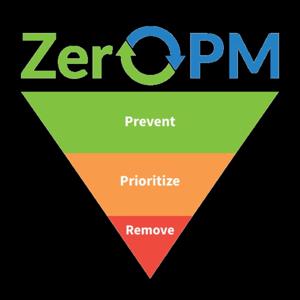
ZeroPM is a transdisciplinary project that will prevent them, prioritize them and remove them. In our first episode, the project coordinator, Sarah Hale, and deputy coordinator, Hans Peter Arp, have a chat about what PFAS and PMT substances are, the need for the project ZeroPM, and introduce the multi-faceted aspects of the project itself. In future podcasts you will hear from various participants in the ZeroPM project and affiliated partners, as we dedicate our work towards enabling zero pollution.
For more information about ZeroPM, please visit our website at zeropm.eu.
ZeroPM is a research and innovation project funded by the European Union's Horizon 2020 research and innovation programme under grant agreement No 101036756.
From the publisher's feed