
Sign up to save your podcasts
Or

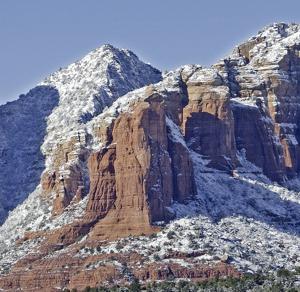


Identifying And Addressing The Issues Facing Sedona. Steve Williamson welcomes three candidates for Sedona City Council: Brian Fultz, Pete Furman, and incumbent John (JT) Thompson. Steve leads the candidates in a wide-ranging discussion that addresses many of the most important issues facing the city. All three offer their takes on the need for workforce housing, traffic, off-road vehicles, short-term rentals, water supply, fire risks, the area’s fragile environment, and more – almost all of the issues created by the city’s status as one of the world’s premier tourist destinations.
The candidates agree that there is little the city can do, or would want to do, to curtail tourism. As Furman says, “Sedona will always have people coming. Every photo ever taken of Sedona is an advertisement for people to come to Sedona.”
Indeed, Thompson explains, “It’s in our official statement of our vision for the community that we’re welcoming to visitors and future residents alike.” But, he says, “There are always lots of things we can do to manage it.”
Fultz notes that, with 3.4 million visitors annually, Sedona would rank as the eighth-busiest national park. He suggests that the city could look at the type of access programs that the national parks have put in place. “I think there’s a misnomer that, in the desert, you can’t really cause any damage. But this is a sensitive, ecological environment.” He says that Sedona needs to educate tourists and continue to ramp up messaging as part of its sustainable tourism plan.
The post Fultz, Furman, Thompson Interview – Podcast March 7, 2022 first appeared on .
Critical Race Theory According To The People Who Teach
For those unfamiliar with CRT, Ploog notes that it emerged from
That is only because a rightwing activist searching for a
Castagno notes that it is one of multiple explanations for why inequality exists. “Critical Race Theory says that racism is everywhere. And that makes people uncomfortable. When we’re faced with a set of ideas that say, maybe your success is not just because of your hard work, maybe it’s also because laws, policies, systems have also made the starting line not even. That makes us uncomfortable. Because then I start to think maybe it was not just my hard work.”
Ononuju cuts to the heart of the controversy. “It’s the same thing we saw in Tucson ten years ago. Right? We don’t want our minority students to learn more about themselves and their relationship that is not in line with the Disney everything-is-rosy-and-beautiful understanding of our relationship with America. And that’s where a lot of this sentiment is coming from.”
The post Reimer, Castagno, Ononuju Interview – Podcast February 28, 2022 first appeared on .
On Becoming A Candidate For Public Office. Steve Williamson and Karen McClelland welcome Sedona City Councilor Kathy Kinsella to discuss how to become a candidate for public office and run a successful campaign. Before moving to Arizona, Kinsella was elected to five two-year terms as highway superintendent in Reinbeck, New York. And, since arriving in Sedona, she served on the Planning and Zoning Commission before running for City Council.
Kinsella says the biggest obstacle in running for office is the decision-making process: Which office do I want to run for? What qualifies me to run? What skills are needed? What can I bring to the office? How much time will it require? She recommends that you make a list and really find your fit. “There should be a dating app – I want to run for office. Here’s my profile,” she wryly suggests.
As for the frustrations of serving in a public office, she lists misinformation as the biggest one. “For all the people who are out there posting on Facebook or Next Door or have lots of opinions, well, opinions are great. But you need to sort of step up and put your money where your mouth is and run for office because that’s where decisions are made.”
Perhaps one of Kinsella’s best bits of advice is to remember
The post Kinsella Interview – Podcast February 21, 2022 first appeared on .
GOP Assault On Free Speech. “You must pledge allegiance to Israel and to the corporations for which we stand.” That’s the message given to state contractors by Republican legislatures in the more than 30 states that have passed draconian laws in reaction to the BDS (Boycott, Divest, and Sanction) movement, a movement designed to pressure Israel into ending human rights violations against Palestinians.
To discuss the issue, Steve Williamson and Karen McClelland welcome Mik Jordahl and Suhad Babaa. Jordahl is an attorney who has pursued lawsuits against states that have passed such laws. Babaa is the executive director of Just Vision and the producer of Boycott, a 2021 documentary film that chronicles the experiences of people who have refused to sign away their rights.
“We are in the midst of one of the most consequential First Amendment battles this country has seen in decades,” says Babaa in explaining what led her to create the film. “When we saw that there were laws being passed in states across the United States that were aiming to suppress the ability of Americans to express their political dissatisfaction with Israeli policies toward Palestinians, and that Americans like Mik were being asked to sign a pledge that they would not engage in boycotts of Israel if they wanted to maintain public contracts with their state, we knew it was a really important story to follow.”
Jordahl expresses his attitude toward the laws this way: “They’re talking about my own money. If I want to boycott Walmart or Chicken McNuggets that’s up to me. But I am sure as hell not going to give away my constitutional rights to a foreign government.”
According to Babaa, Republicans are using similar laws to prevent Americans from expressing their views against other entities. “This isn’t just about Israel/Palestine. In recent months, in the last year in particular, several states including Texas, Oklahoma, West Virginia, Indiana and beyond, have introduced or passed bills that punish companies for boycotting the fossil fuels industry as well as the weapons and ammunitions industries. You’ve already seen these bills pass in Texas and they went into effect, actually, on September 1 of 2021 in Texas,” she warns.
The post Babaa, Jordahl Interview – Podcast February 14, 2022 first appeared on .
Making Sense Of Presidential Elections. Steve and Karen welcome back author and historian, Dan Singal, to discuss Critical Election Theory. If you are unfamiliar with the theory, it holds that, approximately every 36 years, a political realignment occurs in which the prevailing party loses power and is replaced with a new political coalition based on changes in ideology, issues, leadership or demographics. These realignments result in what political scientists call Critical Elections.
Singal explains that the theory applies only to presidential
He notes that the election of 1968 was a perfect example of
When asked how the theory applies to today, Singal responds,
The post Singal Interview – Podcast January 31, 2022 first appeared on .
The History Of Trump’s Paranoid Style Of Politics. Friend of the show, author Dan Singal, joins Steve Williamson and Karen McClelland to discuss the rural/urban divide and how Trumpism came about. He explains the phenomenon by referencing Richard Hofstadter, perhaps America’s greatest historian.
Singal explains that Hofstadter found that this form of
He notes that Hofstadter traces it back to the 1840s when
Singal then quotes Hofstadter who described the phenomenon
Is that not Make America Great Again?
The post Singal Interview – Podcast January 24, 2022 first appeared on .
The Importance Of Enacting Voting Rights Legislation. On Martin Luther King Day, Democratic Perspective welcomes Mark Robert Gordon to discuss the ongoing struggle for equal access to voting. Gordon is an attorney who specializes in election law and represents Arizona as an elected member of the Democratic National Committee (DNC).
Gordon begins by noting that the issue of equal access to
As to why Senator Sinema would not vote to change the filibuster in order to pass voting rights legislation, Gordon says, “Our senior senator’s viewpoint is she believes the filibuster is important as a tool because one day we will be in the minority in the Senate. And there are things that we will need to be able to have our stance against.” But Gordon believes there’s a growing dissatisfaction with the ways of old, saying “…the idea of supporting something that stalls democracy and stalls progress is anathema. It’s a blockage to what we believe should be happening. And that’s why we’re getting pushback within our own Party.”
He notes that there have been carveouts of the filibuster
The post Gordon Interview – Podcast January 17, 2022 first appeared on .
An Enthusiastic Voice For Change.
Karen McClelland and Steve Williamson welcome Jevin Hodge, former vice-chair of the AZ Democratic Party and candidate for the congressional seat currently held by the ethically challenged Rep. David Schweikert. He says, “When elected, I will be Arizona’s first African American congressman and the second youngest at 28.”
Asked about his opponent, Hodge notes that Schweikert has 11 ethical violations that he admitted to. “He has taken money from us and put it in his own pocket,” says Hodge. “He is someone who doesn’t look out for anyone but himself.”
Nevertheless, rather than dwell on the negatives of his opponent, Hodge would much prefer to focus on the positive, saying, “We’re not running against David Schweigert. We’re running for the people of Arizona,” adding that negatives don’t get you votes. To that point, he wants to talk about things like the Child Tax Credit, which was passed by the Democratic majority, that will lift families out of poverty and put our communities on the right track. He stresses that putting money into families and people is an investment. Not and expense.
As for why he’s running for office, he says, “I love people. That’s really what it comes down to. Service is a big part of it.” He continues, “I did a lot of study of Ronald Reagan. If there’s anything I borrowed from him it’s that for you to get involved. That’s the least we can do. We owe it to the next generation because the previous generation did it for us.”
The post Hodge Interview – Podcast January 10, 2022 first appeared on .
Sedona 2021: A Year Of Accomplishment. Steve Williamson welcomes Mayor Sandy Moriarty and City Council Members, Kathy Kinsella and Holli Ploog, to discuss the changes that took place last year, and what Sedona residents might look forward to in the future.
Moriarty begins by noting, “Anytime government does anything, we need data to back up what we’re doing. That’s one of the things we’ve done this year. We’ve done studies.” In particular, she refers to traffic and workforce housing studies intended to address two of the city’s major problems.
Moriarty explains that tourist traffic has always been an issue here because there are only three ways in and three ways out. As a result, the city is about to implement a major transportation plan. “We can’t build our way out of it by building roads,” she says. “We need to get people out of their cars. So, transit is a major component of it.”
Ploog says that the lack of workforce housing exacerbates the traffic problem. “The more we have people commuting in for work, the more traffic we have.” Kinsella adds that it’s also an environmental issue, since vehicles stuck in traffic create pollution.
The guests offer their insights on the challenges facing Sedona. Not surprisingly, one of those challenges is the misinformation on social media. To address that, they note that the city has created a very informative website with a search engine for those looking for the facts on a variety of topics.
The post Kinsella, Moriarity and Ploog Interview – Podcast January 3, 2022 first appeared on .
Putting
Gary LaMaster begins the show with Trump’s Big Lie – the former president’s claim that the 2020 election was stolen – which led to the violent January 6 insurrection and a continuing threat to our democracy.
Following that, Karen McClelland examines the political controversies concerning election integrity and public education, especially as they pertain to the history of slavery and race relations in the U.S.
Finally, Steve Williamson gives an in-depth analysis of what he calls “conservative ethos” and its impact on the success of every Democratic president since Lyndon Johnson.
The post Year In Review – Podcast December 27, 2021 first appeared on .