
Sign up to save your podcasts
Or

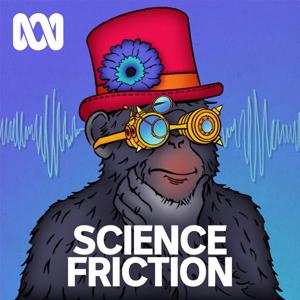

Earlier this year, a US biotech company claimed it had brought back a long-extinct species - the dire wolf, which roamed ancient America thousands of years ago.
And the same editing technology that remade dire wolves could also be used to stop Australian species from going extinct.
In episode two of Artificial Evolution, Pete heads to the labs that are safeguarding the genetic material of unique Australian species and working to bring back the thylacine.
And visits the researchers working on quolls to make them immune to cane toad toxins and experimenting with putting alpaca genes into endangered frogs to protect them from a deadly fungal disease.
As this new field of science opens up opportunities to edit endangered species … can and should we act? And do we have our priorities wrong in tackling species loss and climate change?
Artificial Evolution is a four-part series from Science Friction about how gene technologies are changing the world around us.
You can hear more episodes of Science Friction with journalist Peter de Kruijff about DNA, cloning, genetic modification and gene editing on the ABC listen app (Australia) or wherever you get your podcasts.
Credits:
This story was made on the lands of the Gadigal, Whadjuk Noongar and Menang Noongar peoples.
 View all episodes
 By ABC Australia

4.4
6262 ratings
Earlier this year, a US biotech company claimed it had brought back a long-extinct species - the dire wolf, which roamed ancient America thousands of years ago.
And the same editing technology that remade dire wolves could also be used to stop Australian species from going extinct.
In episode two of Artificial Evolution, Pete heads to the labs that are safeguarding the genetic material of unique Australian species and working to bring back the thylacine.
And visits the researchers working on quolls to make them immune to cane toad toxins and experimenting with putting alpaca genes into endangered frogs to protect them from a deadly fungal disease.
As this new field of science opens up opportunities to edit endangered species … can and should we act? And do we have our priorities wrong in tackling species loss and climate change?
Artificial Evolution is a four-part series from Science Friction about how gene technologies are changing the world around us.
You can hear more episodes of Science Friction with journalist Peter de Kruijff about DNA, cloning, genetic modification and gene editing on the ABC listen app (Australia) or wherever you get your podcasts.
Credits:
This story was made on the lands of the Gadigal, Whadjuk Noongar and Menang Noongar peoples.
99 Listeners
64 Listeners
125 Listeners

86 Listeners

28 Listeners
1,737 Listeners
785 Listeners
752 Listeners
133 Listeners

63 Listeners
27 Listeners
64 Listeners

307 Listeners

1,080 Listeners

143 Listeners

8 Listeners

194 Listeners
116 Listeners
234 Listeners
1,014 Listeners
45 Listeners

4 Listeners
118 Listeners