
Sign up to save your podcasts
Or

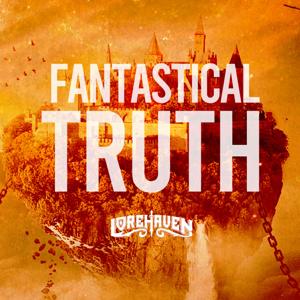

This spooky season, what’s scarier than real-world evil? Imagine that Nazis are hiding in a prison mine where they try to torture their victims—that is, until a mysterious enemy in the dark forest rises up to destroy them with zombie-like plant creatures, a granite face, and supernatural symbols. Pastor and paranormal novelist Marc Schooley, author of König’s Fire, joins us to explore the problem of evil versus the amazing grace of our sovereign God.
middle grade • teens + YA • adults • onscreen • author resources • gifts • guild
Marc Schooley is a Texan, Christian philosopher, theologian, and pastor of the Five Solas Church in League City, Texas. He also has twenty-three years experience in the space program for NASA Johnson Space Center, including work for the James Webb Space Telescope. His fantastical novels include The Dark Man, Konig’s Fire, and Nightriders.
If God is willing to prevent evil, but is not able to, then He is not omnipotent.
If He is able, but not willing, then He is malevolent.
If He is both able and willing, then whence cometh evil?
If He is neither able nor willing, then why call Him God?
—König’s Fire (2010), pages 21–22
Why is there any misery at all in the world? Not by chance surely. From some cause then. Is it from the intention of the Deity? But he is perfectly benevolent. Is it contrary to his intention? But he is almighty. Nothing can shake the solidity of this reasoning, so short, so clear, so decisive.
—David Hume, Dialogues Concerning Natural Religion, 1776 (yet published in 1907)
“Nobledark” would be a story in which there are genuine heroes, but the story world is full of terrors and gritty. An epic struggle for good and evil is ongoing, but the heroes are holding their own. Barely.
—Travis Perry
This podcast does a good job covering the same semantic issue I did here, which is that “ban” is typically semantic overreach (which is used for marketing rather than meaningful communication.) Often the reality is that a book is being restricted from unsupervised access by children below a particular age, and that’s in no way a ban.
It’s also true that some books are genuinely harmful, or they advocate for harmful behaviors but can be read discerningly (to critique them) by a mature-enough reader. It absolutely makes sense to restrict these. Those who say they shouldn’t be restricted because we need to “break free” of “oppression” and we need children to be exposed to this content … well, they’re advocating for a social structure that I think is evil, and they’re advocating for indoctrinating children into that social structure. I think there are very few books that should be banned-banned-banned, like, nobody can interact with them — I basically put things like picture-books of actual sexual assault (including exploitation of children) into that category, and similar graphic depictions of other types of harm (like terrorist attacks) that basically function as violence-porn, and … not much else. I believe adults should be able to choose to read things like Hitler, Marx, Ayn Rand, or even the Unabomber’s manifesto. I don’t necessarily believe it’s *wise* to read certain things for certain people, but wisdom rather than authority should reign there.
Chapter 3 as a whole is very good. Particularly the commentary about how Amazon and others lack the “moral proportion” to make the decisions they’re making about books. And, of course, the commentary about how people encouraging the reading of “banned books” only want to encourage reading “banned books” from one specific political or cultural angle, and not reading controversial books from multiple sides. I never hear “banned book” people encouraging kids to read the Bible or Ayn Rand. They’re trying to put specific content into the hands of children, usually sexual or political content, rather than trying to encourage children to expand their horizons more broadly. The bait-and-switch is vile.
Twelve men on a boat are besieged by a storm. Suddenly they see, amongst the lightning, a spectral shape. Another man looks over a valley covered in skeletons. He speaks an incantation, and every single figure rises to life to form a great army. These images come directly from God’s word, but they’re likely not the most frightening accounts of the Bible. What then might be the scariest ghost story in Scripture, and why did God include this narrative?
 View all episodes
 By Lorehaven

4.9
4444 ratings
This spooky season, what’s scarier than real-world evil? Imagine that Nazis are hiding in a prison mine where they try to torture their victims—that is, until a mysterious enemy in the dark forest rises up to destroy them with zombie-like plant creatures, a granite face, and supernatural symbols. Pastor and paranormal novelist Marc Schooley, author of König’s Fire, joins us to explore the problem of evil versus the amazing grace of our sovereign God.
middle grade • teens + YA • adults • onscreen • author resources • gifts • guild
Marc Schooley is a Texan, Christian philosopher, theologian, and pastor of the Five Solas Church in League City, Texas. He also has twenty-three years experience in the space program for NASA Johnson Space Center, including work for the James Webb Space Telescope. His fantastical novels include The Dark Man, Konig’s Fire, and Nightriders.
If God is willing to prevent evil, but is not able to, then He is not omnipotent.
If He is able, but not willing, then He is malevolent.
If He is both able and willing, then whence cometh evil?
If He is neither able nor willing, then why call Him God?
—König’s Fire (2010), pages 21–22
Why is there any misery at all in the world? Not by chance surely. From some cause then. Is it from the intention of the Deity? But he is perfectly benevolent. Is it contrary to his intention? But he is almighty. Nothing can shake the solidity of this reasoning, so short, so clear, so decisive.
—David Hume, Dialogues Concerning Natural Religion, 1776 (yet published in 1907)
“Nobledark” would be a story in which there are genuine heroes, but the story world is full of terrors and gritty. An epic struggle for good and evil is ongoing, but the heroes are holding their own. Barely.
—Travis Perry
This podcast does a good job covering the same semantic issue I did here, which is that “ban” is typically semantic overreach (which is used for marketing rather than meaningful communication.) Often the reality is that a book is being restricted from unsupervised access by children below a particular age, and that’s in no way a ban.
It’s also true that some books are genuinely harmful, or they advocate for harmful behaviors but can be read discerningly (to critique them) by a mature-enough reader. It absolutely makes sense to restrict these. Those who say they shouldn’t be restricted because we need to “break free” of “oppression” and we need children to be exposed to this content … well, they’re advocating for a social structure that I think is evil, and they’re advocating for indoctrinating children into that social structure. I think there are very few books that should be banned-banned-banned, like, nobody can interact with them — I basically put things like picture-books of actual sexual assault (including exploitation of children) into that category, and similar graphic depictions of other types of harm (like terrorist attacks) that basically function as violence-porn, and … not much else. I believe adults should be able to choose to read things like Hitler, Marx, Ayn Rand, or even the Unabomber’s manifesto. I don’t necessarily believe it’s *wise* to read certain things for certain people, but wisdom rather than authority should reign there.
Chapter 3 as a whole is very good. Particularly the commentary about how Amazon and others lack the “moral proportion” to make the decisions they’re making about books. And, of course, the commentary about how people encouraging the reading of “banned books” only want to encourage reading “banned books” from one specific political or cultural angle, and not reading controversial books from multiple sides. I never hear “banned book” people encouraging kids to read the Bible or Ayn Rand. They’re trying to put specific content into the hands of children, usually sexual or political content, rather than trying to encourage children to expand their horizons more broadly. The bait-and-switch is vile.
Twelve men on a boat are besieged by a storm. Suddenly they see, amongst the lightning, a spectral shape. Another man looks over a valley covered in skeletons. He speaks an incantation, and every single figure rises to life to form a great army. These images come directly from God’s word, but they’re likely not the most frightening accounts of the Bible. What then might be the scariest ghost story in Scripture, and why did God include this narrative?
629 Listeners

326 Listeners
7,118 Listeners
254 Listeners

5,369 Listeners
104 Listeners
1,195 Listeners

2,514 Listeners

1,489 Listeners
7 Listeners
33 Listeners