
Sign up to save your podcasts
Or

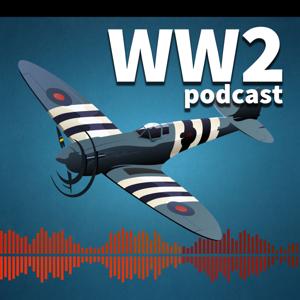

Operation Jubilee, the Dieppe Raid on the coast of France, was a disaster in 1942. However, it did highlight the need for more reconnaissance before any other amphibious operations were mounted.
In London, a small group of eccentric researchers, experimenting on themselves from inside pressure tanks in the middle of the London air raids, explored the deadly science needed to enable the critical reconnaissance vessels and underwater breathing apparatuses that would enable the Allies' future amphibious landings, specifically D-Day.
Joining me today is Dr Rachel Lance.
Rachel is an Assistant Consulting Professor at Duke University, where she conducts research out of their Hyperbaric Medicine facility. She is also the author of Chamber Divers: The Untold Story of the D-Day Scientists Who Changed Special Operations Forever.
Patreon:patreon.com/ww2podcast
 View all episodes
 By Angus Wallace

4.6
11701,170 ratings
Operation Jubilee, the Dieppe Raid on the coast of France, was a disaster in 1942. However, it did highlight the need for more reconnaissance before any other amphibious operations were mounted.
In London, a small group of eccentric researchers, experimenting on themselves from inside pressure tanks in the middle of the London air raids, explored the deadly science needed to enable the critical reconnaissance vessels and underwater breathing apparatuses that would enable the Allies' future amphibious landings, specifically D-Day.
Joining me today is Dr Rachel Lance.
Rachel is an Assistant Consulting Professor at Duke University, where she conducts research out of their Hyperbaric Medicine facility. She is also the author of Chamber Divers: The Untold Story of the D-Day Scientists Who Changed Special Operations Forever.
Patreon:patreon.com/ww2podcast
3,972 Listeners

4,805 Listeners

4,043 Listeners
664 Listeners

461 Listeners
1,424 Listeners
181 Listeners

585 Listeners
528 Listeners

917 Listeners
329 Listeners
761 Listeners

114 Listeners

93 Listeners
96 Listeners