
Sign up to save your podcasts
Or

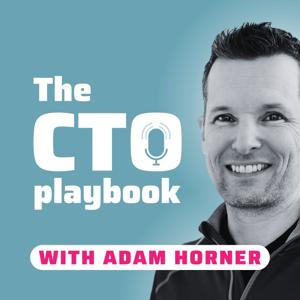

Victor Nicollet is an expert in mechanical sympathy for software, focusing on how software design can better align with the hardware it runs on for smarter, faster systems.
Build your own CTO Playbook at www.theCTOplaybook.com — the leadership platform built for the full CTO journey. Coaching, podcast, and community to help you lead with clarity, confidence, and strategic impact.
In this episode, you're going to learn what mechanical sympathy is and why understanding your hardware can massively improve software performance, how to predict when software should be optimized instead of waiting for users to feel pain, why abstraction layers can hurt performance and how to navigate escape hatches when needed, the importance of building broad but shallow systems to keep software fast and manageable, and when it makes sense to build your own tools instead of buying or using existing ones.
Timestamps:
[00:00] Introduction
[02:00] What mechanical sympathy means for software
[07:00] Building a custom language for supply chain optimization
[09:00] Real-time analysis and scaling big data
[11:00] When to optimize before pain shows up
[13:00] Diagnosing hidden performance issues
[15:00] How hardware understanding drives smarter software
[17:00] Fighting abstraction layers to regain speed
[20:00] Data size matters more than you think
[23:00] Using smaller memory layouts for faster performance
[26:00] Lossy compression vs real-time performance needs
[29:00] Structuring broad but shallow systems
[31:00] Using optimized black boxes the right way
[34:00] Where glue code bottlenecks appear
[37:00] Build vs buy decisions based on real needs
[39:00] Why Lokad had to create its own data format
[41:00] Storing petabytes for supply chain forecasting
[44:00] Summarizing the 7-step optimization strategy
Resources Mentioned:
Lokad | Website
If you want to learn more from Victor, follow him on LinkedIn.
Find more from Adam on LinkedIn and YouTube, and explore coaching, cohorts, and how you can stay up to date at theCTOplaybook.com, helping you build your own playbook for your path at your pace.
 View all episodes
 By Adam Horner
5
77 ratings
Victor Nicollet is an expert in mechanical sympathy for software, focusing on how software design can better align with the hardware it runs on for smarter, faster systems.
Build your own CTO Playbook at www.theCTOplaybook.com — the leadership platform built for the full CTO journey. Coaching, podcast, and community to help you lead with clarity, confidence, and strategic impact.
In this episode, you're going to learn what mechanical sympathy is and why understanding your hardware can massively improve software performance, how to predict when software should be optimized instead of waiting for users to feel pain, why abstraction layers can hurt performance and how to navigate escape hatches when needed, the importance of building broad but shallow systems to keep software fast and manageable, and when it makes sense to build your own tools instead of buying or using existing ones.
Timestamps:
[00:00] Introduction
[02:00] What mechanical sympathy means for software
[07:00] Building a custom language for supply chain optimization
[09:00] Real-time analysis and scaling big data
[11:00] When to optimize before pain shows up
[13:00] Diagnosing hidden performance issues
[15:00] How hardware understanding drives smarter software
[17:00] Fighting abstraction layers to regain speed
[20:00] Data size matters more than you think
[23:00] Using smaller memory layouts for faster performance
[26:00] Lossy compression vs real-time performance needs
[29:00] Structuring broad but shallow systems
[31:00] Using optimized black boxes the right way
[34:00] Where glue code bottlenecks appear
[37:00] Build vs buy decisions based on real needs
[39:00] Why Lokad had to create its own data format
[41:00] Storing petabytes for supply chain forecasting
[44:00] Summarizing the 7-step optimization strategy
Resources Mentioned:
Lokad | Website
If you want to learn more from Victor, follow him on LinkedIn.
Find more from Adam on LinkedIn and YouTube, and explore coaching, cohorts, and how you can stay up to date at theCTOplaybook.com, helping you build your own playbook for your path at your pace.
168 Listeners

45 Listeners
2,233 Listeners

3,900 Listeners

33 Listeners