
Sign up to save your podcasts
Or



Based on Podcast App listening data
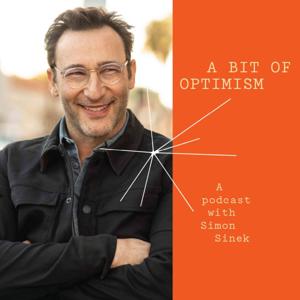
Team Simon here! A Bit of Optimism is on a short break, and brand-new episodes return October 27. Until then, we're revisiting a few conversations we keep coming back to.
This week it's Arthur Brooks, a longtime friend of Simon's and one of his favorite people to talk to.
Have you ever felt like you're falling behind? Everyone else seems to have a plan, a timeline and the next rung on the ladder lined up. Any detour, like a gap year, a pivot or a job that isn't quite right, feels like losing ground.
Arthur Brooks thinks you're running the wrong race. Chasing a finish line is one of the surest ways to end up unhappy. He argues that happiness lives in the process, not the outcome.
Arthur is a bestselling author and teaches one of the most popular classes at Harvard Business School: a whole course on happiness. He lives what he teaches, too. He played French horn professionally from 19 to 31 and then reinvented himself as a behavioral scientist. After that, he became president of a Washington think tank without ever having raised a dollar. When he left that job with no idea what came next, he walked the Camino de Santiago to find out.
In this conversation, Arthur explains how to know when to trust your gut, why reinvention starts with curiosity rather than skills, and why meaning has collapsed for people under 35. Simon pushes on something that worries him: if AI takes away the struggle, what happens to the wisdom that struggle builds?
In this episode you'll learn:
➡️ The 80/20/0 rule for knowing a big decision is the right one
➡️ Why reapplying your skills isn't the same as reinventing yourself
➡️ Why your career is a spiral, not a staircase
➡️ The "arrival fallacy," and why so many Olympic gold medalists struggle after they win
➡️ Why life's most unwelcome changes usually look like gifts in hindsight
➡️ The three parts of happiness
➡️ Why feelings are the evidence of happiness, not the thing itself
➡️ Why Arthur calls AI a "dark triad," and what that means if you're using it as a therapist
➡️ What to do when you're between things: take a walk
Arthur's argument is a freeing one. Happiness lives in the doing, so you can be fully alive right now. You don't have to arrive first.
This… is A Bit of Optimism.
+ + +
If you want to see more of Arthur’s work, check out: https://www.arthurbrooks.com/
+ + +
Chapters
Chapters
+ + +
Simon is an unshakable optimist. He believes in a bright future and our ability to build it together.
Described as “a visionary thinker with a rare intellect,” Simon has devoted his professional life to help advance a vision of the world that does not yet exist; a world in which the vast majority of people wake up every single morning inspired, feel safe wherever they are and end the day fulfilled by the work that they do.
Simon is the author of multiple best-selling books including Start With Why, Leaders Eat Last, Together is Better, and The Infinite Game.
+ + +
Website: http://simonsinek.com/
Leaderful: https://simonsinek.com/leaderful
Podcast: http://apple.co/simonsinek
Instagram: https://instagram.com/simonsinek/
Linkedin: https://linkedin.com/in/simonsinek/
Twitter: https://twitter.com/simonsinek
Facebook: https://www.facebook.com/simonsinek
Hello from Team Simon! We're taking a few weeks off and will be back with brand-new episodes of A Bit of Optimism on Tuesday, October 27. Until then, we're revisiting some of our favorite conversations, starting with one of the most fun we've ever had: Rob Lowe.
Maybe you know the feeling: you've got an idea, a joke, a risk you want to take… and you talk yourself out of it before anyone else gets the chance. Rob Lowe has spent four decades doing the opposite. He calls it a healthy case of the "screw-its."
It's how he survived an industry famous for chewing people up. He went from movies to The West Wing when movie stars didn't do TV, and from TV to hosting a game show when that was supposed to be career death. His secret isn't avoiding failure. It's never letting failure decide what he tries next.
Rob is an actor, producer, and bestselling author whose career runs from The Outsiders and St. Elmo's Fire to The West Wing and Parks and Recreation. He hosts FOX's The Floor and the podcast Literally! with Rob Lowe, and stars alongside his son John Owen Lowe in Netflix's Unstable.
In this conversation, Rob tells the story of his infamous Oscars song-and-dance number (and the open letter from Hollywood legends that followed it). He also shares the Letterman appearance that taught him to trust his instincts for good, and explains why authenticity has become the only currency that matters. And I push him on the question under all of it: can the rest of us learn to take a punch the way he does?
In this episode you'll learn:
➡️ Why a healthy case of the "screw-its" is a career strategy, not a character flaw
➡️ What the world's top tennis players can teach us about bouncing back
➡️ The one practical rule for being more authentic: stop self-editing
➡️ Why the thing you least want to talk about is the thing that makes you relatable
➡️ Why "availability" might be a better word than "vulnerability"
➡️ How to spot performative authenticity (+ Rob's three red-carpet poses)
➡️ Why you can meet your heroes, but shouldn't get to know them
➡️ How humor makes even the hardest subjects easier to talk about
Rob's lesson is a freeing one: take the work seriously, laugh at the absurd parts, and trust your gut on the next big swing. Worst case, you get a great story.
This… is A Bit of Optimism.
+ + +
If you want to listen to Rob’s podcast, Literally! with Rob Lowe, head to: https://teamcoco.com/podcasts/literally-with-rob-lowe
Find out where you can watch Rob as host of GSN’s The Floor, weekends at 8pm ET: https://www.gameshownetwork.com/the-floor
+ + +
Chapters
Chapters
+ + +
Simon is an unshakable optimist. He believes in a bright future and our ability to build it together.
Described as “a visionary thinker with a rare intellect,” Simon has devoted his professional life to help advance a vision of the world that does not yet exist; a world in which the vast majority of people wake up every single morning inspired, feel safe wherever they are and end the day fulfilled by the work that they do.
Simon is the author of multiple best-selling books including Start With Why, Leaders Eat Last, Together is Better, and The Infinite Game.
+ + +
Website: http://simonsinek.com/
Leaderful: https://simonsinek.com/leaderful
Podcast: http://apple.co/simonsinek
Instagram: https://instagram.com/simonsinek/
Linkedin: https://linkedin.com/in/simonsinek/
Twitter: https://twitter.com/simonsinek
Facebook: https://www.facebook.com/simonsinek
Be honest: you've taken a mental health day that made you feel worse. You stayed in bed, you avoided the thing, and by evening it was still waiting for you—with less of the day left to face it.
Amy Morin thinks the problem starts with the word. We treat mental health as something you either have or you don't… and framed that way, there's nothing to actually do on a bad day. Her work runs on the opposite premise: mental strength is a practice, and you build it like you'd build anything else.
Amy is a psychotherapist, a clinical social worker, and the author of the bestseller 13 Things Mentally Strong People Don't Do and the new The Mental Strength Playbook. She became a therapist at 22 and lost her mother at 23. Three years later—to the day—her husband died, and the mental health agency where she worked gave her three days of bereavement leave. She built the practices that became her book in real time, from there.
In this conversation, Amy walks through exactly what she did to get mentally fit. Not as theory, but as the small, unglamorous things that got her out of bed. And I press her on the question nobody in her field says out loud: whether an industry built to help us has any incentive to finish the job.
In this episode you'll learn:
➡️ Why the mental health day you take to feel better isn’t helping
➡️ How to tell whether to solve the problem or solve the feeling (most of us pick wrong)
➡️ The 15-minute daily exercise Amy's clients say lifts the weight of the world
➡️ Why "I am anxious" and "I have anxiety sometimes" build two different lives
➡️ How to compromise with yourself on a bad day instead of going all-or-nothing
➡️ Why "I'm just staying busy" is avoidance we've learned to compliment
➡️ What playing the victim actually gives you (+ why it's so hard to give up)
➡️ Simon's rule for hard days: no crying alone
Amy's argument is a hopeful one: the feeling follows the action. Do one small, ordinary thing today, and you've already started.
This… is A Bit of Optimism.
+ + +
This episode is brought to you by SAP. Bring it with SAP GROW. The AI Cloud ERP for any size business. Learn more at https://SAP.com/GROW
+ + +
If you’d like to buy Amy’s new book, The Mental Strength Playbook, head to: https://amymorinlcsw.com/books/
+ + +
Chapters
+ + +
Simon is an unshakable optimist. He believes in a bright future and our ability to build it together.
Described as “a visionary thinker with a rare intellect,” Simon has devoted his professional life to help advance a vision of the world that does not yet exist; a world in which the vast majority of people wake up every single morning inspired, feel safe wherever they are and end the day fulfilled by the work that they do.
Simon is the author of multiple best-selling books including Start With Why, Leaders Eat Last, Together is Better, and The Infinite Game.
+ + +
Website: http://simonsinek.com/
Leaderful: https://simonsinek.com/leaderful
Podcast: http://apple.co/simonsinek
Instagram: https://instagram.com/simonsinek/
Linkedin: https://linkedin.com/in/simonsinek/
Twitter: https://twitter.com/simonsinek
Facebook: https://www.facebook.com/simonsinek
The internet is flooded with advice for dating in the smartphone age: know your type, trust the spark, watch for red flags, protect your peace, never settle.
It sounds like self-respect, but relationship expert Amy Chan thinks it’s a big reason dating feels impossible right now.
Her argument: we need to correct the lessons we’ve learned when it comes to dating. The person who’s great on a first date isn’t necessarily great at a relationship. Instant chemistry isn’t always a good sign. A red flag could just be an imperfection. And keeping our options open has made a lot of us genuinely bad at choosing someone.
Amy is the founder of Renew Breakup Bootcamp and the author of Unsingle: How to Date Smarter and Create Love That Lasts. For nearly two decades she’s looked at dating through psychology and neuroscience — why we’re drawn to certain people, why relationships fall apart, and what actually predicts whether one lasts. She started her career helping people end relationships… Now, she teaches them how to build one.
In this episode you'll learn:
➡️ Why “instant chemistry” is one of the worst predictors of a lasting relationship
➡️ The quiet qualities research says actually predict a happy partnership
➡️ Why dating skills and relationship skills are two completely different skill sets
➡️ How the algorithm rewards red-flag advice 10X over green-flag advice (and what that’s doing to you)
➡️ Situationships: why the breakup hurts more when there was never a breakup
➡️ “Leaky energy,” micro-cheating, and the honest test for both
➡️ The 9-date experiment Amy gives clients who are stuck dating the same person
➡️ How the right relationship shrinks old wounds
➡️ Why discomfort is a critical skill dating requires
Amy’s advice isn’t about finding a better person. It’s about becoming someone better at love. And that’s advice all of us could use!
This… is A Bit of Optimism.
+ + +
This episode is brought to you by SAP. Bring it with SAP GROW. The AI Cloud ERP for any size business. Learn more at https://SAP.com/GROW
+ + +
To get a copy of Amy's book, Unsingle: How to Date Smarter and Create Love That Lasts, head to: https://missamychan.com/#books
+ + +
Chapters
Chapters+ + +
Simon is an unshakable optimist. He believes in a bright future and our ability to build it together.
Described as “a visionary thinker with a rare intellect,” Simon has devoted his professional life to help advance a vision of the world that does not yet exist; a world in which the vast majority of people wake up every single morning inspired, feel safe wherever they are and end the day fulfilled by the work that they do.
Simon is the author of multiple best-selling books including Start With Why, Leaders Eat Last, Together is Better, and The Infinite Game.
+ + +
Website: http://simonsinek.com/
Leaderful: https://simonsinek.com/leaderful
Podcast: http://apple.co/simonsinek
Instagram: https://instagram.com/simonsinek/
Linkedin: https://linkedin.com/in/simonsinek/
Twitter: https://twitter.com/simonsinek
Facebook: https://www.facebook.com/simonsinek
Have you ever sat through a presentation and felt your attention just start to…drift? Chances are, it wasn't the content. It was the delivery.
A year ago, Rob Willis was a corporate trainer with years of experience and a sharp eye for what makes people listen. He wondered if what he taught in workshops would resonate with a larger audience. So he started making short videos that break down what makes great speakers great: from their word choice, to structure, to the energy they brought to any room or conversation.
Rob even made a video breaking down my method of public speaking. In his video, Rob dissects my signature opening line, and my friends couldn't stop sending it to me. One hundred videos in one hundred days later, Rob's videos are going viral on a regular basis, and a whole new audience is eager to learn from him.
But what I find most interesting about Rob is where he actually learned all of this. Not in a classroom. He learned it by giving free walking tours in Berlin, where nobody pays up front and anyone can leave at any moment. If you're boring, people simply walk away — no tip, no small talk, just people voting with their feet.
Rob and I discuss what that taught him about holding a room, why the smartest person in the room is rarely the most persuasive one, and the handful of simple, almost mechanical shifts that separate a forgettable pitch from one people actually remember.
In this episode you'll learn:
➡️ Why "if I just explain it better" is the most common, and most inaccurate, assumption speakers make
➡️ Rob's trick for holding anyone's attention, whether it's a boardroom or a crowd on a street corner
➡️ What real charisma is made of (hint: it's not confidence, it's belief)
➡️ Why so many people suddenly sound fake the moment they step on stage
➡️ 5 things you can do in your next meeting to immediately present better
You don't need a TED Talk on your calendar to get something out of this one. Any of us who wants to be understood — in a meeting, a pitch, a hard conversation — will find something worth stealing.
This… is A Bit of Optimism.
+ + +
This episode is brought to you by SAP. Bring it with SAP GROW. The AI Cloud ERP for any size business. Learn more at https://SAP.com/GROW
+ + +
Want to keep up with Rob and his video breakdowns? Check out: https://robdwillis.carrd.co/
+ + +
Chapters
+ + +
Simon is an unshakable optimist. He believes in a bright future and our ability to build it together.
Described as “a visionary thinker with a rare intellect,” Simon has devoted his professional life to help advance a vision of the world that does not yet exist; a world in which the vast majority of people wake up every single morning inspired, feel safe wherever they are and end the day fulfilled by the work that they do.
Simon is the author of multiple best-selling books including Start With Why, Leaders Eat Last, Together is Better, and The Infinite Game.
+ + +
Website: http://simonsinek.com/
Leaderful: https://simonsinek.com/leaderful
Podcast: http://apple.co/simonsinek
Instagram: https://instagram.com/simonsinek/
Linkedin: https://linkedin.com/in/simonsinek/
Twitter: https://twitter.com/simonsinek
Facebook: https://www.facebook.com/simonsinek
+ + +
This might sound familiar: you read a full page, get to the bottom, and realize you absorbed none of it. There's a stack of books beside your bed you fully intend to finish. And the only phone number you can remember is your own.
Jim Kwik says none of that means something is wrong with our brains. It’s that we were taught what to learn, but rarely ever taught how to learn.
Jim would know. A well-meaning teacher called him "the boy with the broken brain" when he was nine, and for years he believed it. He's spent the three decades since proving otherwise — as a top brain coach, a leading expert on memory and accelerated learning, and the bestselling author of Limitless. His new book, Limitless Daily, offers 366 daily upgrades to help you focus, remember, and think better.
In this episode you'll learn:
➡️ Why reading faster can actually improve comprehension
➡️ The free technique that stops your mind wandering mid-page
➡️ How to prompt your own brain the way you prompt AI
➡️ What your "dominant question" reveals about your personality
➡️ Why school teaches us what to learn but never how to learn
➡️ What digital dementia is + how to spot it in yourself
➡️ Why focus is a muscle, not a personality trait
➡️ The one thing AI will never be able to do for you
I asked Jim an entirely selfish question about how to actually get through the unread books next to my bed, and got an answer that goes far beyond discipline. Jim explains why the technology making us more capable is quietly making us less able.
And by the end, we landed somewhere neither of us expected: AI could have given Jim every piece of advice that changed his life, word for word. But it wasn't the advice that changed him. It was that a living, breathing person cared enough to give it.
This… is A Bit of Optimism.
+ + +
This episode is brought to you by SAP. Bring it with SAP GROW. The AI Cloud ERP for any size business. Learn more at https://SAP.com/GROW
+ + +
If you want to buy Jim’s new book, Limitless Daily, head to: https://limitlessdaily.com
Want to check out Jim’s other work like his best-selling book Limitless? Go to: https://jimkwik.com
+ + +
Chapters
+ + +
Simon is an unshakable optimist. He believes in a bright future and our ability to build it together.
Described as “a visionary thinker with a rare intellect,” Simon has devoted his professional life to help advance a vision of the world that does not yet exist; a world in which the vast majority of people wake up every single morning inspired, feel safe wherever they are and end the day fulfilled by the work that they do.
Simon is the author of multiple best-selling books including Start With Why, Leaders Eat Last, Together is Better, and The Infinite Game.
+ + +
Website: http://simonsinek.com/
Leaderful: https://simonsinek.com/leaderful
Podcast: http://apple.co/simonsinek
Instagram: https://instagram.com/simonsinek/
Linkedin: https://linkedin.com/in/simonsinek/
Twitter: https://twitter.com/simonsinek
Facebook: https://www.facebook.com/simonsinek
+ + +
Maybe this sounds familiar: you finally get the opportunity you've been waiting for, and the voice in your head says, "I'm not ready, I don't belong here."
Now imagine hearing that voice with millions of people watching.
Mary Holland Nader has lived it. She never dreamed of fame, but when Hulu's reality series Love Thy Nader came knocking, she traded her secure Wall Street job for the spotlight and put her new platform to work. It allowed her to launch Mary & Pip, a purpose-driven fintech company that takes a wellness approach to money, demystifying finance for those of us it usually makes feel dumb. She also brings that expertise to her new podcast, Growing Interest (where I was lucky to be among her first guests).
On the show, Mary Holland lets us join every step of her founder’s journey… even when it’s messy. Because she never wanted to be famous, but now that she is, she’s realized fame is leverage. And Mary Holland's committed to using hers to help and inspire others.
In this episode you'll learn:
➡️ How to survive a 180-degree life pivot
➡️ Why your gut doesn't tell you what to do — it checks your values
➡️ The "corny" morning ritual that transformed Mary Holland's confidence
➡️ How to stop making your doubts your identity (with one simple grammar change)
➡️ The difference between being nice and being kind — and why feedback is kind
➡️ The 2 questions every founder should ask before raising money
➡️ Why Simon gives his time to supporters instead of critics
➡️ The "reluctant sellout" + how financial stability protects your values
➡️ How to introduce yourself when you're more than one job title
Mary Holland is a new breed of entrepreneur — proof of what happens when you use your platform for something bigger than yourself. She stopped waiting for confidence to arrive and decided to build it… in front of everyone.
This… is A Bit of Optimism.
+ + +
This episode is brought to you by SAP. Bring it with SAP GROW. The AI Cloud ERP for any size business. Learn more at https://SAP.com/GROW
+ + +
Tune in to Mary Holland’s new podcast, Growing Interest, and you might just see Simon as a guest.
Improve your financial wellness with Mary & Pip. Head to: https://www.maryandpip.com
Want to keep up with Mary Holland and her sisters? Check out Love Thy Nader on Hulu: https://www.hulu.com/series/love-thy-nader
+ + +
Chapters
+ + +
Simon is an unshakable optimist. He believes in a bright future and our ability to build it together.
Described as “a visionary thinker with a rare intellect,” Simon has devoted his professional life to help advance a vision of the world that does not yet exist; a world in which the vast majority of people wake up every single morning inspired, feel safe wherever they are and end the day fulfilled by the work that they do.
Simon is the author of multiple best-selling books including Start With Why, Leaders Eat Last, Together is Better, and The Infinite Game.
+ + +
Website: http://simonsinek.com/
Leaderful: https://simonsinek.com/leaderful
Podcast: http://apple.co/simonsinek
Instagram: https://instagram.com/simonsinek/
Linkedin: https://linkedin.com/in/simonsinek/
Twitter: https://twitter.com/simonsinek
Facebook: https://www.facebook.com/simonsinek
Maybe you know the feeling: everyone around you seems to be getting ahead, and every hour you spend on something "frivolous" — the hobby, the detour, the game on a Sunday afternoon — feels like falling behind.
Brendan Hunt's career is proof those hours are never wasted. The detour turned out to be the path all along.
Most of us know Brendan as Coach Beard and as the Emmy Award-winning co-creator of Ted Lasso. But before any of that, he was an unknown Chicago improv actor when the Amsterdam comedy institution Boom Chicago offered him something different. He moved to Amsterdam for a year… that turned into five… and he joined an alumni roster that now includes comedians like Seth Meyers, Jordan Peele, Amber Ruffin, and Jason Sudeikis.
Brendan performed every night, fell head over heels for soccer ("a soccer missionary for all Americans," as he puts it), and struck up a friendship with Jason Sudeikis. Years later, all of it collided into one of the most beloved shows on television, Ted Lasso, which is back for Season 4 on Apple TV+. Brendan has also returned to his first love, the stage, with his solo show The Movement You Need.
In this conversation, Brendan and I trace the wildly unplanned path from Chicago to Amsterdam to AFC Richmond… and land on a different way to think about ambition: master the craft in front of you, and let the plan catch up later.
In this episode you'll learn:
➡️ The real origin story of Ted Lasso (it began as a YouTube-only commercial written by a pool)
➡️ Why Coach Beard barely talks + the improv rule that explains everything he does
➡️ The "Beatles in Hamburg" secret to mastering any craft
➡️ Why stepping away won't put you behind (everything will be exactly where you left it)
➡️ How "wasting" Sundays watching Dutch soccer created the Lasso–Beard dynamic
➡️ The surprising origin of the BELIEVE sign + who it was designed to annoy
➡️ Why the flip side of belief is trust + and how it shapes Season 4
We spend so much of our lives protecting the plan. Brendan's story is a reminder that the things worth protecting are usually the ones we never planned for at all.
This… is A Bit of Optimism.
+ + +
This episode is brought to you by SAP. Bring it with SAP GROW. The AI Cloud ERP for any size business. Learn more at https://SAP.com/GROW
+ + +
Check out Brendan as Coach Beard on season 4 of Ted Lasso on Apple TV+: https://tv.apple.com/us/show/ted-lasso
If you want to learn more about Brendan’s solo show, The Movement You Need, head to: https://themovementyouneed.com
+ + +
Chapters
+ + +
Website: http://simonsinek.com
Leaderful: https://simonsinek.com/leaderful
Podcast: http://apple.co/simonsinek
Instagram: https://instagram.com/simonsinek
Linkedin: https://linkedin.com/in/simonsinek
Twitter: https://twitter.com/simonsinek
Facebook: https://www.facebook.com/simonsinek
+ + +
Every lasting relationship has survived at least a few hard conversations.
But most of us would still rather not have them... So we put them off and tell ourselves the tension will fade on its own. Instead it goes underground: into the stories we build about people, the resentments we quietly collect, and the side-texts we send about a colleague we won't talk to directly.
But a hard conversation is a short burst of discomfort in exchange for something better on the other side: trust, collaboration, and a relationship strong enough to survive the next one.
Feelings at Work is a special five-part series from A Bit of Optimism, where Simon Sinek and Alex Simon, founder of LifeShop, explore the human skills that shape how we work, lead, and build relationships. Together, they unpack the emotional challenges most of us face every day—from people pleasing and listening to giving feedback, taking accountability, and having difficult conversations.
In this final episode, Simon and Alex take on hard conversations: why tension is telling us something useful, why the story we build about someone gets harder to undo the longer we wait, and what to actually say when it's time to have the hard conversation.
Simon and Alex share tools like how to know when to bring something up so you don't show up hot, how to break the fourth wall and reset a conversation that's already going sideways, and the practice of “Watering Someone’s Flowers.”
In this episode you'll learn:
➡️ Why tension is a smoke signal telling you to address something
➡️ How conflict is a team sport for mutual understanding
➡️ How to move from "you're the problem" to both of you facing it together
➡️ The "resentment gremlin" + why feeding it feels so satisfying
➡️ When to initiate a hard conversation
➡️ Why it’s important to start with a request for grace
➡️ “Watering someone's flowers”: the practice that softens any tension
➡️ What to do instead of “feedback sandwiches”
➡️ How to interrupt, reset, and take something back during a conversation
Whether you're leading a team, dreading a review, or rehearsing the same speech in your car for the third week running, learning how to have hard conversations is an essential skill to build.
And remember: a hard conversation isn't a sign that something has gone wrong. It's a sign that something matters enough to fix.
This... is A Bit of Optimism.
+ + +
CHAPTERS
Chapters+ + +
Website: http://simonsinek.com/
Leaderful: https://simonsinek.com/leaderful
Podcast: http://apple.co/simonsinek
Instagram: https://instagram.com/simonsinek/
Linkedin: https://linkedin.com/in/simonsinek/
Twitter: https://twitter.com/simonsinek
Facebook: https://www.facebook.com/simonsinek
+ + +
About Alex Simon
Alex Simon is the founder of Lifeshop, a school for adult emotional education and teaches emotional intelligence at Yale University. She teaches the emotional and communication skills we all should've learned in school—but didn't.
She facilitates experiential workshops on how to have hard conversations, stop people pleasing, listen better, navigate major life transitions, and build healthier relationships. Her sessions are practical, deeply connective, and somehow shockingly fun.
When she was 27, Alex created The Self & Other: In Theory and Practice, one of Yale's most sought-after courses.
In 2025, she founded Lifeshop in New York to bring emotional education beyond the classroom and into everyday life. She also launched The School of Life in New York and leads workshops for organizations around the world.
Before dedicating her career to emotional education, Alex worked as a management consultant at Bain and held strategy and operations roles across industries. She has also lived and trained at Plum Village and Esalen and completed dozens of programs in mindfulness, communication, and personal development.
Everyone says they want more accountability at work… yet few of us think we're the ones who need to learn how to be more accountable.
Most of us believe we already know how to own a mistake. We've all said sorry and truly meant it. But meaning it and doing it well are two very different things. And when we’re the first to apologize, we model to everyone around us how cathartic accountability can be.
Feelings at Work is a special five-part series from A Bit of Optimism, where Simon Sinek and Alex Simon, founder of LifeShop, explore the human skills that shape how we work, lead, and build relationships. Together, they unpack the emotional challenges most of us face every day—from people pleasing and listening to giving feedback, taking accountability, and having difficult conversations.
In this episode, Simon and Alex take on accountability: why owning a mistake can feel like losing, why taking credit and dodging blame come from the same place, and what a real repair actually looks like.
You'll discover why owning your part doesn't mean admitting you were wrong, why the confidence to say, "I got that wrong," is what actually makes people follow you, and how to repair something in a way that genuinely clears a pathway forward. Simon and Alex share practical tools like the "wheelie bag" rule for separating intent from impact, the two-part formula that turns an empty gesture into apologies people can actually feel, Alex's practice of "micro-accountability" for owning small things before they accumulate, and the one word that quietly cancels everything you said before it.
In this episode you'll learn:
➡️ Why saying you're sorry doesn't mean you're wrong
➡️ The two-part apology formula: what you actually did + the impact it had
➡️ How to name someone's hurt + leave room to be corrected
➡️ "Micro-accountability": owning the small stuff before it turns into the big stuff
➡️ Why people who take too much credit are the same people who dodge blame
➡️ What real confidence actually looks like
➡️ How to receive an apology and why refusing it is its own kind of failure
➡️ Why being uncoachable is the biggest problem at work
➡️ How to ask people to build the fix with you
Whether you're leading a team, rebuilding trust with a colleague, or still quietly replaying an argument from three years ago, accountability is one of the most healing skills you can develop.
And remember: owning your part is a gift you give the other person AND you give yourself.
This... is A Bit of Optimism.
+ + +
CHAPTERS
Chapters+ + +
Website: http://simonsinek.com/
Leaderful: https://simonsinek.com/leaderful
Podcast: http://apple.co/simonsinek
Instagram: https://instagram.com/simonsinek/
Linkedin: https://linkedin.com/in/simonsinek/
Twitter: https://twitter.com/simonsinek
Facebook: https://www.facebook.com/simonsinek
+ + +
About Alex Simon
Alex Simon is the founder of Lifeshop, a school for adult emotional education and teaches emotional intelligence at Yale University. She teaches the emotional and communication skills we all should've learned in school—but didn't.
She facilitates experiential workshops on how to have hard conversations, stop people pleasing, listen better, navigate major life transitions, and build healthier relationships. Her sessions are practical, deeply connective, and somehow shockingly fun.
When she was 27, Alex created The Self & Other: In Theory and Practice, one of Yale's most sought-after courses.
In 2025, she founded Lifeshop in New York to bring emotional education beyond the classroom and into everyday life. She also launched The School of Life in New York and leads workshops for organizations around the world.
Before dedicating her career to emotional education, Alex worked as a management consultant at Bain and held strategy and operations roles across industries. She has also lived and trained at Plum Village and Esalen and completed dozens of programs in mindfulness, communication, and personal development.
From the publisher's feed
Ranked by our users in the last 21 days
1,459 Listeners
1,344 Listeners

11,785 Listeners
21,048 Listeners
1,653 Listeners

8,527 Listeners
9,070 Listeners
27,762 Listeners

29,204 Listeners
640 Listeners

19,254 Listeners
156 Listeners
381 Listeners

8,463 Listeners
388 Listeners