
Sign up to save your podcasts
Or

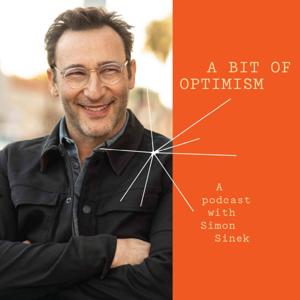


Based on Podcast App listening data
Maybe you know the feeling: everyone around you seems to be getting ahead, and every hour you spend on something "frivolous" — the hobby, the detour, the game on a Sunday afternoon — feels like falling behind.
Brendan Hunt's career is proof those hours are never wasted. The detour turned out to be the path all along.
Most of us know Brendan as Coach Beard and as the Emmy Award-winning co-creator of Ted Lasso. But before any of that, he was an unknown Chicago improv actor when the Amsterdam comedy institution Boom Chicago offered him something different. He moved to Amsterdam for a year… that turned into five… and he joined an alumni roster that now includes comedians like Seth Meyers, Jordan Peele, Amber Ruffin, and Jason Sudeikis.
Brendan performed every night, fell head over heels for soccer ("a soccer missionary for all Americans," as he puts it), and struck up a friendship with Jason Sudeikis. Years later, all of it collided into one of the most beloved shows on television, Ted Lasso, which is back for Season 4 on Apple TV+. Brendan has also returned to his first love, the stage, with his solo show The Movement You Need.
In this conversation, Brendan and I trace the wildly unplanned path from Chicago to Amsterdam to AFC Richmond… and land on a different way to think about ambition: master the craft in front of you, and let the plan catch up later.
In this episode you'll learn:
➡️ The real origin story of Ted Lasso (it began as a YouTube-only commercial written by a pool)
➡️ Why Coach Beard barely talks + the improv rule that explains everything he does
➡️ The "Beatles in Hamburg" secret to mastering any craft
➡️ Why stepping away won't put you behind (everything will be exactly where you left it)
➡️ How "wasting" Sundays watching Dutch soccer created the Lasso–Beard dynamic
➡️ The surprising origin of the BELIEVE sign + who it was designed to annoy
➡️ Why the flip side of belief is trust + and how it shapes Season 4
We spend so much of our lives protecting the plan. Brendan's story is a reminder that the things worth protecting are usually the ones we never planned for at all.
This… is A Bit of Optimism.
+ + +
This episode is brought to you by SAP. Bring it with SAP GROW. The AI Cloud ERP for any size business. Learn more at https://SAP.com/GROW
+ + +
Check out Brendan as Coach Beard on season 4 of Ted Lasso on Apple TV+: https://tv.apple.com/us/show/ted-lasso
If you want to learn more about Brendan’s solo show, The Movement You Need, head to: https://themovementyouneed.com
+ + +
Chapters
+ + +
Website: http://simonsinek.com
Leaderful: https://simonsinek.com/leaderful
Podcast: http://apple.co/simonsinek
Instagram: https://instagram.com/simonsinek
Linkedin: https://linkedin.com/in/simonsinek
Twitter: https://twitter.com/simonsinek
Facebook: https://www.facebook.com/simonsinek
+ + +
Every lasting relationship has survived at least a few hard conversations.
But most of us would still rather not have them... So we put them off and tell ourselves the tension will fade on its own. Instead it goes underground: into the stories we build about people, the resentments we quietly collect, and the side-texts we send about a colleague we won't talk to directly.
But a hard conversation is a short burst of discomfort in exchange for something better on the other side: trust, collaboration, and a relationship strong enough to survive the next one.
Feelings at Work is a special five-part series from A Bit of Optimism, where Simon Sinek and Alex Simon, founder of LifeShop, explore the human skills that shape how we work, lead, and build relationships. Together, they unpack the emotional challenges most of us face every day—from people pleasing and listening to giving feedback, taking accountability, and having difficult conversations.
In this final episode, Simon and Alex take on hard conversations: why tension is telling us something useful, why the story we build about someone gets harder to undo the longer we wait, and what to actually say when it's time to have the hard conversation.
Simon and Alex share tools like how to know when to bring something up so you don't show up hot, how to break the fourth wall and reset a conversation that's already going sideways, and the practice of “Watering Someone’s Flowers.”
In this episode you'll learn:
➡️ Why tension is a smoke signal telling you to address something
➡️ How conflict is a team sport for mutual understanding
➡️ How to move from "you're the problem" to both of you facing it together
➡️ The "resentment gremlin" + why feeding it feels so satisfying
➡️ When to initiate a hard conversation
➡️ Why it’s important to start with a request for grace
➡️ “Watering someone's flowers”: the practice that softens any tension
➡️ What to do instead of “feedback sandwiches”
➡️ How to interrupt, reset, and take something back during a conversation
Whether you're leading a team, dreading a review, or rehearsing the same speech in your car for the third week running, learning how to have hard conversations is an essential skill to build.
And remember: a hard conversation isn't a sign that something has gone wrong. It's a sign that something matters enough to fix.
This... is A Bit of Optimism.
+ + +
CHAPTERS
Chapters+ + +
Website: http://simonsinek.com/
Leaderful: https://simonsinek.com/leaderful
Podcast: http://apple.co/simonsinek
Instagram: https://instagram.com/simonsinek/
Linkedin: https://linkedin.com/in/simonsinek/
Twitter: https://twitter.com/simonsinek
Facebook: https://www.facebook.com/simonsinek
+ + +
About Alex Simon
Alex Simon is the founder of Lifeshop, a school for adult emotional education and teaches emotional intelligence at Yale University. She teaches the emotional and communication skills we all should've learned in school—but didn't.
She facilitates experiential workshops on how to have hard conversations, stop people pleasing, listen better, navigate major life transitions, and build healthier relationships. Her sessions are practical, deeply connective, and somehow shockingly fun.
When she was 27, Alex created The Self & Other: In Theory and Practice, one of Yale's most sought-after courses.
In 2025, she founded Lifeshop in New York to bring emotional education beyond the classroom and into everyday life. She also launched The School of Life in New York and leads workshops for organizations around the world.
Before dedicating her career to emotional education, Alex worked as a management consultant at Bain and held strategy and operations roles across industries. She has also lived and trained at Plum Village and Esalen and completed dozens of programs in mindfulness, communication, and personal development.
Everyone says they want more accountability at work… yet few of us think we're the ones who need to learn how to be more accountable.
Most of us believe we already know how to own a mistake. We've all said sorry and truly meant it. But meaning it and doing it well are two very different things. And when we’re the first to apologize, we model to everyone around us how cathartic accountability can be.
Feelings at Work is a special five-part series from A Bit of Optimism, where Simon Sinek and Alex Simon, founder of LifeShop, explore the human skills that shape how we work, lead, and build relationships. Together, they unpack the emotional challenges most of us face every day—from people pleasing and listening to giving feedback, taking accountability, and having difficult conversations.
In this episode, Simon and Alex take on accountability: why owning a mistake can feel like losing, why taking credit and dodging blame come from the same place, and what a real repair actually looks like.
You'll discover why owning your part doesn't mean admitting you were wrong, why the confidence to say, "I got that wrong," is what actually makes people follow you, and how to repair something in a way that genuinely clears a pathway forward. Simon and Alex share practical tools like the "wheelie bag" rule for separating intent from impact, the two-part formula that turns an empty gesture into apologies people can actually feel, Alex's practice of "micro-accountability" for owning small things before they accumulate, and the one word that quietly cancels everything you said before it.
In this episode you'll learn:
➡️ Why saying you're sorry doesn't mean you're wrong
➡️ The two-part apology formula: what you actually did + the impact it had
➡️ How to name someone's hurt + leave room to be corrected
➡️ "Micro-accountability": owning the small stuff before it turns into the big stuff
➡️ Why people who take too much credit are the same people who dodge blame
➡️ What real confidence actually looks like
➡️ How to receive an apology and why refusing it is its own kind of failure
➡️ Why being uncoachable is the biggest problem at work
➡️ How to ask people to build the fix with you
Whether you're leading a team, rebuilding trust with a colleague, or still quietly replaying an argument from three years ago, accountability is one of the most healing skills you can develop.
And remember: owning your part is a gift you give the other person AND you give yourself.
This... is A Bit of Optimism.
+ + +
CHAPTERS
Chapters+ + +
Website: http://simonsinek.com/
Leaderful: https://simonsinek.com/leaderful
Podcast: http://apple.co/simonsinek
Instagram: https://instagram.com/simonsinek/
Linkedin: https://linkedin.com/in/simonsinek/
Twitter: https://twitter.com/simonsinek
Facebook: https://www.facebook.com/simonsinek
+ + +
About Alex Simon
Alex Simon is the founder of Lifeshop, a school for adult emotional education and teaches emotional intelligence at Yale University. She teaches the emotional and communication skills we all should've learned in school—but didn't.
She facilitates experiential workshops on how to have hard conversations, stop people pleasing, listen better, navigate major life transitions, and build healthier relationships. Her sessions are practical, deeply connective, and somehow shockingly fun.
When she was 27, Alex created The Self & Other: In Theory and Practice, one of Yale's most sought-after courses.
In 2025, she founded Lifeshop in New York to bring emotional education beyond the classroom and into everyday life. She also launched The School of Life in New York and leads workshops for organizations around the world.
Before dedicating her career to emotional education, Alex worked as a management consultant at Bain and held strategy and operations roles across industries. She has also lived and trained at Plum Village and Esalen and completed dozens of programs in mindfulness, communication, and personal development.
Giving and receiving feedback is one of the hardest things we do at work and most of us just... avoid it.
But avoiding feedback has a cost. Everything you need to grow is already in the room and it's just sitting in your blind spot. Your colleagues can see it. Your boss can see it. And nobody will tell you, unless you learn to ask.
Feelings at Work is a special five-part series from A Bit of Optimism, where Simon Sinek and Alex Simon, founder of LifeShop, explore the human skills that shape how we work, lead, and build relationships. Together, they unpack the emotional challenges most of us face every day—from people pleasing and listening to giving feedback, taking accountability, and having difficult conversations.
In this episode, Alex and Simon take on feedback: how to give it, how to take it, and how to ask for it.
You’ll discover ways to give feedback people can actually hear, receive criticism without taking it personally, and build a feedback culture on any team. Alex and Simon share practical techniques like the one-word ritual Simon borrowed from the Air Force that made his whole company crave critiques, the “FBI” method for delivering hard feedback without blowing up relationships, and questions Alex asks her team to surface everything left unsaid, like "What are you afraid to tell me?"
In this episode you'll learn:
➡️ Why we avoid giving feedback + what that avoidance quietly costs our teams
➡️ "Spears": the Air Force ritual that turns criticism into something people actually want
➡️ The “FBI” (Feelings, Behavior, Impact) method for giving feedback people can actually hear
➡️ The Army Rangers' peer assessment’s "foxhole question" + what it reveals about character
➡️ How to think of feedback as preventative care and build that muscle
➡️ Why everyone receives feedback differently (+ how to give people what they need)
➡️ When to give feedback (hint: never the moment you think of it)
➡️ The four-word habit that builds a thick skin: "What can I do better?"
Whether you're leading a team, managing up, or just tired of side-texting about a problem no one will name out loud, feedback is one of the most valuable skills you can build.
And remember: feedback is kind, even when it’s not nice.
This... is A Bit of Optimism.
+ + +
+ + +
Website: http://simonsinek.com/
Leaderful: https://simonsinek.com/leaderful
Podcast: http://apple.co/simonsinek
Instagram: https://instagram.com/simonsinek/
Linkedin: https://linkedin.com/in/simonsinek/
Twitter: https://twitter.com/simonsinek
Facebook: https://www.facebook.com/simonsinek
+ + +
About Alex SimonAlex Simon is the founder of Lifeshop, a school for adult emotional education and teaches emotional intelligence at Yale University. She teaches the emotional and communication skills we all should've learned in school—but didn't.
She facilitates experiential workshops on how to have hard conversations, stop people pleasing, listen better, navigate major life transitions, and build healthier relationships. Her sessions are practical, deeply connective, and somehow shockingly fun.
When she was 27, Alex created The Self & Other: In Theory and Practice, one of Yale's most sought-after courses.
In 2025, she founded Lifeshop in New York to bring emotional education beyond the classroom and into everyday life. She also launched The School of Life in New York and leads workshops for organizations around the world.
Before dedicating her career to emotional education, Alex worked as a management consultant at Bain and held strategy and operations roles across industries. She has also lived and trained at Plum Village and Esalen and completed dozens of programs in mindfulness, communication, and personal development.
The fastest way to improve your relationships isn't talking. It's listening.
Most of us hear what's being said. Very few of us know how to make someone feel heard.
Feelings at Work is a special five-part series from A Bit of Optimism, where Simon Sinek and Alex Simon, founder of LifeShop, explore the human skills that shape how we work, lead, and build relationships. Together, they unpack the emotional challenges most of us face every day—from people pleasing and listening to giving feedback, taking accountability, and having difficult conversations.
In this episode, they explore one of the most important communication skills we can develop: listening.
Together, they share practical techniques to improve your listening skills, build trust, navigate difficult conversations, and create better outcomes at work and at home. You'll learn why people often ask for one thing but actually need another, how to stop jumping into fix-it mode, and Alex's simple Four-Second Rule for becoming a better listener.
When people feel heard, relationships grow stronger, conflicts become easier to navigate, and conversations become more meaningful.
Because better conversations don't require everyone to be a great listener.
They only require one.
In this episode you'll learn:
➡️ Why hearing someone isn't the same as making them feel heard
➡️ How to stop jumping into "fix-it mode" and start listening with curiosity
➡️ Alex Simon's simple Four-Second Rule for becoming a better listener
➡️ Why people often ask for one thing but actually need something else
➡️ How better listening builds trust, strengthens relationships, and improves teamwork
➡️ How to navigate conversations when power dynamics are involved
Whether you're leading a team, supporting a friend, or navigating a difficult conversation, listening is one of the most valuable skills you can develop.
Because when people feel heard, relationships grow stronger, conflict becomes easier to navigate, and better conversations follow.
This... is A Bit of Optimism.
+ + +
Chapters+ + +
Simon is an unshakable optimist. He believes in a bright future and our ability to build it together.
Described as “a visionary thinker with a rare intellect,” Simon has devoted his professional life to help advance a vision of the world that does not yet exist; a world in which the vast majority of people wake up every single morning inspired, feel safe wherever they are and end the day fulfilled by the work that they do.
Simon is the author of multiple best-selling books including Start With Why, Leaders Eat Last, Together is Better, and The Infinite Game.
+ + +
Website: http://simonsinek.com/
Leaderful: https://simonsinek.com/leaderful
Podcast: http://apple.co/simonsinek
Instagram: https://instagram.com/simonsinek/
Linkedin: https://linkedin.com/in/simonsinek/
Twitter: https://twitter.com/simonsinek
Facebook: https://www.facebook.com/simonsinek
+ + +
About Alex SimonAlex Simon is the founder of Lifeshop, a school for adult emotional education and teaches emotional intelligence at Yale University. She teaches the emotional and communication skills we all should've learned in school—but didn't.
She facilitates experiential workshops on how to have hard conversations, stop people pleasing, listen better, navigate major life transitions, and build healthier relationships. Her sessions are practical, deeply connective, and somehow shockingly fun.
When she was 27, Alex created The Self & Other: In Theory and Practice, one of Yale's most sought-after courses.
In 2025, she founded Lifeshop in New York to bring emotional education beyond the classroom and into everyday life. She also launched The School of Life in New York and leads workshops for organizations around the world.
Before dedicating her career to emotional education, Alex worked as a management consultant at Bain and held strategy and operations roles across industries. She has also lived and trained at Plum Village and Esalen and completed dozens of programs in mindfulness, communication, and personal development.
Welcome to Feelings at Work, a special series from A Bit of Optimism with Simon Sinek.
Work isn't just about deadlines, meetings, and getting things done. It's also where we experience frustration, excitement, trust, anxiety, belonging, conflict, and joy. If we want to build healthier teams and better workplaces, we have to get better at understanding the emotions that shape how we work together.
That's what this series is about.
In each episode, Simon Sinek sits down with Yale professor and Lifeshop founder Alex Simon to explore one emotional challenge that affects how we work, lead, and relate to one another. Together, they unpack the emotional skills most of us were never taught—but use every single day.
This episode is about saying yes.
Have you ever agreed to something... and immediately regretted it?
Maybe you didn't want to disappoint someone. Maybe you thought, I'll figure it out somehow. Maybe your calendar is packed, your to-do list never gets shorter, and somehow you're still worried you're letting people down.
Most of us don't think of ourselves as "people pleasers."
We just want to be helpful. We want to be dependable. We want to be someone others can count on.
But what if constantly saying yes is actually making things harder—for you and everyone around you?
Together, Simon and Alex explore why so many thoughtful, capable people take on more than they can realistically handle. They unpack the hidden patterns that lead to overwhelm, resentment, and burnout—and why trying to keep everyone happy can quietly make us less reliable.
The good news? This is a skill we can learn.
In this conversation, you'll discover practical ways to communicate more honestly, set healthier boundaries, and build stronger relationships—without feeling selfish or letting people down.
In this episode you'll learn:
➡️ Why saying yes too often can actually make you less reliable
➡️ The hidden connection between overwhelm, burnout, and self-betrayal
➡️ The simple phrase that creates space before committing
➡️ A better alternative to saying yes or no: how to "share the dilemma"
➡️ What leaders can do to create teams where people feel safe telling the truth
➡️ Why healthy boundaries strengthen relationships instead of hurting them
Whether you call it people pleasing or simply trying to keep up with everyone else's expectations, this conversation is a reminder that taking care of yourself isn't selfish.
It's one of the best ways to show up for the people who matter.
This... is A Bit of Optimism.
+ + +
Chapters
Chapters+ + +
Website: http://simonsinek.com/
Leaderful: https://simonsinek.com/leaderful
Podcast: http://apple.co/simonsinek
Instagram: https://instagram.com/simonsinek/
Linkedin: https://linkedin.com/in/simonsinek/
Twitter: https://twitter.com/simonsinek
Facebook: https://www.facebook.com/simonsinek
+ + +
About Alex SimonAlex Simon is a Yale professor and the founder of Lifeshop, a school for adult emotional education. She teaches the emotional and communication skills we all should've learned in school—but didn't.
She facilitates experiential workshops on how to have hard conversations, stop people pleasing, listen better, navigate major life transitions, and build healthier relationships. Her sessions are practical, deeply connective, and somehow shockingly fun.
When she was 27, Alex created The Self & Other: In Theory and Practice, one of Yale's most sought-after courses.
In 2025, she founded Lifeshop in New York to bring emotional education beyond the classroom and into everyday life. She also launched The School of Life in New York and leads workshops for organizations around the world.
Before dedicating her career to emotional education, Alex worked as a management consultant at Bain and held strategy and operations roles across industries. She has also lived and trained at Plum Village and Esalen and completed dozens of programs in mindfulness, communication, and personal development.
Maybe this sounds familiar: you fall hard for someone, and over a year later you're fighting about the very things that drew you to them in the first place. And you can't figure out how the person who felt so right suddenly feels so wrong.
Dr. Harville Hendrix has spent 50 years studying love. And he’s also lived through its hardest challenges: one divorce, two near-misses in his current marriage, and a couple’s therapist who fired him and his wife, calling them "the couple from hell." That marriage is now 45 years strong.
Harville is a couples therapist, and alongside his wife and creative partner Dr. Helen LaKelly Hunt, they creator Imago Relationship Therapy. They’ve also written 10 books, including the bestseller Getting the Love You Want, the book that made him a fixture on Oprah for nearly two decades. Harville’s theory is this: we don't consciously choose who we fall for, rather our unconscious does. And it has an agenda.
In this episode you'll learn:
➡️ Why you keep falling for the same person
➡️ What your childhood has to do with who you swipe right on
➡️ Why the "power struggle" phase might mean you picked the right person
➡️ The shift that saved Harville's own marriage after divorce papers were filed
➡️ Why some of us can't receive love (even when we ask for it)
➡️ What arranged marriages understood about commitment that we forgot
➡️ The difference between equal relationships and egalitarian ones
➡️ How to reach the stage where you have no needs left… only wants
In this conversation, Harville makes the case that real romantic love is what gets built after the fantasy collapses, when two people commit to the work of meeting each other's needs instead of demanding their own. And the engine of that transformation goes beyond compatibility and chemistry—it's gratitude and service.
This… is A Bit of Optimism.
+ + +
Want to keep up with Harville’s work? Check out: https://harvilleandhelen.com/
If you’d like to buy Harville & Helen’s latest book, How to Talk with Anyone about Anything, head to: https://harvilleandhelen.com/books/how-to-talk-with-anyone-about-anything/
+ + +
Chapters
+ + +
Simon is an unshakable optimist. He believes in a bright future and our ability to build it together.
Described as “a visionary thinker with a rare intellect,” Simon has devoted his professional life to help advance a vision of the world that does not yet exist; a world in which the vast majority of people wake up every single morning inspired, feel safe wherever they are and end the day fulfilled by the work that they do.
Simon is the author of multiple best-selling books including Start With Why, Leaders Eat Last, Together is Better, and The Infinite Game.
+ + +
Website: http://simonsinek.com/
Leaderful: https://simonsinek.com/leaderful
Podcast: http://apple.co/simonsinek
Instagram: https://instagram.com/simonsinek/
Linkedin: https://linkedin.com/in/simonsinek/
Twitter: https://twitter.com/simonsinek
Facebook: https://www.facebook.com/simonsinek
We tell ourselves the reason we never chase the big dream is that we're not ready, not brave enough, doomed to fail.
Nelly Attar would tell you she felt all of that too… but she chased them anyway.
Nelly is a psychologist turned extreme athlete and mountaineer. She built Saudi Arabia's first dance studio, MOVE, at a time when women couldn't train publicly by sneaking classes into a warehouse and office building after hours. She's the first Lebanese person to climb the five highest peaks in the world, like Everest. And she also became the first Arab to summit K2, the world’s second highest peak that’s so dangerous that one in four people who attempt it survive.
But what makes Nelly remarkable aren’t the summits and heights she reaches. It's that she's found a way to turn individual acts of accomplishment into acts of service: for the women she shows what's possible and for the team that climbs beside her.
In this episode you'll learn:
➡️ The difference between fear that protects you and fear that holds you back
➡️ How preparing and working hard can lighten the load for others
➡️ What small, daily kindness practices become the best investment you can make
➡️ Why there's no such thing as "self-made" and what actually de-risks courage
➡️ The art of “strategic retreat” + why quitting and retreating aren't the same thing
➡️ Why your title and achievements aren’t your identity (and what is)
➡️ How movement is medicine, and why the mind leads the body
➡️ What it really means to live a life of service to the people right in front of you
In this conversation, Nelly shows that the size of what you accomplish matters far less than the spirit you bring to it. She faces her fear for herself, but she does the hard work for everyone else.
This… is A Bit of Optimism.
+ + +
Want to keep up with Nelly’s adventures? Check out: https://www.nellyattar.com/
+ + +
Chapters
+ + +
Simon is an unshakable optimist. He believes in a bright future and our ability to build it together.
Described as “a visionary thinker with a rare intellect,” Simon has devoted his professional life to help advance a vision of the world that does not yet exist; a world in which the vast majority of people wake up every single morning inspired, feel safe wherever they are and end the day fulfilled by the work that they do.
Simon is the author of multiple best-selling books including Start With Why, Leaders Eat Last, Together is Better, and The Infinite Game.
+ + +
Website: http://simonsinek.com/
Leaderful: https://simonsinek.com/leaderful
Podcast: http://apple.co/simonsinek
Instagram: https://instagram.com/simonsinek/
Linkedin: https://linkedin.com/in/simonsinek/
Twitter: https://twitter.com/simonsinek
Facebook: https://www.facebook.com/simonsinek
Sixteen years ago, an unknown CEO running a manufacturing company in the Midwest saw my TED Talk and recognized something in it. He sent me a letter and we made plans to meet. What started as a one-hour lunch turned into three, then four days touring factories together across the Midwest, and an idea I had only imagined turned out to already exist in reality.
That CEO was Bob Chapman. Over five decades, Bob grew an unassuming manufacturing company in the Midwest into a global proof point that leadership grounded in humanity can scale and outperform. Bob saw the people in his company as human beings in his care, people he felt responsible to help become healthy, fulfilled, and whole. His belief was simple and profound: when people are cared for at work, they build happier families, stronger communities, and a better world. He called it Truly Human Leadership.
In the years that followed, Bob became something more: a mentor, a close friend, the central figure in my book Leaders Eat Last, and one of the people who shaped how I think about leadership itself.
In September 2025, I returned to one of Bob's factories in Phillips, Wisconsin, with a camera crew, to capture Bob's incredible legacy in his own words. Six months later, Bob passed away.
As a tribute to this great man, we're releasing the full conversation, in its entirety, for the first time.
In this episode you'll learn:
➡️ Why Bob believed in seeing every person as someone’s precious child
➡️ How Barry-Wehmiller rewrote the rules and
➡️ The university Bob built to teach his employees skills they were never taught
➡️ What impact a caring workplace can have on an employees life
➡️ The real difference between a prosperous company and a healthy one
➡️ Why Bob believed layoffs meant your business has failed
➡️ Why the greatest act of charity has nothing to do with the checks you write
➡️ What changed in Bob over the fifteen years Simon knew him
➡️ The letter Simon sent Bob years ago that ended up framed on his office wall
As Bob said, "You can retire from a job, but you can't retire from a calling." He never did. This conversation is a chance to hear why, in his own words.
This… is A Bit of Optimism.
+ + +
To buy Bob’s book, Everybody Matters, head to: https://simonsinek.com/optimism-press/everybody-matters
To read about Bob in my book, Leaders Eat Last, head to: https://simonsinek.com/books/leaders-eat-last
+ + +
Chapters
+ + +
Simon is an unshakable optimist. He believes in a bright future and our ability to build it together.
Described as “a visionary thinker with a rare intellect,” Simon has devoted his professional life to help advance a vision of the world that does not yet exist; a world in which the vast majority of people wake up every single morning inspired, feel safe wherever they are and end the day fulfilled by the work that they do.
Simon is the author of multiple best-selling books including Start With Why, Leaders Eat Last, Together is Better, and The Infinite Game.
+ + +
Website: http://simonsinek.com/
Leaderful: https://simonsinek.com/leaderful
Podcast: http://apple.co/simonsinek
Instagram: https://instagram.com/simonsinek/
Linkedin: https://linkedin.com/in/simonsinek/
Twitter: https://twitter.com/simonsinek
Facebook: https://www.facebook.com/simonsinek
Be honest: AI makes you a little nervous.
Maybe you're afraid it'll take your job. Maybe you're overwhelmed by all the advice about prompts and agents and which chatbot to use. Or maybe you're just quietly hoping it'll all slow down.
Ethan Mollick says we're underestimating our own agency in the age of AI. Instead of worrying about what AI will do to us, we should focus on what we choose to do with it.
Ethan is a Wharton professor, the author of the bestseller Co-Intelligence: Living and Working with AI, and the writer behind “One Useful Thing,” one of the most popular newsletters on AI, work, and education. He's spent twenty years studying how people actually use technology, and he's become the go-to voice for making sense of AI without the hype or the doom. And in his new book, Co-Existence: The Next Phase of AI, he explores what comes next as AI moves from a tool we prompt to a presence we live and work alongside.
In this conversation, Ethan shares the practical playbook most of us are missing and makes the case that our experience, taste, and point of view aren't things AI replaces. They're exactly what make us better at using it.
In this episode you'll learn:
➡️ Why young people are NOT "AI natives" (and why experience is the real AI advantage)
➡️ The $20 decision that instantly upgrades how you use AI
➡️ Why AI agrees with everything you say + the simple prompt that fixes it
➡️ How to make AI write in YOUR voice instead of sounding like everyone else
➡️ The "jagged frontier": what AI is surprisingly bad at (and why that's your opportunity)
➡️ Why taste may become the most valuable skill of the AI era
➡️ How much agency we really have over where AI takes us
Ethan believes that the future of AI isn't something that will just happen to us… It's something we get to build together.
This… is A Bit of Optimism.
+ + +
To pre-order Ethan’s new book, Co-Existence: The Next Phase of AI, head to: https://co-existence.ai/
Want to hear more from Ethan? Check out his Substack “One Useful Thing”: https://www.oneusefulthing.org/
+ + +
Chapters
+ + +
Simon is an unshakable optimist. He believes in a bright future and our ability to build it together.
Described as “a visionary thinker with a rare intellect,” Simon has devoted his professional life to help advance a vision of the world that does not yet exist; a world in which the vast majority of people wake up every single morning inspired, feel safe wherever they are and end the day fulfilled by the work that they do.
Simon is the author of multiple best-selling books including Start With Why, Leaders Eat Last, Together is Better, and The Infinite Game.
+ + +
Website: http://simonsinek.com/
Leaderful: https://simonsinek.com/leaderful
Podcast: http://apple.co/simonsinek
Instagram: https://instagram.com/simonsinek/
Linkedin: https://linkedin.com/in/simonsinek/
Twitter: https://twitter.com/simonsinek
Facebook: https://www.facebook.com/simonsinek
From the publisher's feed
Ranked by our users in the last 21 days

1,461 Listeners
1,336 Listeners

11,738 Listeners

21,048 Listeners
1,645 Listeners

8,334 Listeners

9,069 Listeners

27,909 Listeners

29,105 Listeners

640 Listeners

18,920 Listeners

159 Listeners

368 Listeners

8,469 Listeners
384 Listeners