
Sign up to save your podcasts
Or

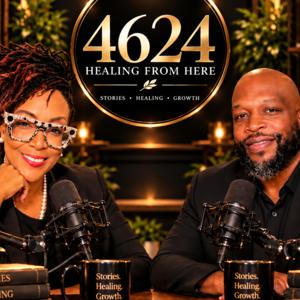


Radio personality Brandy "Beasy Baybie" Henshaw joins Ed Averette and L Michelle Salvant for one of the most transparent conversations in 4624 history. Foster care, teen motherhood, homelessness, a felony and a prison cell — then a prayer from a woman who wasn't sure God was real, and the second-chance life that followed: the mirror moment, aging out of the system, a prayer life AND a therapist, and a calling she never saw coming.SUBSCRIBE FOR NEW EPISODES OF 4624: HEALING FROM HERE.
Ed Averette went into foster care at 10 and aged out at 18. In this episode of 4624: Healing From Here, he tells his sister L Michelle Salvant everything — the 12 homes, the label that made him feel "less than," the day a judge made him a ward of the state, and the moment he decided his childhood was just preseason. If you grew up in the system, or love someone who did, this conversation is for you.
SUBSCRIBE FOR NEW EPISODES OF 4624: HEALING FROM HERE. DROP A COMMENT - WHAT DOES HEALING FROM HERE MEAN TO YOU? VISIT OUR WEBSITE @WWW.4624HEALINGFROMHERE.COM FOR MORE RESOURCES.
Can you love your father and still tell the truth about what he did?
Ed Averette and his sister L Michelle Salvant sit down for the conversation they once couldn't have — about the father they experienced in completely different ways. L Michelle knew the man who told her there was nothing she couldn't do, who pushed her into broadcasting and filled every room he entered. Ed knew the man whose abuse put him in foster care for eight years. In this tender, unflinching episode, they hold both truths at once: that he was all of those things, and that healing demands the whole story, not just the comfortable parts. They talk grace and boundaries, the “infamous phone call” that went left, and why choosing healing — out loud, together — changes everything for the generations after them.
Subscribe for new episodes of 4624: Healing From Here. Drop a comment - What does healing from here mean to you? Visit our website www.healingfromhere.com for more resources.
What do you do when you're healing, but the people around you aren't?
How do you maneuver around people who aren't healing? Ed Averette and L. Michelle Salvant of 4624: Healing From Here get honest about triggers, childhood trauma, boundaries, and forgiveness in this raw, unscripted sibling conversation. They trace their triggers back to childhood, question whether trauma can quietly create narcissistic or controlling behavior, and work through what healthy conflict actually looks like versus the avoidant kind most of us were taught. By the end, they land on a truth that reframes the whole episode: healing isn't a one-time event, even for two people who talk about it professionally. This is a candid look at holding onto your peace without cutting people off.
🔔 Subscribe for new episodes of 4624: Healing From Here
Visit our website @www.4624healingfromhere.com for our blog, newsletter and other resources.
Are we ever truly healed? 4624: Healing From Here returns for Season 3, and Ed and Michelle open up more than ever — recording live from Michelle's home in Savannah. Ed shares one of the hardest years of his life and admits this show has "made him soft," forcing him to feel things he'd buried since childhood. Michelle gets honest about the guilt of being caught in the middle of family loyalty. They revisit the explosive blowup from Season 2 and Ed tells, for the first time, the story of being removed from his childhood home by law enforcement — and what happened when he tried to go back. It's a raw conversation about resources vs. the Source, choosing the healed version of yourself, and why healing from here is a daily walk, not a finish line.
🔔 Subscribe for new episodes of 4624: Healing From Here 📌
💬 Drop a comment — what does "healing from here" mean to you?
What if the very place you ran to for safety — church, family, faith — turned out to be the source of your deepest wound? And what if God was still there the whole time?
In one of the most vulnerable and powerful episodes of 4624 Healing From Here, hosts Ed Averette and L Michelle Salvant sit down with their longtime friend, Pastor Nicky Collins — author, entrepreneur, and woman of deep, hard-won faith — for a conversation that goes to the very root of why so many people struggle to trust God after experiencing trauma. Together they tackle the question that lives quietly in the hearts of millions: If God is real, why did He let this happen to me?
Nicky opens up about growing up navigating the emotional complexity of having two fathers, the identity confusion that created, and how she learned to pray not from a house of strong religious structure, but out of sheer survival — convinced there had to be something greater than what she was living through. Ed shares his own raw truth about growing up in a home where Bible scriptures were read before he was beaten, and how that contradiction built a block between him and faith that took years to dismantle. L Michelle adds the layer so many trauma survivors carry silently — the desperate need, as a child, to simply feel seen by God in the midst of what was happening.
What makes this episode exceptional is that it doesn't stop at the pain. Pastor Nicky reframes the entire conversation with a single powerful insight: trauma can steal your identity, but it cannot cancel your purpose. She draws on her grandmother's tradition of preserving pears — cut up, exposed to heat, sealed away — as a living metaphor for how God preserves people through their hardest seasons, not despite the fire but through it. Ed lands the closing message with equal weight: God is the equalizer, available 24/7, and your trauma is not the whole book — it is just one chapter. The three close with a direct word to any child or adult still in the middle of the heat: you were created on purpose, for purpose, and you are preserved.
In Episode 9 of 4624: Healing From Here, hosts L. Michelle Salvant and Ed Averette are joined by Dr. Todd Schultz — a renowned psychologist and psychobiographer whose book and academic work on personality and biography have shaped the field. But it's a deeply personal article Todd wrote about his father's narcissism, his own childhood, and his sister's infamous airplane hijacking in the 1970s that brings him to the show. The conversation centers on the cost of telling the truth — what it takes to share your story, what it means to reject your family's delusion, and whether healing from a toxic family dynamic is even possible.
Todd opens up about the vulnerability of writing from personal experience for the first time, the role his editor played in helping him find the human center of his piece on narcissism, and why he believes truth — however painful — is the only path to real freedom. The hosts push the conversation further, exploring attachment theory, the family pact we unknowingly make as children, what it looks like to maintain a relationship with a narcissistic family member, and the moment you decide to step away entirely.
In Episode 8 of 4624: Healing From Here, Ed Averette and L. Michelle Salvant ask the question at the center of countless relationships — should you stay with or leave someone who carries unhealed childhood trauma?
Sparked by Taraji P. Henson's widely shared declaration that she refuses to date anyone's unhealed son, Ed and Michelle bring something most podcasts can't — personal honesty, spiritual grounding, and a real framework for navigating love when trauma is in the room. Both are married. Both are products of childhood trauma. And neither is here to give easy answers.
This episode covers red flags in early dating, why leaving is never simple, how generational patterns keep cycles alive, and the single most important factor that determines whether staying is wise or dangerous. They also speak directly to those causing the pain and challenge them to begin their healing journey now.
Domestic violence doesn't just end relationships, it ends lives. In this special episode of 4624: Healing From Here, hosts Ed Averette and L Michelle Salvant sit down with Shreveport City Councilwoman and Chairwoman Tabatha Taylor following a devastating domestic violence tragedy that claimed the lives of eight children in her district.
Chairwoman Taylor speaks candidly about what she witnessed firsthand — first responders leaving the scene, family members asking the community to allow them to grieve, and the long road of healing that lies ahead not just for the surviving family members, but for an entire city. She shares sobering national statistics on how domestic violence has risen sharply among African American women between 2020 and 2024, why silence and control keep victims trapped, and what a comprehensive, community-wide response actually looks like — from full-service domestic violence centers and mental health counselors, to churches opening their doors and organizations like 50 Cent's G-Unity Foundation investing directly in local nonprofits.
This is not a theoretical conversation. This is an on-the-ground account of what happens when we don't act — and a call for every community to stop being quiet.
If you or someone you know is experiencing domestic violence, the National Domestic Violence Hotline is available 24/7 at 1-800-799-7233 or thehotline.org.
When childhood trauma shows up in your adult relationships, are you actually reacting to your partner — or to a child inside you who never got the chance to heal?
CW: In Part 2 of their conversation with Dr. Yvette Mignon, Ed Averette and L Michelle Salvant go deeper into one of the most misunderstood forces in adult relationships: the inner child. Dr. Mignon breaks down how the inner child is really an emotional memory — feelings and experiences carried forward from childhood that quietly shape our behaviors, communication patterns, and emotional reactions in the present. The conversation gets personal fast, with L Michelle opening up about the difference between "spending time" and "passing time" with her son, and Ed sharing a real-life moment when his urgency in a professional email was read as aggression. Together, they tackle the tough questions: Can you experience childhood trauma if you grew up in a stable, two-parent home? Is forgiveness truly necessary for healing? And what does "taking a moment" actually look like in practice? Dr. Mignon reminds us that healing isn't about wallowing in the past — it's about recognizing the pattern, identifying the need behind emotion, and choosing a new response. The episode closes with a powerful reminder: you survived, you're still here, and the trauma is just a chapter. Now it's just a story.
Timestamped Chapters:
(00:00 - 02:00) When Love Meets Childhood Wounds (02:00 - 06:00) What Is the Inner Child Really Trying to Tell You (06:00 - 13:00) You Can't Outrun It — But You Can Outgrow It (13:00 - 19:00) Forgiveness, Freedom and Finding Your Way Forward
If this conversation helped you recognize patterns from your past, take a moment to answer the Spotify poll for this episode. Your experience may help someone else recognize their own healing journey.
If you're listening on Spotify, follow the show so you don’t miss upcoming conversations on healing, trauma, and personal growth.
From the publisher's feed