
Sign up to save your podcasts
Or


Odysseus, Craft, and Calypso.
When Pulitzer-Prize-winning novelist Michael Chabon was announced as the writer the Star Trek: Short Treks episode "Calypso," fans knew they would be in for something special. But the poignant, wry, and bold story he came up with was full of surprises. Chabon chose to set his episode a thousand years in Discovery's future, further than any Star Trek episode had gone before. Far from reveling in the high-tech futurism of the barely glimpsed world beyond the ship, he instead produced a bottle show that seemed fixated on the past—both Star Trek's and our own. The central premise—and title—of the story originate in Homer's ancient Greek epic poem Odyssey, while twentieth-century cultural curios Betty Boop and Funny Face add a quirky real-world humanity to this otherwise deeply detached tale.
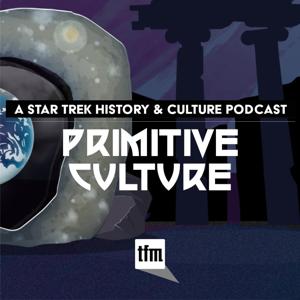
In this episode of Primitive Culture, hosts Clara Cook and Duncan Barrett consider how the use of cultural touchstones from long-ago play into the Star Trek: Short Treks episode "Calypso." Along the way, we consider the importance of names and stock epithets in the Homeric literary traditional, ideas of female sexuality as embodied in both classic Hollywood film and more recent forays into virtual romance, and how the products of an ancient, long-dead culture can continue to resonate centuries later.
Chapters Intro (00:00:00) Crafty Odysseus (00:08:04) Funny Faces (00:17:55) Romancing Alexa (00:31:10) Beyond the Short Form? (00:54:30) That Which Survives (01:09:20) Final Thoughts (01:16:30)
Hosts Clara Cook and Duncan Barrett Production Clara Cook (Editor) Duncan Barrett (Producer) C Bryan Jones (Executive Producer) Matthew Rushing (Executive Producer) Ken Tripp (Executive Producer) Tony Black (Associate Producer) Norman C. Lao (Associate Producer) Amy Nelson (Associate Producer) Richard Marquez (Production Manager) Brandon-Shea Mutala (Patreon Manager)
 View all episodes
 By Trek.fm

4.6
2121 ratings
Odysseus, Craft, and Calypso.
When Pulitzer-Prize-winning novelist Michael Chabon was announced as the writer the Star Trek: Short Treks episode "Calypso," fans knew they would be in for something special. But the poignant, wry, and bold story he came up with was full of surprises. Chabon chose to set his episode a thousand years in Discovery's future, further than any Star Trek episode had gone before. Far from reveling in the high-tech futurism of the barely glimpsed world beyond the ship, he instead produced a bottle show that seemed fixated on the past—both Star Trek's and our own. The central premise—and title—of the story originate in Homer's ancient Greek epic poem Odyssey, while twentieth-century cultural curios Betty Boop and Funny Face add a quirky real-world humanity to this otherwise deeply detached tale.
In this episode of Primitive Culture, hosts Clara Cook and Duncan Barrett consider how the use of cultural touchstones from long-ago play into the Star Trek: Short Treks episode "Calypso." Along the way, we consider the importance of names and stock epithets in the Homeric literary traditional, ideas of female sexuality as embodied in both classic Hollywood film and more recent forays into virtual romance, and how the products of an ancient, long-dead culture can continue to resonate centuries later.
Chapters Intro (00:00:00) Crafty Odysseus (00:08:04) Funny Faces (00:17:55) Romancing Alexa (00:31:10) Beyond the Short Form? (00:54:30) That Which Survives (01:09:20) Final Thoughts (01:16:30)
Hosts Clara Cook and Duncan Barrett Production Clara Cook (Editor) Duncan Barrett (Producer) C Bryan Jones (Executive Producer) Matthew Rushing (Executive Producer) Ken Tripp (Executive Producer) Tony Black (Associate Producer) Norman C. Lao (Associate Producer) Amy Nelson (Associate Producer) Richard Marquez (Production Manager) Brandon-Shea Mutala (Patreon Manager)
45 Listeners
16 Listeners
143 Listeners
159 Listeners
15 Listeners
113 Listeners
242 Listeners

76 Listeners
161 Listeners
125 Listeners
74 Listeners
8 Listeners
92 Listeners
111 Listeners
40 Listeners
6 Listeners
20 Listeners