
Sign up to save your podcasts
Or

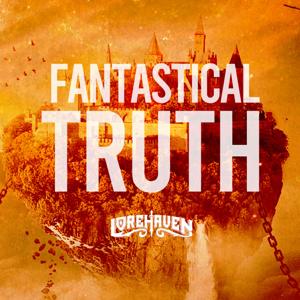

In our last episode, we explored the fact that Christians actually need fiction as part of our daily lives. However, we could stop there and presume that we only need “realistic” stories, such as historical or contemporary fiction. Instead, we’ll explore how Christian readers also benefit from fantasy stories, so much that we could also say that we need stories about fantastical other worlds, in order to pursue our chief end of glorifying Jesus and enjoying him forever.
Q: What is the chief end of man?
A: Man’s chief end is to glorify God, and to enjoy him forever.
“As I urged you when I went to Macedonia, remain in Ephesus so that you may instruct certain people not to teach false doctrine or to pay attention to myths and endless genealogies. These promote empty speculations rather than God’s plan, which operates by faith.”
“But have nothing to do with pointless and silly myths. Rather, train yourself in godliness.”
—1 Timothy 4:7, CSB
“Fairy tales are more than true: not because they tell us that dragons exist, but because they tell us that dragons can be beaten.”
—Attributed somewhat incorrectly to G. K. Chesterton, by Neil Gaiman in his epigraph to Coraline
“Fairy tales do not give the child his first idea of bogey. What fairy tales give the child is his first clear idea of the possible defeat of bogey. The baby has known the dragon intimately ever since he had an imagination. What the fairy tale provides for him is a St. George to kill the dragon.”
—G. K. Chesterton, “The Red Angel”
“I met a man the other day who did not believe in fairy tales. … He actually thought that fairy tales ought not to be told to children. … The man had come to see me in connection with some silly society of which I am an enthusiastic member; … ‘Man,’ I said, ‘who are you that you should not believe in fairy tales? It is much easier to believe in Blue Beard than to believe in you. … It is far easier to believe in a million fairy tales than to believe in one man who does not like fairy tales. … Folk-lore means that the soul is sane, but that the universe is wild and full of marvels. Realism means that the world is dull and full of routine, but that the soul is sick and screaming. The problem of the fairy tale is—what will a healthy man do with a fantastic world? The problem of the modern novel is—what will a madman do with a dull world? In the fairy tales the cosmos goes mad; but the hero does not go mad.'”
—G.K. Chesterton, The Dragon’s Grandmother
Hey guys!
I loved the topic and discussion in episode 50. (congratulations!) It reminded me of a conversation I had that’s worth sharing.
Some time ago I was lamenting to a friend how I wanted my kids to read more and fight their strong attraction toward online games. He said that he didn’t see much difference; One of his children was an online gamer, the other was an avid reader and both options used up hours of their time and was done alone.
His pushback made me consider why I felt that reading was superior. What I ‘found’ was this: Fiction uniquely invites us to become co-creators.
An author creates a framework of place, person, and plot but as the reader I must create the images and textures of that world in my mind, entering into the creative process. That imaginative responsibility makes the story more powerful and personal, as most creative acts do. And, because it’s co-creative, it’s never really done alone. Reading is always collaborative—even if the author’s framework must wait in time and space until I join in with my imagination.
Certainly other story forms involve creativity on my part, even video games, but I can’t think of anything that invites me to such a high level of collaborative world-building than a good work of fiction.
(And isn’t that the world we’re actually living in? God as author spoke our world into being and invited us to take the framework he’s given us, filling it with good things by way of our image-bearing creativity.)
We’ve explored fiction’s chief end, and now fantastical fiction’s chief end. Now, what about a genre within what we’d call fantastical stories: the specific genre of science fiction? These stories often imagine visions of our own world, and sometimes that’s a world that not only ignores these traditional fantasy images but ignores the existence of God—or even uses technology or theories to explain otherwise supernatural themes. We will explore why Christians may actually need science fiction, just like we need fiction and need fantasy.
 View all episodes
 By Lorehaven

4.9
4444 ratings
In our last episode, we explored the fact that Christians actually need fiction as part of our daily lives. However, we could stop there and presume that we only need “realistic” stories, such as historical or contemporary fiction. Instead, we’ll explore how Christian readers also benefit from fantasy stories, so much that we could also say that we need stories about fantastical other worlds, in order to pursue our chief end of glorifying Jesus and enjoying him forever.
Q: What is the chief end of man?
A: Man’s chief end is to glorify God, and to enjoy him forever.
“As I urged you when I went to Macedonia, remain in Ephesus so that you may instruct certain people not to teach false doctrine or to pay attention to myths and endless genealogies. These promote empty speculations rather than God’s plan, which operates by faith.”
“But have nothing to do with pointless and silly myths. Rather, train yourself in godliness.”
—1 Timothy 4:7, CSB
“Fairy tales are more than true: not because they tell us that dragons exist, but because they tell us that dragons can be beaten.”
—Attributed somewhat incorrectly to G. K. Chesterton, by Neil Gaiman in his epigraph to Coraline
“Fairy tales do not give the child his first idea of bogey. What fairy tales give the child is his first clear idea of the possible defeat of bogey. The baby has known the dragon intimately ever since he had an imagination. What the fairy tale provides for him is a St. George to kill the dragon.”
—G. K. Chesterton, “The Red Angel”
“I met a man the other day who did not believe in fairy tales. … He actually thought that fairy tales ought not to be told to children. … The man had come to see me in connection with some silly society of which I am an enthusiastic member; … ‘Man,’ I said, ‘who are you that you should not believe in fairy tales? It is much easier to believe in Blue Beard than to believe in you. … It is far easier to believe in a million fairy tales than to believe in one man who does not like fairy tales. … Folk-lore means that the soul is sane, but that the universe is wild and full of marvels. Realism means that the world is dull and full of routine, but that the soul is sick and screaming. The problem of the fairy tale is—what will a healthy man do with a fantastic world? The problem of the modern novel is—what will a madman do with a dull world? In the fairy tales the cosmos goes mad; but the hero does not go mad.'”
—G.K. Chesterton, The Dragon’s Grandmother
Hey guys!
I loved the topic and discussion in episode 50. (congratulations!) It reminded me of a conversation I had that’s worth sharing.
Some time ago I was lamenting to a friend how I wanted my kids to read more and fight their strong attraction toward online games. He said that he didn’t see much difference; One of his children was an online gamer, the other was an avid reader and both options used up hours of their time and was done alone.
His pushback made me consider why I felt that reading was superior. What I ‘found’ was this: Fiction uniquely invites us to become co-creators.
An author creates a framework of place, person, and plot but as the reader I must create the images and textures of that world in my mind, entering into the creative process. That imaginative responsibility makes the story more powerful and personal, as most creative acts do. And, because it’s co-creative, it’s never really done alone. Reading is always collaborative—even if the author’s framework must wait in time and space until I join in with my imagination.
Certainly other story forms involve creativity on my part, even video games, but I can’t think of anything that invites me to such a high level of collaborative world-building than a good work of fiction.
(And isn’t that the world we’re actually living in? God as author spoke our world into being and invited us to take the framework he’s given us, filling it with good things by way of our image-bearing creativity.)
We’ve explored fiction’s chief end, and now fantastical fiction’s chief end. Now, what about a genre within what we’d call fantastical stories: the specific genre of science fiction? These stories often imagine visions of our own world, and sometimes that’s a world that not only ignores these traditional fantasy images but ignores the existence of God—or even uses technology or theories to explain otherwise supernatural themes. We will explore why Christians may actually need science fiction, just like we need fiction and need fantasy.
630 Listeners

325 Listeners
7,188 Listeners
258 Listeners

5,373 Listeners

102 Listeners

1,199 Listeners

2,512 Listeners

1,477 Listeners
7 Listeners
34 Listeners