
Sign up to save your podcasts
Or

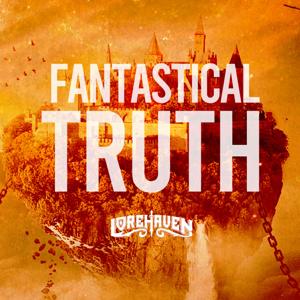

Some people say that science fiction is just fantasy with spaceships. Others would say that fantasy is about plausible impossible worlds, whereas sci-fi centers on possible, albeit improbable worlds. But is sci-fi something that Christians actually need? We’ll explore that today!
“The genre [of science fiction] draws us to its own views of redemption. Carl Sagan recognized the grip that the future, space, and the extraterrestrial hold on the post-Christian Western imagination. Spiritual seekers, then, get some answers and a taste of transcendence without the moral accountability or costly interpersonal commitments of church.”
—James A. Herrick at Christianity Today
“We’re living in a science fictional era, thanks to all the incredible technological and scientific discoveries we’ve made. In some sense, science fiction has ‘come true.’ This means science fiction is uniquely qualified to comment on the era we’re living in, and is the only pop culture that accurately reflects the world around us. Science fiction is for anybody who wants to imagine how the world will be, or could be, different.”
—Charlie Jane Anders, author and former managing editor of i09
Martin Cooper can recall the moment when he was at a break in his lab watching the episode of Star Trek when Kirk used his Communicator to call for help for an injured Spock, which later inspired him to invent the mobile phone.
The inventor of the MP3 [Karlheinz Brandenburg] can look back to the episode of Star Trek The Next Generation where Data was playing music from his computer and conceived of the idea of the digital music file. The series Star Trek: The Next Generation, Deep Space Nine, and Voyager pioneered the graphic art of the “okudagram” (named after scenic art supervisor Michael Okuda), the GUI interface in the LCARS operating system, later used in the PADD, (Personal Access Display Device), the hand-held computer interface that foresaw the design and touch functionality of Apple’s iPad and iPad mini.
Science fiction has always been the genesis of our greatest technological triumphs. The idea for land ironclads, first written about by H.G. Wells, were adapted by Winston Churchill into the first tank in military history. The idea of military aeroplanes was first written about by A.A. Milne, of Winnie the Pooh fame. The concept of atomic bombs is another idea that was first generated by H.G. Wells.
—Michael Venables, “Captain Kirk’s Call to Spock,” Forbes.com, April 3, 2013
“The thing with science fiction that’s different than other genres is that it’s always about the idea. The idea, in science fiction, is the real leading man or leading lady. And I like that because I’m a big fan of ideas. You always learn from ideas, even the crazy ones.”
—Seth Shostak, SETI director
“Science and technology belong to Christians as much as anyone, so why not the fiction that delves into their uses and effects?”
—novelist Kerry Nietz
“Your scientists were so preoccupied with whether or not they could, they didn’t stop to think if they should.”
—Ian Malcolm (Jeff Goldblum) in Jurassic Park (1993)
“I have no idea why I’m obsessed with science fiction TV and movies. I don’t know why I have that rather unusual desire. I wish I could tell you that something caused this in me, but I have no idea why.”
—Peter Boghossian, philosophy professor
This episode and #50 were both just awesome. I really, really enjoyed the thoughts and insights. This is such a great podcast. Keep up the excellent work.
So, I sent this podcast to my pastor (who happens to be my brother-in-law) and asked him when he’d last read anything but non-fiction. He’s a huge book lover, or he was in his life before him and his wife had tiny children and started church planting. He said it’s been YEARS since he’s read any fiction!
Just the other week, actors from Buffy the Vampire Slayer, decades later, enjoined the ongoing effort to expose Joss Whedon’s on-set abuses. Meanwhile, after another mob offensive, actress Gina Carano gets fired from The Mandalorian, then instantly she joins a conservative group that’s now making movies. When actors are fired from fantastic shows and directors get shunned for on-set scandals, what’s a Christian fan to think? We will explore how Christians might enjoy great stories while reckoning with this very real “cancel culture,” yet still identifying the idols that hide behind the scenes.
 View all episodes
 By Lorehaven

4.9
4444 ratings
Some people say that science fiction is just fantasy with spaceships. Others would say that fantasy is about plausible impossible worlds, whereas sci-fi centers on possible, albeit improbable worlds. But is sci-fi something that Christians actually need? We’ll explore that today!
“The genre [of science fiction] draws us to its own views of redemption. Carl Sagan recognized the grip that the future, space, and the extraterrestrial hold on the post-Christian Western imagination. Spiritual seekers, then, get some answers and a taste of transcendence without the moral accountability or costly interpersonal commitments of church.”
—James A. Herrick at Christianity Today
“We’re living in a science fictional era, thanks to all the incredible technological and scientific discoveries we’ve made. In some sense, science fiction has ‘come true.’ This means science fiction is uniquely qualified to comment on the era we’re living in, and is the only pop culture that accurately reflects the world around us. Science fiction is for anybody who wants to imagine how the world will be, or could be, different.”
—Charlie Jane Anders, author and former managing editor of i09
Martin Cooper can recall the moment when he was at a break in his lab watching the episode of Star Trek when Kirk used his Communicator to call for help for an injured Spock, which later inspired him to invent the mobile phone.
The inventor of the MP3 [Karlheinz Brandenburg] can look back to the episode of Star Trek The Next Generation where Data was playing music from his computer and conceived of the idea of the digital music file. The series Star Trek: The Next Generation, Deep Space Nine, and Voyager pioneered the graphic art of the “okudagram” (named after scenic art supervisor Michael Okuda), the GUI interface in the LCARS operating system, later used in the PADD, (Personal Access Display Device), the hand-held computer interface that foresaw the design and touch functionality of Apple’s iPad and iPad mini.
Science fiction has always been the genesis of our greatest technological triumphs. The idea for land ironclads, first written about by H.G. Wells, were adapted by Winston Churchill into the first tank in military history. The idea of military aeroplanes was first written about by A.A. Milne, of Winnie the Pooh fame. The concept of atomic bombs is another idea that was first generated by H.G. Wells.
—Michael Venables, “Captain Kirk’s Call to Spock,” Forbes.com, April 3, 2013
“The thing with science fiction that’s different than other genres is that it’s always about the idea. The idea, in science fiction, is the real leading man or leading lady. And I like that because I’m a big fan of ideas. You always learn from ideas, even the crazy ones.”
—Seth Shostak, SETI director
“Science and technology belong to Christians as much as anyone, so why not the fiction that delves into their uses and effects?”
—novelist Kerry Nietz
“Your scientists were so preoccupied with whether or not they could, they didn’t stop to think if they should.”
—Ian Malcolm (Jeff Goldblum) in Jurassic Park (1993)
“I have no idea why I’m obsessed with science fiction TV and movies. I don’t know why I have that rather unusual desire. I wish I could tell you that something caused this in me, but I have no idea why.”
—Peter Boghossian, philosophy professor
This episode and #50 were both just awesome. I really, really enjoyed the thoughts and insights. This is such a great podcast. Keep up the excellent work.
So, I sent this podcast to my pastor (who happens to be my brother-in-law) and asked him when he’d last read anything but non-fiction. He’s a huge book lover, or he was in his life before him and his wife had tiny children and started church planting. He said it’s been YEARS since he’s read any fiction!
Just the other week, actors from Buffy the Vampire Slayer, decades later, enjoined the ongoing effort to expose Joss Whedon’s on-set abuses. Meanwhile, after another mob offensive, actress Gina Carano gets fired from The Mandalorian, then instantly she joins a conservative group that’s now making movies. When actors are fired from fantastic shows and directors get shunned for on-set scandals, what’s a Christian fan to think? We will explore how Christians might enjoy great stories while reckoning with this very real “cancel culture,” yet still identifying the idols that hide behind the scenes.
630 Listeners

325 Listeners
7,184 Listeners
256 Listeners

5,371 Listeners

103 Listeners

1,195 Listeners

2,509 Listeners

1,476 Listeners
7 Listeners
34 Listeners