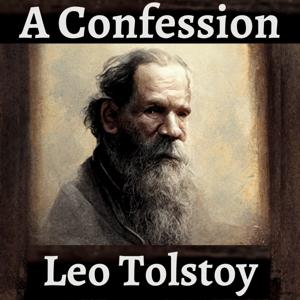
A Confession - Leo Tolstoy

A Confession - Leo Tolstoy

Download on the App Store

A Confession - Leo Tolstoy episodes

  • War and Peace, Book 13 1812-Leo Tolstoy
    "War and Peace, Book 13 1812" by Leo Tolstoy delves into the profound and tumultuous events of the year 1812, set against the backdrop of the Napoleonic Wars. This segment of Tolstoy's epic masterpiece captures the intricacies of human emotions, the struggle for identity, and the impact of war on society. Its exploration of themes such as fate, free will, and the interconnectedness of individual lives resonates deeply with contemporary listeners, reminding us that the complexities of human experience remain timeless. Tolstoy's rich narrative and philosophical insights offer a compelling reflection on the nature of conflict and the enduring quest for meaning in a chaotic world.

    This episode includes AI-generated content.
    2 hr 15 min
  • A Confession - Leo Tolstoy
    "A Confession" by Leo Tolstoy is a profound exploration of the search for meaning and the struggle with existential questions that resonate deeply across time. In this reflective work, Tolstoy grapples with the nature of life, death, and faith, confronting his own beliefs and the societal norms that shaped them. The themes of despair, the quest for authenticity, and the desire for spiritual fulfillment remain relevant today, inviting listeners to reflect on their own lives and the values they hold dear. Tolstoy's candid examination of his inner turmoil and the societal pressures he faced offers a timeless warning about the emptiness of material success without a deeper understanding of one's purpose. This powerful narrative encourages a journey inward, making it a compelling listen for anyone seeking clarity in a complex world.

    This episode includes AI-generated content.
    2 hr 7 min
  • Astrophel and Stella-Sir Philip Sidney
    "Astrophel and Stella" by Sir Philip Sidney is a poignant exploration of love, desire, and the complexities of the human heart, presented through a sequence of lyrical sonnets. This timeless work delves into the struggles of unrequited love and the interplay between passion and reason, themes that resonate deeply in today's world where emotional authenticity and vulnerability are increasingly valued. Sidney's masterful use of language and poetic form elevates the expression of love to an art, making it a profound experience for listeners. Engaging with this classic not only enriches our understanding of love's enduring nature but also invites reflection on our own emotional journeys.

    This episode includes AI-generated content.
    1 hr 41 min
  • War and Peace, Book 11 1812-Leo Tolstoy
    "War and Peace, Book 11 1812" by Leo Tolstoy delves into the tumultuous events of the year 1812, exploring the impact of war on society and the human spirit. This installment captures the struggles and resilience of individuals amidst the chaos of conflict, reflecting timeless themes of courage, sacrifice, and the search for meaning in the face of adversity. The narrative resonates today as it invites listeners to reflect on the nature of war and peace, and the profound effects they have on humanity. Tolstoy's masterful storytelling and deep philosophical insights make this work a compelling exploration of life’s complexities, ensuring its relevance for generations to come.

    This episode includes AI-generated content.
    6 hr 11 min
  • Flaw in the Crystal-May Sinclair
    "Flaw in the Crystal" by May Sinclair delves into the complexities of human perception and the imperfections that shape our understanding of reality. This thought-provoking narrative invites listeners to reflect on the nature of truth and the fragility of our beliefs, making it a timeless exploration of the human condition. Its themes of introspection and the quest for clarity resonate deeply in a world where certainty often feels elusive. Sinclair's keen insights into the flaws inherent in our perspectives remind us that embracing ambiguity can lead to a richer, more nuanced appreciation of life. This enduring work continues to challenge and inspire, inviting contemplation and discussion long after the final word is spoken.

    This episode includes AI-generated content.
    2 hr 15 min
  • Prelude-William Wordsworth
    "Prelude" by William Wordsworth is a profound exploration of the poet's journey, reflecting on the nature of poetry and the creative process. This work delves into the relationship between the poet and nature, emphasizing the importance of personal experience and emotion in the act of creation. Wordsworth's insights into the human condition and the power of imagination remain relevant today, inviting listeners to reconnect with their own feelings and the world around them. The themes of introspection and the role of the artist in society make "Prelude" an enduring masterpiece that continues to inspire and resonate with audiences seeking depth and meaning in their lives.

    This episode includes AI-generated content.
    7 hr 56 min
  • Adventures of Chatterer the Red Squirrel-Thornton W. Burgess
    "Adventures of Chatterer the Red Squirrel" by Thornton W. Burgess invites listeners into the lively world of Chatterer, a spirited red squirrel navigating the challenges of his woodland home. This charming tale captures the essence of curiosity and the importance of friendship, as Chatterer encounters various creatures and learns valuable lessons about life in the forest. The themes of adventure and the quest for knowledge resonate strongly today, reminding us of the joys of exploration and the bonds we form along the way. With its timeless appeal and engaging storytelling, this audiobook is a delightful escape into nature's wonders, perfect for listeners of all ages.

    This episode includes AI-generated content.
    2 hr 5 min
  • Sevastopol - Leo Tolstoy
    Sevastopol Sketches (Russian: Севастопольские рассказы, Sevastopolskiye rasskazy) are three short stories written by Leo Tolstoy and published in 1855 to record his experiences during the Siege of Sevastopol (1854–1855) in the Crimean War (1853-1856). The name originates from Sevastopol, a city in Crimea. The book has also been released under the anglicized title The Sebastopol Sketches and is sometimes titled Sevastopol Stories. These brief "sketches" formed the basis of many of the episodes in Tolstoy's magnum opus, War and Peace. Sevastopol in December: In Sevastopol in December, Tolstoy uses second person narrative (with the pronoun 'you') in an introductory tour of life in Sevastopol. The detailed tour is arguably similar to one Tolstoy may have been given upon arrival in Sevastopol in November, 1854…. Tolstoy also uses Sevastopol in December to introduce the reader to the settings, mannerisms, and background he uses in Sevastopol in May and Sevastopol in August. For example, when referring to the enemy, either the British or the French, but only the French are featured in the Sketches; they are referred to as " 'him', as both soldiers and sailors say". Sevastopol in May In Sevastopol in May, Tolstoy examines the senselessness and vanity of war. The story examines many aspects of the psychology of war, heroism, and the misleading presence of humanism in truces (misleading because countries continuously go to war with one another, despite past truces). Tolstoy concludes by declaring that the only hero of his story is truth. - Summary by Wikipedia and david wales

    This episode includes AI-generated content.

    4 hr 56 min
  • Hope of the Gospel - George MacDonald
    Perhaps most well-known for his fairy tales and fantasy stories such as The Golden Key and Phantastes, or for his poetry, George MacDonald was a great spiritual master of the nineteenth century. He spent several years as a minister in his native Scotland; however he was forced to resign his position due to ill health. He had a profound influence on such later writers as G. K. Chesterton and C. S. Lewis – the latter of whom considered MacDonald to be his spiritual father, and edited an anthology of his works. In The Hope of the Gospel, with his ever sagely style, MacDonald explores the essential heart of the gospel that is so often overlooked, both in his day and ours. Dissatisfied with cheap and hasty interpretations of Scripture, MacDonald invites us beneath the surface in a heartfelt meditation on all that Christ came to accomplish. (Summary by Jordan)

    This episode includes AI-generated content.
    6 hr 28 min
  • Moral Equivalent of War - William James
    William James's "The Moral Equivalent of War" presents a thought-provoking exploration of the necessity of certain virtues fostered by militarism, even as he advocates for peace. Written in 1910, this essay addresses the growing movement for international peace, acknowledging the challenges faced by pacifists in countering the arguments of militarists. James suggests that until a moral equivalent to war is found, the ideals of peace may remain unattainable. His insights into the human condition and the need for discipline resonate today, reminding us that the qualities developed through conflict can be redirected towards constructive, peaceful endeavors.

    This episode includes AI-generated content.
    44 min

About A Confession - Leo Tolstoy

From the publisher's feed

Experience the profound introspection and spiritual questioning suggested by the concept of confession. This podcast explores themes of self-examination, moral struggle, and the search for meaning,…

More shows like A Confession - Leo Tolstoy

In Our Time by BBC Radio 4

In Our Time

5,507 Listeners


