
Sign up to save your podcasts
Or

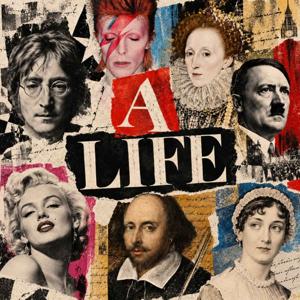


Marilyn Monroe: The Complete Life
Everyone knows the face. The blonde hair, the breathy voice, the photographs, the films and the image that has become one of the most enduring symbols of twentieth-century popular culture. But who was the woman behind it?
In this special omnibus edition of A Life with Paul Carmichael, we bring together all five episodes exploring the extraordinary life of Marilyn Monroe, from her childhood as Norma Jeane Mortenson in Los Angeles to her emergence as Hollywood’s most celebrated star.
We follow the making of Marilyn Monroe: the modelling assignments, the studio system, the films that made her famous, the marriages and relationships, and her increasingly determined fight for artistic independence. We explore her work with some of cinema’s greatest figures, the pressures that accompanied her fame, and the final, unfinished chapter of her life.
Her death, at just 36, helped create a legend that has continued to grow, sometimes obscuring the complicated, ambitious and talented woman who lived behind it.
Five episodes. One extraordinary life. And a chance to look beyond the legend to discover how the woman became it.
Researched, written and read by Paul Carmichael.
Hosted on Acast. See acast.com/privacy for more information.
1960–1962, and beyond
By the beginning of the 1960s, Marilyn Monroe had achieved much of what she had once dreamed of, yet her personal life and professional future remained uncertain. Her marriage to Arthur Miller had ended, her health was fragile, and the film industry that had helped create her was once again proving difficult to negotiate.
This final episode follows Marilyn through the aftermath of The Misfits, her return to Hollywood for Something’s Got to Give, and the celebrated appearance at President John F. Kennedy’s birthday fundraiser in May 1962. It then examines the circumstances surrounding her death at the age of thirty-six, the official findings, and the speculation that has continued ever since.
But this is not simply a story about a tragic ending. It is an attempt to look beyond the photographs and the mythology, and to remember the actress, the ambition, the intelligence, the humour and the determination that made Marilyn Monroe far more than the image the world came to recognise.
Everyone knows the legend. But how did the person become the legend?
Researched, written and read by Paul Carmichael.
Hosted on Acast. See acast.com/privacy for more information.
1955–1960
Marilyn Monroe had spent years fighting to be recognised as an actress. Now she was prepared to take that fight further, moving to New York, studying at the Actors Studio and establishing her own production company with photographer Milton Greene.
Her ambition was clear: she wanted to choose better roles, work with directors she respected and have a greater influence over the films she made. The consequences of that determination would shape the next stage of her career.
This episode explores her new professional independence, her marriage to playwright Arthur Miller, and the demanding productions of Bus Stop, The Prince and the Showgirl and Some Like It Hot. It also follows the making of The Misfits, a film that brought together an extraordinary cast while exposing the personal and professional pressures gathering around its leading actress.
Behind the familiar image was a woman who was still learning, still working and still trying to determine the course of her own life. But the struggle for independence had not brought the peace she might have hoped for.
Researched, written and read by Paul Carmichael.
Hosted on Acast. See acast.com/privacy for more information.
1950–1955
By the early 1950s, Marilyn Monroe was becoming one of Hollywood’s most valuable attractions. Her performances in The Asphalt Jungle and All About Eve had attracted attention, while Niagara, Gentlemen Prefer Blondes and How to Marry a Millionaire turned her into an international star.
But the image that audiences adored was also becoming a limitation. Marilyn understood the commercial value of the blonde persona, yet she wanted more substantial roles, greater respect and a say in the direction of her own career.
This episode follows the rise of the star, the relationships that helped and complicated her progress, the publicity controversies that surrounded her, and the growing conflict with Twentieth Century-Fox. Her marriage to Joe DiMaggio, the extraordinary attention surrounding The Seven Year Itch, and her increasingly determined efforts to challenge the studio system all form part of the story.
Marilyn Monroe had become a major star. Now she wanted something that Hollywood was much less willing to give her: control.
Researched, written and read by Paul Carmichael.
Hosted on Acast. See acast.com/privacy for more information.
1945–1948
A modelling career, a Hollywood screen test and a new name. The transformation from Norma Jeane Baker into Marilyn Monroe was under way, but becoming a film star would prove rather more complicated than changing her appearance.
This episode explores the modelling world that first gave Norma Jeane professional opportunities, the photographers who helped shape her public image, and the lessons she learned about presenting herself in front of a camera. We follow her first encounters with the Hollywood studio system, the Fox contract that offered a foothold in the film industry, and the decision to adopt the name Marilyn Monroe.
There were acting lessons, small film roles, publicity photographs and the gradual construction of a recognisable screen identity. But the studios were not waiting for her with a succession of leading roles, and her early contracts offered no guarantee of success.
Marilyn Monroe was becoming a name. The challenge was to make the people behind that name take her seriously.
Researched, written and read by Paul Carmichael.
Hosted on Acast. See acast.com/privacy for more information.
Norma Jeane Mortenson · 1926–1945
Before the blonde hair, the red lips and the photographs that would make her one of the most recognisable women in the world, there was a little girl called Norma Jeane.
Born in Los Angeles in 1926, Norma Jeane grew up in circumstances marked by uncertainty. Her mother struggled with mental illness, her childhood involved a succession of homes and guardians, and the security most children take for granted was often beyond her reach. At sixteen, she married James Dougherty, and during the Second World War she found work in a factory making aircraft components.
It was there that a photographer noticed her.
This first episode follows Norma Jeane through the experiences that shaped her early life, separating the established history from the familiar stories that have gathered around her. We leave her at the beginning of a new possibility: a young woman discovering that the camera might offer a different future.
Before there was Marilyn Monroe, there was Norma Jeane. And her story had only just begun.
Researched, written and read by Paul Carmichael.
Hosted on Acast. See acast.com/privacy for more information.
Elizabeth I’s life spanned one of the most turbulent and transformative periods in English history. Born the daughter of Henry VIII and Anne Boleyn, she grew up amid religious upheaval, dynastic uncertainty and the dangerous politics of the Tudor court. Her mother’s execution, her own changing status, imprisonment and years of uncertainty under Mary I shaped the experiences of a young woman who would eventually rule England for forty-four years.
Across this complete five-part biography, we follow Elizabeth from vulnerable princess to formidable monarch, exploring the intelligence, political instincts and carefully cultivated public image that helped her maintain power in a world dominated by men. We encounter the people who shaped her life, from William Cecil and Robert Dudley to Francis Walsingham and Robert Devereux, Earl of Essex, while examining the religious conflicts, international rivalries and questions of marriage and succession that repeatedly threatened her reign.
We also explore the extraordinary cultural world that flourished during her rule, the defeat of the Spanish Armada, the changing character of England, and the difficulties faced by an ageing Queen whose authority remained immense even as the people and circumstances around her changed.
Elizabeth became the Virgin Queen, Gloriana, a symbol of national identity whose image was carefully preserved long after the realities of age and mortality could no longer be concealed. Yet behind the portraits and the legend was a human being who had survived the destruction of her family, learned to navigate the treacherous machinery of power, and spent a lifetime resisting the demands of others.
Her death in 1603 brought the Tudor dynasty to an end, leaving England to face a future she had spent decades postponing.
This is the story of Elizabeth I: not simply the Queen history remembers, but the woman who became her.
Researched, written and read by Paul Carmichael
Hosted on Acast. See acast.com/privacy for more information.
At the beginning of the seventeenth century, Elizabeth remained Queen, but the stability of her final years was increasingly fragile. The question of succession, postponed throughout her reign, could no longer be ignored. Her relationship with Essex had reached a breaking point, and the events that followed would expose the dangers of allowing a favourite to mistake royal affection for political independence.
This final episode explores the collapse of Essex’s position, his rebellion in 1601 and his execution, before turning to the Queen’s final years. The court was changing, the old generation was disappearing, and the Tudor dynasty had no direct heir. Elizabeth’s long reign had transformed England’s political and cultural identity, but she could not determine what would happen after her death.
On 24 March 1603, Elizabeth died at Richmond Palace, bringing the Tudor dynasty to an end. James VI of Scotland succeeded her as James I of England, uniting the crowns in a new monarchy. The woman who had spent her life managing uncertainty left behind a kingdom that had to move forward without her.
Her story was not simply one of survival, power or legend. It was the story of a woman who turned the vulnerabilities of her position into a distinctive form of authority, and whose image would continue to shape how England understood itself long after the last Tudor had gone.
Researched, written and read by Paul Carmichael.
Hosted on Acast. See acast.com/privacy for more information.
In 1588, the defeat of the Spanish Armada appeared to confirm Elizabeth’s position as a monarch who had survived every threat to her authority. Yet beneath the triumph, the world that had shaped her reign was beginning to disappear. Robert Dudley, Earl of Leicester, died soon after the Armada campaign, followed in the years ahead by other trusted figures, including Francis Walsingham, Christopher Hatton and William Cecil, Lord Burghley.
As Elizabeth grew older, her public image became ever more carefully controlled, while the country around her developed a cultural confidence that would find expression in the theatre of Shakespeare and his contemporaries. A new generation had grown up knowing no other monarch, and among its most ambitious figures was Robert Devereux, Earl of Essex, whose charisma and military reputation brought him unusually close to the Queen.
The episode follows the increasingly difficult relationship between Elizabeth and Essex, the continuing conflict in Ireland, and Essex’s disastrous campaign as Lord Lieutenant. When he returned to England in 1599 without resolving the crisis or waiting for the Queen’s permission, he brought the conflict between royal authority and personal ambition directly to Elizabeth’s door. The future was approaching, and Elizabeth could no longer control every part of it.
Researched, written and read by Paul Carmichael.
Research and Evidence Note
This script draws on contemporary documentary evidence where available, while distinguishing established fact from interpretation. Particular attention has been paid to the surviving correspondence of Robert Devereux, Earl of Essex, records of his 1599 Irish campaign, the Ditchley Portrait and Elizabeth’s concern with royal portraiture, and the documented presence of Shakespeare’s company at court. It does not treat a sexual relationship between Elizabeth and Essex as established fact, diagnose Elizabeth’s private psychology, or project Essex’s 1601 rebellion backwards into 1599.
Key primary-source repositories and references consulted:
· British Library, Add MS 74286: letters from Robert Devereux, 2nd Earl of Essex, to Elizabeth I, including correspondence from Ireland in 1599.
· British Library, Cotton MS Titus B XIII: contemporary papers on Ireland, Essex’s 1599 campaign and Elizabeth’s response to his conduct.
· British Library, Add MS 5495: contemporary material including the account of the Essex–Tyrone parley of 7 September 1599.
· British Library, Stowe MS 167: correspondence concerning Essex’s appointment as Lord Deputy of Ireland in March 1599.
· The Metropolitan Museum of Art: Ditchley Portrait of Elizabeth I, Marcus Gheeraerts the Younger, c.1592, and accompanying curatorial interpretation.
· Shakespeare Birthplace Trust: evidence concerning the Lord Chamberlain’s Men and their performances at Elizabeth’s court.
Hosted on Acast. See acast.com/privacy for more information.
As Elizabeth’s reign progressed, the question of marriage became inseparable from the question of succession. The Queen’s refusal to commit herself to a husband frustrated Parliament, complicated diplomacy and fuelled speculation across Europe. Gradually, the image of Elizabeth as the Virgin Queen became an increasingly powerful political and cultural idea, allowing her unmarried status to be presented not simply as a personal choice, but as a form of devotion to England.
This episode examines the development of that image alongside the dangers that threatened the monarchy. The arrival of Mary, Queen of Scots, in England created a persistent problem for Elizabeth, bringing together questions of dynastic legitimacy, Catholic resistance and the possibility of an alternative monarch. Rebellion, conspiracy and international rivalry made the succession question more urgent, while the execution of Mary in 1587 marked one of the most consequential decisions of Elizabeth’s reign.
The Virgin Queen was becoming a legend, but the woman behind the image continued to govern in a world of uncertainty. As tensions with Spain intensified, Elizabeth’s kingdom approached the crisis that would define the following year.
Researched, written and read by Paul Carmichael.
Research note
This episode has been written with particular attention to National Archives material concerning Elizabethan propaganda, Mary, Queen of Scots' ciphers and the Babington Plot, as well as the documented relationship between Elizabeth and Robert Dudley. The episode deliberately distinguishes surviving evidence from later tradition, particularly around Elizabeth's sexuality, the exact wording of the Tilbury speech, Mary's involvement in conspiracies, and Shakespeare's personal relationship with Elizabeth. The National Archives describes the Babington correspondence and ciphers as evidence used to implicate Mary, while also noting that the conspiracy was allowed to proceed so that further plotters could be implicated.
Hosted on Acast. See acast.com/privacy for more information.