
Sign up to save your podcasts
Or

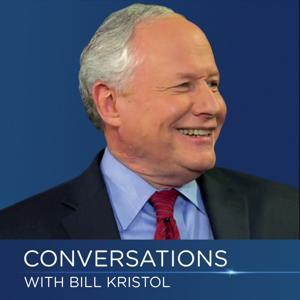

Tensions between the United States and China have been rising as a result of the coronavirus pandemic. There is urgent need to think about the U.S.-China relationship and how the U.S. should confront the challenge. In this Conversation, Princeton professor and author of A Contest for Supremacy: China, America, and the Struggle for Mastery in Asia, Aaron Friedberg argues that the pandemic has accelerated a fact apparent for some time—namely, that strategic competition between the U.S. and China is likely to be the central question of geopolitics in the years ahead. According to Friedberg, one effect of the current crisis may be emerging bipartisan agreement that China represents a serious threat to American interests and principles. Friedberg asserts that it is yet unclear how America will react to the challenge from China—much will depend on elections, strategic choices, and other factors. But, Friedberg argues, we are unlikely to return to a policy consensus that seeks seamless integration of China into the world order. And, in this timely and important Conversation, Friedberg sketches some political, ideological, and economic factors the United States will have to confront as it attempts to develop a comprehensive China strategy.
 View all episodes
 By Bill Kristol

4.7
19621,962 ratings
Tensions between the United States and China have been rising as a result of the coronavirus pandemic. There is urgent need to think about the U.S.-China relationship and how the U.S. should confront the challenge. In this Conversation, Princeton professor and author of A Contest for Supremacy: China, America, and the Struggle for Mastery in Asia, Aaron Friedberg argues that the pandemic has accelerated a fact apparent for some time—namely, that strategic competition between the U.S. and China is likely to be the central question of geopolitics in the years ahead. According to Friedberg, one effect of the current crisis may be emerging bipartisan agreement that China represents a serious threat to American interests and principles. Friedberg asserts that it is yet unclear how America will react to the challenge from China—much will depend on elections, strategic choices, and other factors. But, Friedberg argues, we are unlikely to return to a policy consensus that seeks seamless integration of China into the world order. And, in this timely and important Conversation, Friedberg sketches some political, ideological, and economic factors the United States will have to confront as it attempts to develop a comprehensive China strategy.

6,295 Listeners

20 Listeners
12,649 Listeners
4,611 Listeners

8,103 Listeners

1,342 Listeners
4,021 Listeners

4,670 Listeners

2,612 Listeners
495 Listeners

2,290 Listeners

3,198 Listeners
3,474 Listeners

1,082 Listeners
784 Listeners