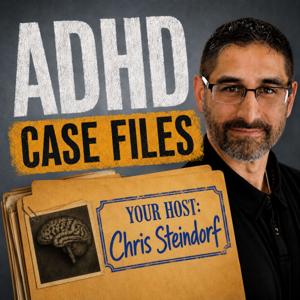
A son’s lifelong struggle to understand his father — The episode begins with the emotional absence you experienced and the childhood conclusion that followed: “I will not become my father.”
How your ADHD diagnosis changed the evidence — Being diagnosed at 46 caused you to investigate not only yourself, but your father’s history, trauma, behavior, and what you believe was his undiagnosed ADHD.
The two conversations at your father’s deathbed — First, the hurt teenager finally confronts his father. Then you return as the grown man who can see both what his father failed to give you and what your father himself never received.
Breaking generational patterns instead of inheriting them — Your promise that “when you die, poverty dies with you” expands beyond money into identity, shame, silence, emotional disconnection, and generations of people believing they are defective.
Why ADHD Case Files is dedicated to your father — His unopened case becomes part of the mission: investigate behavior rather than simply judge it, give people language for what they're experiencing, and help others understand themselves while there is still time.
3 Key Takeaways
1. Understanding someone doesn't excuse what they did—it changes how you interpret the evidence.
One of the strongest ideas in the episode is your shift from asking “Why wouldn't you?” to “What if he didn't know how?” You preserve accountability while making room for understanding.
2. Patterns that aren't investigated can become identities that get passed down.
Pain, shame, silence, beliefs, and coping behaviors can travel through generations until somebody becomes willing to examine them. Your message is that inheritance doesn't have to determine continuation: “It can change with you.”
3. Your father's closed case became part of the purpose behind yours.
You can't give your father the understanding he never received, but you can use what his life taught you to help another father, son, daughter, or late-diagnosed adult understand themselves before their own case closes.
“Patterns that aren't investigated get inherited. Pain that isn't understood gets transferred. Beliefs that aren't questioned become identity.”
-Chris Steindorf
Chris Steindorf
[email protected]
Connect with Chris on your favorite social media platform
Facebook: https://www.facebook.com/chris.steindorf.2025
LinkedIn: https://www.linkedin.com/in/chris-steindorf-89a5363a6/
For more information, go check out the ADHD Case Files website
https://adhdcasefiles.com