
Sign up to save your podcasts
Or

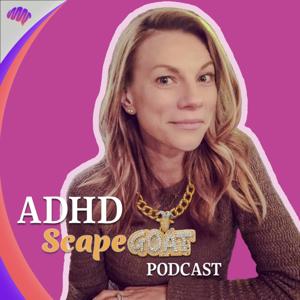


What happens when a brain that struggles with executive dysfunction also deals with the rigid demands of OCD? In this episode of the ADHD Scapegoat Podcast, host Angie shares her personal journey navigating the coexistence of ADHD and OCD. Rather than these conditions acting as "quirky opposites," she explains how they often compound one another, creating a cycle of cognitive chaos and a desperate need for absolute control.
Angie dives deep into the "I have to get it right" mindset. For many who grew up as the family scapegoat, perfectionism is not a personality trait or a "bad habit." It is a survival strategy. When a child is punished for their ADHD symptoms or blamed for things they cannot control, the brain weaponizes perfectionism as a shield to avoid further criticism, shame, or abandonment.
In this episode, we explore:
If you have ever felt that you must be perfect just to be accepted, or if you struggle with the mental loop of "getting it right," this episode offers validation and a path toward understanding your brain without shame.
What happens when a child's neurological differences are viewed as moral failings? In this episode of the ADHD Scapegoat Podcast, Angie explores the "double stigma" of having ADHD while being the family scapegoat. Using the powerful analogy of corrective eyewear, she explains why ADHD support should be seen as practical maintenance rather than a special favor.
Angie breaks down the "layers of the onion" to show how baseline ADHD struggles are compounded by a lack of support, scapegoating, and deep trauma wounds. When a child is told they are lazy or defiant for struggling with executive dysfunction, the brain enters survival mode. This transforms traits like hyperfocus into hypervigilance and perfectionism.
In this episode, we explore:
If you grew up believing you were "too much" or "not enough," this episode is a reminder that you were never the problem. You were simply an unsupported brain in a system that didn't understand you.
Have you ever asked a simple question only to find yourself defending your entire character? In this episode of the ADHD Scapegoat Podcast, we explore the frustrating and confusing experience of having your curiosity, concern, and need for clarity interpreted as malicious intent.
For those in narcissistic or abusive family systems, asking "why" is often seen as an attack. This is especially true for the ADHD scapegoat, whose natural pattern recognition and justice sensitivity allow them to spot inconsistencies that others ignore. When you point out a contradiction, you aren't just asking a question; you are threatening the controller's narrative.
In this episode, we discuss:
If you have been told that your curiosity is "meddling" or your concerns are "drama," this episode is a reminder that your need for truth is not a character flaw. It is time to stop accepting a false verdict on your character and start trusting your own reality.
For many, the start of a new school year brings back a flood of memories. But for those who grew up with undiagnosed ADHD and as the family scapegoat, those memories are often tied to a cycle of overcompensation, misunderstanding, and isolation. In this episode, Angie reflects on her experience as the "new kid" who had to constantly adapt to new environments while battling a nervous system that no one understood.
Angie explores the exhausting reality of being a "high functioning" girl with ADHD. She discusses the common report card trope of being "bright but lacking effort" and reveals the invisible labor she performed as a child just to survive the day. From waking up at 5:00 AM to avoid sensory overload to relying on extreme urgency to get work done, she highlights how previous success is often used as evidence that a child doesn't need support.
In this episode, we discuss:
If you spent your childhood feeling like you were the problem, or if you are a parent trying to support a neurodivergent child in a way you weren't supported, this episode offers validation and a path toward healing.
Have you ever felt like you were playing a game where the rules changed every time you started to win? In this episode of the ADHD Scapegoat Podcast, host Angie explores the "fluid morals" and "situational rules" of dysfunctional family systems.
For the family scapegoat, rules are often weaponized to maintain control, while other family members violate those same standards without consequence. This conversation dives into why ADHD brains, with their high justice sensitivity and strong pattern recognition, find these contradictions particularly painful and exhausting.
In this episode, we discuss:
Situational vs. Universal Morals: How narcissistic systems use rules as a power tool rather than a moral compass.
The ADHD Scapegoat Trap: The "Hamster Wheel" of trying to find the perfect explanation to make others understand your reality.
Mending the Fence: Why you might be doing all the relational labor in a relationship that isn't reciprocal.
Hypervigilance: How inconsistent rules keep your nervous system in a constant state of scanning for danger.
Unlearning the Rulebook: Why "that’s just how they are" is not an excuse for abuse, and how to stop betraying yourself to keep the peace.
If you have spent years trying to be "less sensitive" or "better at communicating" only to be met with more criticism, this episode will help you validate your experience. It is time to stop trying to solve relational equations with zero consistent variables and start trusting your own reality.
#ADHD #FamilyScapegoat #NarcissisticFamily #JusticeSensitivity #TraumaRecovery #Healing #Neurodivergent #Boundaries
Is it just sibling rivalry, or is it something more sinister? In this episode of the ADHD Scapegoat podcast, host Angie and her husband Jeremy dive into the painful distinction between normal sibling conflict and actual sibling bullying. Many toxic family systems use phrases like "siblings fight" or "boys will be boys" as a cover story to minimize one-sided targeting and emotional abuse.Angie and Jeremy compare their vastly different childhood experiences to highlight how healthy conflict involves mutual disagreement and eventual repair, while sibling bullying relies on a persistent power imbalance and intentional harm. They specifically explore how children with undiagnosed ADHD are often trapped in this dynamic, as their natural justice sensitivity and emotional dysregulation are used to label them as the "difficult" one while the bully is protected.
If you have spent years wondering why you cannot "just get over" the way your sibling treats you, this conversation will help you validate your experience and stop honoring a family narrative that requires you to stay small.
In this episode of the ADHD Scapegoat podcast, host Angie dives into the common experience of being labeled "difficult" or a "bitch." For many ADHD women and family scapegoats, these terms are weaponized the moment they stop over-functioning and start setting boundaries.
Drawing inspiration from "The Bee and the Fox," Angie explores the difference between being cruel and simply declining to manage other people's emotions.
When a woman stops automatically repairing things she didn't break or explaining herself to people committed to misunderstanding her, she is often called "difficult." This episode introduces the "Bitch Test," a tool to help you analyze whether someone is actually behaving badly or if they are simply no longer responding to manipulation, guilt tactics, or disrespect.
Angie discusses the transition from being a compliant "rule follower" to a woman who chooses self-respect over likability. If you have ever felt exhausted from holding a relationship together by yourself or felt like your identity was built around avoiding criticism, this conversation will help you reclaim your reality.
Key Topics Covered:
✅ Declining to over-function in toxic relationships
✅ Why name-calling is proof of a lack of an honest defense
✅ Reframing sensitivity and pattern recognition as strengths
✅ The difference between caring how you affect people and being responsible for their reactions
✅ Why truth-telling is threatening in dysfunctional systems
✅ Reclaiming your time and energy from people who benefit from your silence
In this episode of the ADHD Scapegoat Podcast, host Angie challenges the common phrase "all relationships are hard." While marriage, parenting, and friendships certainly require effort, there is a dangerous line between the effort that builds you up and the effort that drains you.
If you grew up as a family scapegoat or with unsupported ADHD, you may have been conditioned to believe that endurance equals love.Angie breaks down the difference between "healthy hard" and "toxic hard." In a healthy relationship, the difficulty lies in vulnerability, active listening, and the discomfort of growth. In a toxic relationship, the "hard" involves defending your right to exist, over explaining your intentions, and navigating the mental fog of gaslighting.
This conversation is a must watch for anyone who feels exhausted after interacting with loved ones or feels they are constantly "shrinking" to keep the peace. Learn how to identify the ADHD scapegoat trap of assuming everyone has good intentions and start evaluating your relationships by your actual experience rather than their empty promises.
Key Topics Covered:
The ultimate litmus test: Does this relationship ask you to grow or ask you to disappear?
If you grew up in a world of chaos, emotional abuse, or family scapegoating, peace can often feel like a trap. When "unsafe" is all you have ever known, real safety can feel strange, boring, or even suspicious. In this episode Angie and Jeremy discuss the vital second step of healing: identifying what emotional safety actually feels like in real life.
Angie and Jeremy break down the trauma lens that causes neurodivergent people to stay in a state of hypervigilance, waiting for the "other shoe to drop." They explore why we mistake the absence of an attack for affection and how our survival responses, while once necessary, can keep us stuck in a loop of self doubt.
In this episode, we explore:
Why Safety Feels Strange: Understanding the trauma lens and survival responses of the neurodivergent brain.
The Hypervigilance Trap: Why a quiet room or a direct compliment can trigger anxiety instead of peace.
RSD and Scapegoat Wounds: How rejection sensitive dysphoria is amplified by a history of actual rejection.
7 Core Elements of Relational Safety: From predictability and co regulation to low ego repair and explicit communication.
Body Signs of Safety: How to listen to your physical reactions to determine if an environment is truly safe.
Whether you are navigating a partnership, a friendship, or healing from family trauma, this conversation provides a roadmap for moving out of survival mode and into a life of unconditional love and peace.
#ADHD #TraumaRecovery #EmotionalSafety #FamilyScapegoat #Neurodivergent #Hypervigilance #RSD #HealingTrauma #HealthyRelationships
Book your FREE ADHD Coaching discovery call: https://adhdwithangie.com/
When you raise the "price of access" to a healthy person, they evaluate their behavior. When you raise it to a controller, they escalate. In this episode of the ADHD Scapegoat Podcast, host Angie explores the terrifying reality of what happens when toxic or abusive individuals lose their grip on a victim.
Drawing on the research of world-renowned criminal behavior analyst Laura Richards and therapist Steven Ng, Angie breaks down the psychology of coercive control. Abuse is not a "loss of control." It is a calculated method used to maintain dominance when a person feels overwhelmed or challenged by boundaries.
In this episode, we discuss:
💟 The Escalation Quote: Why some people choose abuse as their primary solution to feeling overwhelmed.
💟 Coercive Control Tactics: Identifying subtle red flags like isolation, strategic charm, and love bombing.
💟 Overt Escalation: How controllers use intimidation, stalking, gaslighting, and financial abuse to force submission.
💟 The Background Check Example: Why gathering objective safety data is a protective choice, not an attack.
💟 The Role of the Enabler: How dysfunctional family systems flip the script to blame the scapegoat for noticing danger.
💟 Choosing Reality: Why you do not owe anyone your silence at the expense of your own personhood and safety.
If you have recently set a boundary and feel the "heat" turning up, this conversation provides the validation and vocabulary needed to understand the patterns of escalation.
Resources Mentioned:
Resource link on Coercive Control: https://www.thelaurarichards.com/resources/coercivecontrol
Real Talk with Lisa Sonni: Relationships Unsensored https://podcasts.apple.com/us/podcast/real-talk-with-lisa-sonni-relationships-uncensored
Crime Analyst with Laura Richards: https://podcasts.apple.com/us/podcast/crime-analyst
From the publisher's feed

19,151 Listeners