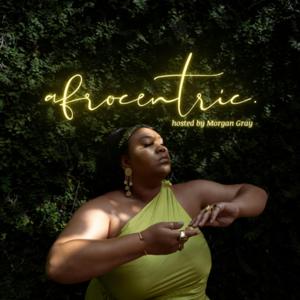
Afrocentric.

Afrocentric.

By Morgan GrayEducationHow To
Download on the App Store

Afrocentric. episodes

  • Who Will Survive in America? featuring Amelia Mathews
    The Afrocentric Podcast episode titled "Who Will Survive in America?" focuses on the state of Black America one year after the overturning of Roe v. Wade. The episode begins by introducing the topic of the overturning of Affirmative Action and what it was originally created to do within minority communities. Morgan and her guest, Amelia Mathews discuss what to expect in America post Roe v. Wade and post Affirmative Action. The podcast explores the question of who will survive in America, referencing Gil Scott-Heron's poem of the same name.
    2 hr 8 min
  • The Legacy of the Diaspora featuring Femi Johnson
    In this episode of the Afrocentric podcast, Femi Johnson discusses the legacy of the diaspora, including the relationship between Africa and those who are descendants of enslaved people dispersed throughout the diaspora. The episode covers topics such as the diaspora wars, bridging the gap between African Americans and others of African descent, creating unity, and creating a new narrative of how we think of Africa and how others think of the Black community.
    2 hr 43 min
  • Jesus Walks featuring Ivory Cancer
    In this episode of the Afrocentric podcast, Ivory Cancer discusses their experience as a black LGBTQIA member attending a Christian church as a child. They share how they navigated the cultural and racial differences between themselves and Christian doctrines, and the challenges they faced in that process. The episode also explores the history of Christianity in the black community, including Christianity in Africa before colonization, the slave Bible, and the attempt to integrate African Traditional Religions into Christianity. The episode also delves into the role of the black church as a center of resistance and activism during the Civil Rights Movement, and the legacy that has continued to shape the church today. Finally, the episode discusses the deconstruction or decolonization of Jesus, the white washing of Jesus, and the attempt to stay connected to African traditions and heritage.
    3 hr 22 min
  • The Evolution of Black Violence featuring Lenderrick Taylor
    In this episode of the Afrocentric podcast, Lenderrick Taylor discusses the evolution of violence in the black community. The episode covers various topics, including violence as a form of resistance during enslavement, violence during rebellions such as the Nat Turner rebellion and the Haitian Revolution, and violence by means of protection. The episode also delves into the fear of violence from white communities during and post-emancipation, laws passed to keep enslaved people from congregating in large groups, and the glorification of violence in modern black culture. The episode concludes with ways to actively reduce violence in the black community.
    2 hr 28 min
  • Freestyle 1: GET UP AND VOTE YOUNG PEOPLE, NO CAP
    In the Afrocentric podcast episode "Freestyle 1: GET UP AND VOTE YOUNG PEOPLE, NO CAP," Morgan emphasizes the importance of voting in the black community and the history of voting rights. The goal of this episode is to address the concern(s) of Black Baby Boomers that fear younger generations will not carry on the tradition of voting or take pride in voting. Our Generation pushes back against this narrative, and we argue that Generation Z has high voting rates and is becoming more involved in politics. This episode also addresses modern attempts to divide the black votes, including the Black men to Conservative Christian Pipeline.
    This episode is a call to action, it is imperative that our community starts educating, rallying, and supporting the topics like black voting and black politics on a local, statewide, and national level.
    2 hr 15 min
  • Part 2: There’s Piss in the Segregated Dating Pool featuring Chris Mayberry
    In part 2 of the There’s Piss in the Segregated Dating Pool, Morgan and Chris explore the topic of dating as a modern black person and how it has changed throughout generations. They attempt to find a middle ground between cisgendered heterosexual relationships and discuss the differences between talking and dating in black relationships. The podcast explores dating within and throughout the intersection and diaspora as a black person and the narratives that need to be changed and/or released in order for heterosexual relationships to have harmony.
    1 hr 42 min
  • Part 1: There’s Piss in the Segregated Dating Pool featuring Chris Mayberry
    In part one of this episode, the Afrocentric podcast explores the topic of dating as a modern black person and how it has changed throughout generations. Chris Mayberry and Morgan Gray attempt to find a middle ground between cisgendered heterosexual relationships and discuss the differences between talking and dating in black relationships. They also delve into the stages of dating within black relationships, including the talking stage, dating stage, relationship, engagement, and marriage.
    1 hr 18 min
  • For the Fathers of Colored Girls featuring Mike Cotton
    The podcast features Mike Cotton, a black father who shares his experiences, challenges, and strategies of raising black daughters. The discussions cover various aspects of family dynamics, upbringing, and the impact of race and identity. The aim is to provide insights and support for black fathers navigating the unique journey of raising black daughters. The interview questions explore different aspects of the black father-daughter relationship, including the comparison between raising daughters and sons, unique challenges faced by black fathers, addressing issues of race and identity, societal expectations and stereotypes, the importance of positive role models, instilling empowerment and self-confidence, and biases in educational settings.
    1 hr 51 min
  • The Radical Beauty of Self Belief featuring Taylor Clark
    In this episode, Taylor Clark shares her personal journey of embracing her unique beauty and self-worth, highlighting the importance of self-belief. She discusses the challenges she faced in the modeling industry and how she overcame them. Taylor also sheds light on the not-so-glamorous aspects of the industry that people may not be aware of.
    The conversation explores the impact of mental health and body dysmorphia on Taylor's journey and the strategies she found helpful in maintaining her well-being. She emphasizes the empowerment of others to embrace their own self-belief and challenge societal norms.
    Overall, this episode delves into the power of self-belief, the importance of mental health, and the empowerment of embracing one's unique beauty. It provides valuable insights and advice for aspiring models who want to break into the industry. Tune in to discover how believing in oneself acts as an act of resistance and how to navigate the modeling industry while prioritizing well-being and self-worth.
    1 hr 38 min
  • Barbershop Talk featuring Isaiah Thompson
    In this episode of the Afrocentric Podcast, Isaiah Thompson and Morgan explore the history and importance of black barbershops as social gathering places for black men. They discuss the role of barbershops in promoting mental health, self-care, and community wellness, as well as the need to ensure that these spaces remain safe and inclusive for all members of the black community. The episode also touches on the future of barbershops and their impact on the black community, including the role of technology. Tune in to learn more about the cultural significance of the black barbershop and how it continues to shape the black community today.
    1 hr 23 min

About Afrocentric.

From the publisher's feed

Mission: To redefine and expand the understanding of Afrocentrism by illuminating the deeper, often untold histories and lived experiences of the Black Aboriginal peoples of North America—those later labeled as African American. The podcast bridges these truths with the ancestral narratives of Africa, South America, and the Caribbean, fostering a renewed global appreciation for Black heritage, resilience, and cultural continuity.