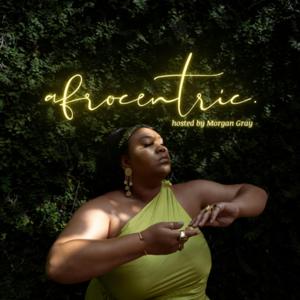
Afrocentric.

Afrocentric.

By Morgan GrayEducationHow To
Download on the App Store

Afrocentric. episodes

  • The Good Ol’ Days: Black History with Black Historians featuring Bria Young
    The Civil Rights Movement was a nonviolent social and political movement and campaign from 1954 to 1968 that swept through the nation. Many African Americans worked tirelessly to abolish legalized institutional racial segregation, discrimination, and disenfranchisement. While doing so, white supremacy groups were created to counteract this movement.
    While many will focus on the achievements accomplished by the prominent luminaries of that time,
    me and my guest Bria Young will discuss the atrocities and harmful ideologies created by white supremacy groups and lawmakers to disrupt the Civil Rights Movement.
    Join us as we reminisce on the good ol’ days!
    1 hr 42 min
  • Strange Fruit: Black History with Black Historians featuring Kymara Sneed
    A new chapter in American history opened as the Thirteenth Amendment, passed in January of 1865, was implemented. It abolished slavery in the United States, and now, with the end of the war, four million African Americans were free. As a result, millions of African Americans began to build a new place for themselves in public life, actively confronting racial prejudice as well as economic, political and social challenges to create a Black urban culture that would exert enormous influence in the decades to come. Join our black historian of the week, Kymara Sneed, as we discuss the progress of the black community post Emancipation, the Great Migration, and the Harlem Renaissance viewed through an afrocentric lens.
    1 hr 15 min
  • For Those Who Chose the Sea: Black History with Black Historians featuring Xavier Sivels
    The Atlantic slave trade involved the transportation by slave traders of enslaved African people, mainly to the Americas. The slave trade regularly used the triangular trade route and its Middle Passage, and existed from the 16th to the 19th centuries. The purpose of this episode is to paint an accurate timeline of the enslaved person’s journey to the Americans while dispelling and correcting inaccurate myths surrounding American enslavement.
    Join our black historian of the week, Xavier Sivels, as we discuss the day to day life like for those who were enslaved and the atrocities that occurred durning American enslavement as we view it through an Afrocentric perspective.
    1 hr 16 min
  • TALKING CASH MONEY $HIT featuring Benjamin Parker
    Black Americans experience far more precarious economic conditions than the American population as a whole. While the typical black household's income has risen over time, black households earn just 62 cents for every dollar earned by white households.
    The purpose of this episode is to inform the black community about the history of black finance and the modern black economy, while addressing the systematic disparities in finance for black Americans. Join my guest, Benjamin Parker and I, as we talk our cash money shit.
    1 hr 53 min
  • Freestyle 11: The Abundance of the Heart
    It is well known that the black community traditionally passes down history orally. By word of mouth, black people were able to teach morality and life lessons, revive old traditions, and heal the trauma that passed down from generations. With this in mind, the purpose of this episode is to combat the narrative that “black people do not have culture” by showcasing the richness of our tradition of storytelling through the lens of African American folklore.
    1 hr 21 min
  • A Doctor in the Sick Room featuring Jessica Gray
    Trust in health care among Americans has declined in recent decades, and it’s worse among African Americans. African Americans are more likely than whites to say they don’t trust their physician. In a poll, conducted in October of 2020, 7 of 10 African Americans say they’re treated unfairly by the health care system and 55% percent say they distrust it.
    Why?!
    The medical establishment has a long history of mistreatment towards African Americans — from gruesome experiments on enslaved people to the forced sterilizations of Black women and the infamous Tuskegee syphilis study that withheld treatment from hundreds of Black men for decades to let doctors track the course of the disease.
    Generations of racism and mistreatment at the hands of medical professionals have left many African Americans distrustful of the healthcare system.
    Join me and my co host for the episode, Jessica Gray, as we unpack over 450 years of trauma and mistreatment at the hands of the American healthcare system while providing tips to navigate the system as a black person.
    1 hr 28 min
  • Freestyle 10: Racism for Dummies
    For many of you, the last time someone sat down and had a conversation with you it surrounded topics that involved birds and bumblebees.
    Today I wanted to have a more serious conversation about race and racism in America.
    Talking about racism is not an attempt to guilt or shame anyone. It is about spreading awareness so that it can be properly addressed.
    And if I were you, I would stick around to the end to hear me answer this nefarious question: Can black people be racist?
    1 hr 4 min
  • Freestyle 9: The Hueless Heroes

    After closely reflecting over 2022, I have come to the conclusion that the white community has a shortage of role models and heroes, and an extended supply of audacity. So, I have made it my New Year's resolution to help point your community in the right direction. I have come to this conclusion based on the fact that a handful of white, Americans believe that Critical Race Theory courses have the potential to create an environment that demonizes the offspring of American colonizers. So much so that their community is willing to erase roughly 400 years of creative work and history from the African American Community. This belief system raises many questions for the people on the right side of history. The main question would be: Why would the offspring of European Americans identify with the mindset of the oppressor and not the mindset of the abolitionist?

    So with that in mind, the purpose of this episode is to introduce to you, some of the good white people in American History. Those who denounced the evils of slavery and segregation. The pale people that went home and told their parents that white supremacy was evil.

    Not all heroes wear capes. In fact, not all role models have melanin.  Some are just hueless heroes

    1 hr 5 min
  • Gray(t) Minds featuring Alex Gray
    As of 2021, the Black hair market is worth $1.6 billion and is expected to continue growing. Although the black hair care industry is extremely profitable, for many of the shareholders and business owners within this sector there is a lack of diversity of hair types. Moreover, many of the hair products that are promoted specifically towards the black community contain toxins that are hazardous to our health.
    Throughout the Diaspora, people of African descent are shamed for the way that their hair naturally grows out of their scalp. Leading me to wonder:
    How can we learn to love our hair when it is ostracized and critiqued everywhere we turn?
    So with this in mind, i would like to invite you to
    join my sister, Alex Gray, and I as we celebrate our natural hair journey while sharing our personal experiences with our hair. Because you can’t spell Afrocentric with the Afro. If I were you, I would stick around to hear Alex give amazing hair advice, because Gray(t) minds always think alike.
    1 hr 43 min

About Afrocentric.

From the publisher's feed

Mission: To redefine and expand the understanding of Afrocentrism by illuminating the deeper, often untold histories and lived experiences of the Black Aboriginal peoples of North America—those later labeled as African American. The podcast bridges these truths with the ancestral narratives of Africa, South America, and the Caribbean, fostering a renewed global appreciation for Black heritage, resilience, and cultural continuity.