
Sign up to save your podcasts
Or

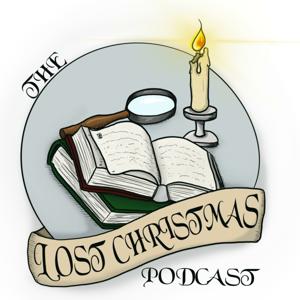

Christmas doesn’t end on December 25—so why do we treat it like it does?
For centuries, Christmas was a forty-day season, stretching from the Nativity all the way to Candlemas on February 2. In this episode, we explore the entire forgotten half of Christmas: the feast days, folk traditions, saints, celebrations, and moments of sanctioned chaos that once filled the darkest weeks of winter.
From Boxing Day and St. Stephen’s Day to Wren Day in Ireland, from the Boy Bishop and the Lord of Misrule to Twelfth Night, Epiphany, Three Kings Day, La Befana, Orthodox Theophany, Plough Monday, Old Christmas, and finally Candlemas, this episode uncovers how Christmas slowly unfolded—rather than abruptly ending.
We trace how:
Medieval society embraced misrule, role reversal, and communal feasting
Gift-giving traditions moved from Christmas Day to Epiphany
Calendar changes created “Old Christmas”
Industrialization and reform compressed Christmas into a single day
Candlemas weather lore gave rise to Groundhog Day
This is a global journey through liturgy, folklore, agrarian life, and cultural memory, revealing how Christmas once lingered—burning slowly like a candle against the long winter night.
If you’ve ever felt like Christmas ends too quickly...this episode explains why it didn’t used to.
Contact:
email
website
Special thanks to:
The Christmas Song/Heaven/Slow 3/4 Song by Peter Evans, Tom Blancarte, and Brandon Seabrook - CC by 3.0
Santa Claws is Coming by Ergo Phizmiz - CC by 3.0
holiday by Dee Yan-Key - CC by 3.0
 View all episodes
 By The Chronicler

4.6
7575 ratings
Christmas doesn’t end on December 25—so why do we treat it like it does?
For centuries, Christmas was a forty-day season, stretching from the Nativity all the way to Candlemas on February 2. In this episode, we explore the entire forgotten half of Christmas: the feast days, folk traditions, saints, celebrations, and moments of sanctioned chaos that once filled the darkest weeks of winter.
From Boxing Day and St. Stephen’s Day to Wren Day in Ireland, from the Boy Bishop and the Lord of Misrule to Twelfth Night, Epiphany, Three Kings Day, La Befana, Orthodox Theophany, Plough Monday, Old Christmas, and finally Candlemas, this episode uncovers how Christmas slowly unfolded—rather than abruptly ending.
We trace how:
Medieval society embraced misrule, role reversal, and communal feasting
Gift-giving traditions moved from Christmas Day to Epiphany
Calendar changes created “Old Christmas”
Industrialization and reform compressed Christmas into a single day
Candlemas weather lore gave rise to Groundhog Day
This is a global journey through liturgy, folklore, agrarian life, and cultural memory, revealing how Christmas once lingered—burning slowly like a candle against the long winter night.
If you’ve ever felt like Christmas ends too quickly...this episode explains why it didn’t used to.
Contact:
email
website
Special thanks to:
The Christmas Song/Heaven/Slow 3/4 Song by Peter Evans, Tom Blancarte, and Brandon Seabrook - CC by 3.0
Santa Claws is Coming by Ergo Phizmiz - CC by 3.0
holiday by Dee Yan-Key - CC by 3.0

91,297 Listeners
78,688 Listeners

23,774 Listeners
44,999 Listeners
797 Listeners
4,561 Listeners
142 Listeners
13,595 Listeners
66 Listeners
269 Listeners
1,920 Listeners
305 Listeners
304 Listeners
129 Listeners
21 Listeners