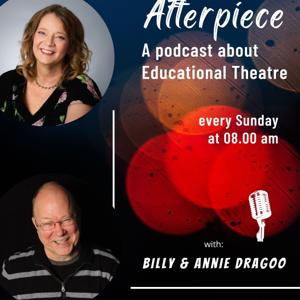
Afterpiece: A Podcast About Educational Theatre

Afterpiece: A Podcast About Educational Theatre

By Billy & Annie DragooEducationArtsPerforming Arts
Download on the App Store

Afterpiece: A Podcast About Educational Theatre episodes

  • Incorporating Play Reading in to Your Classroom

    Website: www.DragooTheatre.com

    Facebook: Dragoo Theatre Consultants

    Incorporating play reading into the classroom can enrich students' understanding of drama, literature, and performance.

    1. Select Appropriate Plays

    • Choose Age-Appropriate Material: Select plays that are suitable for the students' age and reading level.
  • Diverse Voices: Include works from diverse playwrights and perspectives to broaden students' cultural and social understanding.
  • Varied Genres: Introduce different genres, such as classical, contemporary, comedy, and tragedy, to expose students to various styles and themes.
  •  

    2. Create a Reading Schedule

    • Plan a Reading Calendar: Set aside regular time for reading plays, whether as a dedicated class period or integrated into the existing curriculum.
  • Balance: Incorporate play reading alongside other forms of literature and media.
  •  

    3. Facilitate Read-Aloud Sessions

    • Assign Roles: Have students take on different characters and read their lines aloud to make the experience interactive.
  • Use Dramatic Reading Techniques: Encourage expressive reading and use vocal variations to bring characters and scenes to life.
  •  

    4. Engage in Group Discussions

    • Analyze Themes and Characters: Lead discussions on the play’s themes, characters, and conflicts to deepen students' understanding.
  • Explore Historical and Cultural Context: Provide background information on the playwright, historical setting, and cultural influences.
  •  

    5. Incorporate Performance Elements

    • Act Out Scenes: Assign small groups to rehearse and perform selected scenes, allowing students to physically engage with the text.
  • Use Improvisation: Encourage improvisation exercises based on the play to explore characters’ motivations and actions.
  •  


    6. Connect to Writing Assignments

    • Creative Responses: Have students write reflective essays, character analyses, or alternate endings based on the play.
  • Scriptwriting: Encourage students to write their own short plays or scenes inspired by the plays they’ve read.
  •  

    7. Integrate Technology

    • Digital Scripts: Use online resources to access digital versions of scripts and multimedia elements related to the play.
  • Virtual Tours and Interviews: Utilize online resources for virtual tours of theaters or interviews with playwrights to enhance understanding.
  •  

    8. Encourage Critical Thinking

    • Debate and Discuss: Facilitate debates on characters’ decisions, themes, and outcomes to promote critical thinking and articulate opinions.
  • Compare and Contrast: Compare the play with other works by the same playwright or within the same genre to identify common themes and stylistic elements.
  •  


    9. Host Play Readings and Performances

    • Classroom Play Readings: Organize informal readings where students can share their interpretations and discuss their perspectives.
  • Invite Guest Speakers: Bring in local actors, directors, or playwrights to discuss the play and provide professional insights.
  •  

    10. Assessment and Feedback

    • Evaluate Understanding: Use quizzes, essays, and presentations to assess students’ comprehension and interpretation of the play.
  • Provide Constructive Feedback: Offer feedback on their participation in readings, performances, and discussions to help them improve.
  •  

    12. Foster a Love for Theater

    • Field Trips: If possible, take students to see live theater productions to experience plays in a real-world setting.
  • Theater Club: Encourage students to join or start a theater club to continue exploring drama outside the classroom
  • By incorporating these strategies, play reading can become an engaging and educational experience that enhances students’ literary analysis, creativity, and appreciation for theater.

    34 min
  • Incorporating Play Reading into Your Classroom

    Website: www.DragooTheatre.com

    Facebook: Dragoo Theatre Consultants

    Incorporating play reading into the classroom can enrich students' understanding of drama, literature, and performance.

    1. Select Appropriate Plays

    • Choose Age-Appropriate Material: Select plays that are suitable for the students' age and reading level.
  • Diverse Voices: Include works from diverse playwrights and perspectives to broaden students' cultural and social understanding.
  • Varied Genres: Introduce different genres, such as classical, contemporary, comedy, and tragedy, to expose students to various styles and themes.
  •  

    2. Create a Reading Schedule

    • Plan a Reading Calendar: Set aside regular time for reading plays, whether as a dedicated class period or integrated into the existing curriculum.
  • Balance: Incorporate play reading alongside other forms of literature and media.
  •  

    3. Facilitate Read-Aloud Sessions

    • Assign Roles: Have students take on different characters and read their lines aloud to make the experience interactive.
  • Use Dramatic Reading Techniques: Encourage expressive reading and use vocal variations to bring characters and scenes to life.
  •  

    4. Engage in Group Discussions

    • Analyze Themes and Characters: Lead discussions on the play’s themes, characters, and conflicts to deepen students' understanding.
  • Explore Historical and Cultural Context: Provide background information on the playwright, historical setting, and cultural influences.
  •  

    5. Incorporate Performance Elements

    • Act Out Scenes: Assign small groups to rehearse and perform selected scenes, allowing students to physically engage with the text.
  • Use Improvisation: Encourage improvisation exercises based on the play to explore characters’ motivations and actions.
  •  


    6. Connect to Writing Assignments

    • Creative Responses: Have students write reflective essays, character analyses, or alternate endings based on the play.
  • Scriptwriting: Encourage students to write their own short plays or scenes inspired by the plays they’ve read.
  •  

    7. Integrate Technology

    • Digital Scripts: Use online resources to access digital versions of scripts and multimedia elements related to the play.
  • Virtual Tours and Interviews: Utilize online resources for virtual tours of theaters or interviews with playwrights to enhance understanding.
  •  

    8. Encourage Critical Thinking

    • Debate and Discuss: Facilitate debates on characters’ decisions, themes, and outcomes to promote critical thinking and articulate opinions.
  • Compare and Contrast: Compare the play with other works by the same playwright or within the same genre to identify common themes and stylistic elements.
  •  


    9. Host Play Readings and Performances

    • Classroom Play Readings: Organize informal readings where students can share their interpretations and discuss their perspectives.
  • Invite Guest Speakers: Bring in local actors, directors, or playwrights to discuss the play and provide professional insights.
  •  

    10. Assessment and Feedback

    • Evaluate Understanding: Use quizzes, essays, and presentations to assess students’ comprehension and interpretation of the play.
  • Provide Constructive Feedback: Offer feedback on their participation in readings, performances, and discussions to help them improve.
  •  

    12. Foster a Love for Theater

    • Field Trips: If possible, take students to see live theater productions to experience plays in a real-world setting.
  • Theater Club: Encourage students to join or start a theater club to continue exploring drama outside the classroom
  • By incorporating these strategies, play reading can become an engaging and educational experience that enhances students’ literary analysis, creativity, and appreciation for theater.

    34 min
  • Theatre Superstitions and Traditions

    In this episode, we discuss the intriguing world of superstitions and traditions in the theatre world.

    Theater is full of superstitions and traditions, many of which have fascinating origins. The theater is rich with superstitions, many of which are steeped in tradition and lore.

    These superstitions add a layer of mystique and tradition to the theatrical world, reflecting its rich history and the deep-seated belief in the magic and mystery of live performance.


    Website: www.DragooTheatre.com

    Facebook Page: DragooTheatreConsultants

    34 min
  • Cutting a One-Act Play

    This week's episode is about cutting a play for competition. This is a recording of a webinar that Billy led with theatre educators in Texas. 

    One Correction: our website is www.DragooTheatre.com

    Facebook Community: Dragoo Theatre Consultants

    25 min
  • Coaching Acting with Joe Reynolds

    Billy discusses coaching the student actor with Joe Reynolds. Joe earned is BFA in Acting from University of Texas and an MFA from the Yale School of Drama. 

    Website: www.DragooTheatre.com

    Facebook: Dragoo Theatre Consultants

    50 min
  • Stupid Things People Say to Theatre Educators

    Theatre educators are highly educated professionals. Most have the student loans and stacks of professional development training certificates to prove it. However, there are certain things that set theatre educators apart from other professionals. Billy and Annie discuss stupid things that people say to theatre educators. 

    Website:  www.DragooTheatre.com

    Facebook: Dragoo Theatre Consultants


    31 min

About Afterpiece: A Podcast About Educational Theatre

From the publisher's feed

Afterpiece is a practical, story-driven podcast about Educational Theatre hosted by Billy and Annie Dragoo. Each episode explores the real work of teaching theatre — balancing creativity with classroom realities, directing shows with limited time and resources, and building programs where students learn to think, collaborate, and grow.

More shows like Afterpiece: A Podcast About Educational Theatre

Fresh Air by NPR

Fresh Air

37,902 Listeners

Good Hang with Amy Poehler by The Ringer

Good Hang with Amy Poehler

12,451 Listeners