
Sign up to save your podcasts
Or



“The disciplines are about problem solving. They’re a way to navigate to knowledge… Different people love to find their knowledge different ways.” — Mark Richards
SPCs Unleashed returns with a stepwise, hard-nosed look at the new Scaled Agile “disciplines” announced in Sorrento—an architectural shift intended to make the framework more usable, less dogmatic, and ultimately more valuable in the context of enterprise change. With Mark Richards guiding the connection points and Stephan Neck leading the inquiry, the team (joined by Nikolaos “Niko” Kaintantzis) explores what this modular reframe really means for practitioners and transformation leaders invested in real agility, not just surface adoption.
No hype here. The Unleashed crew does what they do best: challenge received wisdom, probe for real-world risks, and test whether the new direction delivers what coaches and organizations actually need.
Here’s what the crew surfaces—directly and by friction—about adopting the “disciplines” model for Scaled Agile:
- Navigation over prescription: The move from static configurations to adaptable disciplines creates more tailored entry points for actual business problems—if you’re willing to begin with context, not the “one true path.”
- Optionality introduces risk and clarity: The flexibility is real, but so is the risk of new “disciplinary silos.” Systemic glue—often in the form of LACE or a Value Management Office—matters more than ever.
- Depth and teaming over overwhelm: Coaches shouldn’t be daunted by the number of disciplines now in play. The days of aspiring to be a master of everything are gone; the model favors T-shaped expertise—broad awareness, with real depth in focus areas, working in cross-functional teams where strengths combine instead of one coach trying to cover all bases.
- Leadership isn’t a module: While there’s a dedicated discipline for Leadership & Culture, raising actual executive capability will almost always demand more than the framework prescribes.
The team unpacks what a discipline means—a field of study, not just a “box to tick.” As Stephan frames it: “You study something… you inquire—it’s not a given, then you dive into the methods, theories, and principles.”
For coaches, this isn’t a theoretical shift. Navigation starts with the problem at hand. Mark calls out the storytelling value: “You can now sit and see a connected story… Discipline names guide you, then the disciplines can tell a story that is meaningful to you.”
There’s energy around the newfound freedom to “specialize”—but also caution. Niko reframes the “silo” anxiety, saying: “If there are silos, I love them—as areas of specialization. It’s better than forcing full SAFE because you think you have to do everything.” Still, the LACE becomes responsible for ensuring the overall flow: “The LACE should be the glue between the disciplines.”
Mark and the crew recognize that modern knowledge-seeking isn’t about browsing static pictures: “Structuring your knowledge for a modern person means providing clarity to the information and guidance SAFE has to offer—in their particular context and situation. People are going to do what most of us do… ask our CoPilots or ChatGPT questions.”
This has implications for framework design—and for the way coaches help others find, not just receive, useful knowledge.
Niko spotlights a critical mindset shift: “With disciplines, it feels more human—a living organism you actively tend, not just a system to install or upgrade.” The conversation pushes for systemic coaching and change—not checklist compliance. In Stephan’s words: “It’s a step from crawling to walking, even running.”
On the leadership discipline: Mark is frank—perhaps provocatively so: “Personally, I don’t know that teaching senior leaders to be better leaders is SAFE’s strong suit… If an enterprise wants better leaders, they’ll go elsewhere.” Niko echoes the call for “outside bodies of knowledge” and cautions that even with more content, “leadership training is not everything.”
Yet, the team affirms the new model’s “red thread”: contextual, cross-cutting, lived behaviors matter. Stephan frames it clearly: “Culture isn’t a poster on the wall; it’s the sum of our behaviors… you either live it or it doesn’t exist.”
When exploring the Product Development Flow discipline, Niko delivers a caution to those who see themselves as “special cases”: “Never say, ‘I don’t need this competency; everything is clear.’ Nothing is clear.” Mark adds, “The discipline gives you a starting place for a conversation. Where you begin is not always where you should end.”
Don’t be a donut. Both Mark and Niko agree: you can’t—and shouldn’t—try to become a generalist who is “a jack of all trades, master of none.” Mark points out, “If you’re an SPC, you’ve got to find some way to do better than copilot. I don’t know that you’re going to do that if you chase being a donut.”
The answer? Cross-functional, specialized LACE teams—moving as a team sport, not as isolated experts.
This episode doesn’t romanticize SAFE’s evolution—it interrogates it. The new disciplines model offers real leverage for coaches to navigate, not just replicate, patterns of agility. But it comes with risks: potential fragmentation, the need for new forms of glue, and an increased demand for coaches to specialize, stay context-sensitive, and admit where outside expertise is essential.
If you’re leading an enterprise journey, start with the context. Let the problem, not the picture, guide your engagement. Don’t chase donuts; build a team where depth and cross-pollination are your differentiators.
“Safe is evolving in small batches now—not just big bangs.” - Nikolaos Kaintantzis
Introduction
Niko moderates this debrief of the 2024 SAFe Summit in Sorrento—but it quickly becomes more than a recap. While only he and Ali attended in person, Stephan and Mark bring layered reflection from the sidelines. What begins as a highlight reel turns into a conversation about direction: not just where the framework is going, but how change agents are meant to meet it. What does it mean to decouple without diluting? How do we contextualize without fragmenting? And how do you lead when the framework’s evolving beneath your feet?
Actionable Insights
Here’s what the Unleashed crew surfaced—explicitly and between the lines—about navigating SAFe's latest shifts:
Highlights
Configuring SAFe for Continuous Delivery
The crew probes both the mechanics and the implications of breaking the framework into modular, industry-specific parts. While the monolith gave SAFe stability, it also limited adaptability—especially in fast-moving or heavily specialized environments. Now, there's a growing shift toward a leaner, more customizable ecosystem, one where guidance can evolve continuously without requiring a complete re-release.
“How do we decouple it? How do we set ourselves up to get into more of a continuous delivery model with SAFe?” —Mark Richards
The New Discipline and Competency Model
The team reflects on the practical limits of the old competency model and the opportunities created by the new discipline format. The previous structure forced symmetry, even when some dimensions overlapped or felt redundant. With disciplines, SAFe can hold complexity without enforcing uniformity. It also creates clearer on-ramps for learners—and clearer invites for contributors.
Niko shares his own internal tension when offered the chance to contribute to one of the new competencies. At first, he planned to focus tightly—but the new structure made that harder than expected.
“I always had in my mind, I want to specialize... then I realized everything is so interesting.” —Nikolaos Kaintantzis
Insights from the State of SAFe Survey
Ali brings in results from the 2024 State of SAFe report, and the conversation turns toward implementation integrity. From misused titles to rebranded hierarchies, the crew reflects on what makes a transformation feel hollow—and what makes it stick. Rather than avoid hard truths, the report appears to be surfacing them, prompting a more honest community conversation.
Looking Ahead: Between Sorrento and Denver
Instead of closing with conclusions, the crew opens the door to what’s next. They speculate on competency expansions, story-first navigation, and new learning tools—along with risks of fragmentation or fatigue. It’s a hopeful segment, but not a naive one. They’re excited—but they also want to keep the purpose intact.
Conclusion
If SAFe is shifting, so are the questions we ask of it—and of ourselves. This episode doesn’t just explore new structures. It shows what happens when a community chooses curiosity over certainty, and depth over dogma. For the Unleashed crew, the goal isn’t to protect the past. It’s to help shape what’s next—one thoughtful step at a time.
References
“There are at least four different versions of a process: how managers believe it operates, how it's supposed to operate, how it really operates, and how it could operate.” —Mark Richards
Introduction
This episode begins with beach envy and ends with facilitation mastery. In between: a sharp, field-grounded discussion about Value Stream Mapping—its purpose, practice, and perils.
Ali, Stephan, and Mark trace their own learning curves, revisit facilitation misfires, and offer clear-eyed advice to SPCs who want more than “a map on the wall.” They’re not trying to convince anyone that Value Stream Mapping is magic. They’re trying to make it useful.
Actionable Insights
From anecdotes and cautionary tales, here’s what emerges:
Highlights
Don’t Let the Map Derail the Dialogue
Ali recalls early workshops where things spiraled into endless details—some valid, some not.
“People are really passionate… even though they're valid, they're not that valid in that detail, in the grand scheme of things.” —Ali Hajou
Stephan agrees: the core challenge is “this competition between over-complication and over-simplification.”
Delegate ≠ Disengaged
Stephan names the trap bluntly: “It looked like a delegate workshop… that doesn't work.” But Mark reframes it. Delegates can help build the map—if the real decision-makers show up to own the outcomes. And those delegates must speak from real experience: “It’s their ‘aha’ moment that comes out of that.”
Mapping as Sensemaking
Ali offers a systems lens: Value Stream Mapping “is a trick to try to understand the system” as it really works—not just on paper.
Stephan builds on that metaphor: “Value Stream Mapping for me is this magnifying glass… your crime scene of inefficiency.”
Maps That Breathe
Mark’s closing gem is a pragmatic vision: when maps become systems, insight becomes flow.
“Your Value Stream Map should become your Kanban… then you'd get your data for free.” —Mark Richards
Conclusion
This episode isn’t about selling Value Stream Mapping. It’s about rescuing it.
From vague templates. From overzealous data obsession. From workshops that deliver nothing but fatigue.
And the biggest rescue move? Invite the right people. Ask the right question. Then let the map do its real job: show you what’s really going on.
"Don't underestimate how much fear is in the room" - Ali Hajou
In this episode of SPCs Unleashed, Mark Richards, Stephan Neck, Ali Hajou, and Nikolaos Kaintantzis bring their collective experience to one of the most pivotal—and high-risk—moments in a SAFe transformation: the Value Stream and ART Identification Workshop.
Each voice brings a distinct perspective. Stephan sets the stage with a sharp metaphor and a focus on structure. Ali warns of the workshop’s destructive potential if rushed or misused. Nikolaos grounds the conversation in organizational reality and long-term systems thinking. And Mark reminds us that the goal isn’t to get it perfect, but to start the journey of learning and adaptation.
Key Highlights
1. A Honeypot With Bees
Stephan opens with a perfect metaphor: this workshop is a honeypot—but it attracts bees. While it promises alignment and flow, it also brings organizational tension and complexity to the surface.
2. It Can Make or Break a Transformation
Ali calls it potentially the most destructive workshop in a SAFe rollout. Get it wrong, and you embed misalignment from day one—creating teams that still can't deliver value together.
3. Respect What Already Works
Nikolaos cautions against wiping the slate clean. While redesigning for value flow is essential, facilitators must acknowledge existing relationships, patterns, and practices that are already enabling success. Change for change’s sake is just as risky as standing still.
4. Set the Stage for Learning
Mark emphasizes that the real outcome of this workshop isn’t finality—it’s understanding. It's a first draft of a system that will evolve through inspection and adaptation.
5. Use Two Workshops, Not One
The group strongly advocates for a second workshop. The first is about exploring the system, the second about committing to decisions. The gap between the two allows for assumption testing and fact finding to enable more informed commitments.
Actionable Takeaways
If you’re preparing to run a Value Stream and ART Identification Workshop—or coaching leaders through one—this episode is a must-listen. It’s a real-world guide to helping organizations shift from structure-first to value-first thinking.
“Good flow is invisible, but it takes a lot of work to get there” - Nikolaos Kaintantzis
In this episode of SPCs Unleashed, Mark Richards, Ali Hajou, Nikolaos Kaintantzis, and Stephan Neck take you behind the scenes of their virtual facilitation setups. It’s a follow-up to their earlier hardware episode—but this time, the spotlight is on software: the tools, flows, and tweaks that help them deliver seamless, engaging remote workshops.
What emerges is less about specific apps and more about a mindset—crafting experiences that support learning, participation, and energy in distributed environments.
Key Highlights
1. Craft Before Convenience
Ali kicks off the conversation by reflecting on how tweaking and refining their setups became a creative obsession—not just to impress, but to enable smoother sessions. The group agrees: great online workshops don’t happen by default.
2. Their Actual Software Stack
The team share a range of tools they rely on in different contexts, including:
The focus isn’t on using every tool—it’s about configuring the right mix to serve the group.
3. It's About Reducing Friction
Mark emphasizes the importance of flow—both technical and emotional. Tools should fade into the background, allowing participants to stay focused and feel safe. Nikolaos adds that even internal facilitator backchannels (like Slack) help keep delivery smooth.
4. It’s Performance, But Grounded in Purpose
Stephan compares facilitation to a performance—but stresses it’s not theater for the sake of it. The tech is in service of connection, trust, and clarity.
Actionable Takeaways
If you’ve ever juggled tabs mid-session or wished your workshops felt more alive—this episode offers practical setups, mindsets, and inspiration from seasoned practitioners who’ve been there.
“It’s weeding time, right? Sometimes you have to weed out stuff that doesn’t work. Dead wood is not good on a tree.” - Stephan Neck
Is Agile really “dead,” or just misunderstood and badly applied? In this lively podcast episode, Mark, Stephan, and Niko challenge the buzz about Agile’s demise and share why core principles of flexibility, fast feedback, and collaboration remain essential—even if the word “Agile” has lost some of its shine.
The Agile Hype and the Reality Check
Over the past year, you may have heard conflicting headlines—“Agile is Dead!” versus “Agile is Thriving!” The truth seems to lie somewhere in between. The hosts argue that many organizations adopted Agile by the book—Scrum ceremonies, product owners, and endless backlogs—without truly embracing the mindset that underpins it. This results in rituals with little substance and disappointment when promised benefits don’t materialize.
Misunderstood Child Star
An entertaining analogy emerges: Agile as a once-celebrated child actor. Just like Macaulay Culkin or Lindsay Lohan, Agile gained rapid fame but got derailed by an industry eager to exploit it. The hosts note how corporate certification factories and “by-the-numbers” rollouts diluted Agile’s original spark and led to frustration, leaving many asking: “Is it even worth it anymore?”
What Really Killed “Agile”?
Rather than pointing fingers at one person or movement, the conversation highlights multiple factors:
So…Is It Dead?
Not really. The panel agrees the core idea of responding to change and delivering outcomes rapidly is more vital than ever. They note that what people call “Agile” may be morphing—focusing on product thinking, DevOps, or simply excellent collaboration. You might not see as many “Agile Coach” job titles, but businesses still crave those skills: facilitation, iterative development, and an experimental mindset.
Actionable Takeaways
Conclusion
If you’re intrigued by whether “Agile” should be retired or revived, give this episode a listen. Join the discussion: share your experiences, comment on social, and consider how the spirit of agility can be rekindled in your organization.
“A cheap writing tablet can transform your PowerPoint into a shared canvas.” - Ali Hajou
Remote facilitation has come a long way since the early days of clunky video calls. In this lively episode, four experienced facilitators—Mark, Ali, Stephan, and Niko—swap stories about how they transformed their home offices into high-energy digital studios. From teleprompters and standing desks to iPhone cameras strapped to arms, they prove that you don’t necessarily need massive budgets to build an engaging remote-training setup.
Key Insights & Highlights
Human Touch
Each host has a unique style. Ali is the “hardware guy,” always tinkering with his suitcase studio so he can set up anywhere in 10 minutes. Stephan, self-proclaimed “old dog,” embraced new gadgets like a teleprompter to simulate direct eye contact. Niko loves mixing analog tools (like paper cards) with digital meeting rooms, ensuring creative variety. Mark ties it all together with a stand-up energy that keeps participants on their toes—literally.
Actionable Takeaways
Conclusion
Ready to level up your remote facilitation game? Start by experimenting with one new piece of gear or software—then let your creativity lead the way. And be sure to tune in for the next episode, where the team dives into the software side of remote workshops, sharing demos, tips, and more.
References
Work Together Anywhere by Lisette Sutherland
“Leaders have to do more than simply say ‘we have two systems.’ They have to actively steer the organization so it’s both robust and free to innovate.” - Stephan Neck
What happens when an organization outgrows the myth that “all you need is cross-functional teams”? In this episode of SPCs Unleashed, Stephan, Ali, Niko, and Mark dig into the Dual Operating System—the concept that healthy enterprises need both a stable hierarchy and a network of agile teams. Balancing these two “systems” can be tricky: too much network, and chaos creeps in; too much hierarchy, and innovation stalls.
The group shares real-world stories where line managers struggled to find their place in an agile environment, and teams were forced to “figure out” things like career growth, performance management, and compliance. The central point? A thriving enterprise can’t ignore its operational backbone or the people who keep it running—yet it also can’t let old school structures choke the flow of value.
Key Highlights
Actionable Insights
Conclusion
Embracing a Dual Operating System means recognizing that “manager” isn’t a bad word—hierarchies can be powerful for stability and talent development, while agile networks spark rapid innovation. With the right balance, clear processes, and respect for both sides of the coin, enterprises can keep their core strong while racing forward into new possibilities.
References
Six Simple Rules by Eve Morieux and Peter Toolman
“If you do no pre-work, the first 20 minutes are lost—someone can’t open Miro, doesn’t have the password, so you lose that time sorting out technical difficulties.” - Mark Richards
Remote facilitation may feel like juggling blindfolded—especially when every participant has a muted mic and a hidden camera. In this episode of SPCs Unleashed, our hosts (Mark Richards, Ali Hajou, Stephan Neck, and Nikolaos Kaintantzis) share what they’ve learned about driving engagement when no one’s in the same room. From innovative digital whiteboard designs to “crazy” energizers, they show that running remote sessions is more than swapping your physical whiteboard for a screen—it’s about designing for human connection in a virtual space.
Whether you’re leading a PI Planning event or training new teams, remote facilitation demands empathy, flexible tools, and a heavy dose of creativity. If you’ve struggled with black squares on video calls, endless background noise, or total silence from participants, this conversation will spark fresh ideas for making digital gatherings productive and even fun.
Key Highlights
Actionable Insights
Conclusion
Remote facilitation has traveled far beyond “new reality” status—it’s simply how many of us work. With the right preparation, a dash of human empathy, and a few creative tricks, even digital distance can spark real engagement. Tune in for practical insights on orchestrating seamless, lively virtual sessions that your teams will remember for all the right reasons.
“If you ask questions about the past, it’s always about going to a corpse and opening it up... If you ask questions about the future, it’s always about values" - Nikolaos Kaintantzis
“Are you all dumb?” When a senior stakeholder dropped that bombshell mid-retro, chaos threatened to derail everything. In this episode of SPCs Unleashed, Mark, Ali, Stephan, and Niko reflect on what makes art-level retros truly transformative. Spoiler: It’s a balance of authentic emotion, precise data, and a willingness to experiment with new formats.
Key Highlights
Actionable Insights
Conclusion
Retrospectives aren’t a cozy chat—they’re a critical lever for cultural and operational gains. Whether dealing with emotional blow-ups or nailing down the data to validate success, this episode offers a roadmap for art-level retros that genuinely deliver.
References
Agile Retrospectives: Making Good Teams Great by Esther Derby and Diana Larsen
From the publisher's feed
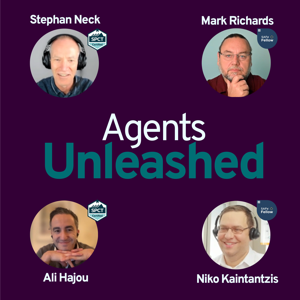
Agents Unleashed is a podcast for curious change agents building the next generation of adaptive organizations — where people and AI learn, work, and evolve together.
Hosted by Mark Richards, Ali Hajou, Stephan Neck, and Nikolaos Kaintantzis, the show blends stories from the field with experiments in agility, leadership, and technology. We explore how work is changing — from agile teams to agentic ecosystems — through honest conversation, a dash of mischief, and the occasional metaphor that gets away from us.
We’re not selling frameworks or chasing hype. We’re practitioners figuring it out in real time — curious, hopeful, and sometimes hilariously wrong.
Join us as we unpack what it really means to be adaptive in a world where intelligent agents (human and otherwise) are rewriting the rules of change.