
Sign up to save your podcasts
Or



“Without consistency and standards none of this works. With too much consistency nothing changes. You have to steer and constantly sense and course-correct.” - Mark Richards
Mark Richards and Niko Kaintantzis join Stephan Neck in this episode with Agile Portfolio Operations from Lean Portfolio Management.
We kick off by sharing our passions: Mark’s thoughts about finding the balance between consistency and standards so that it works, but not too much of it so that nothing changes; Niko’s emphasis on avoiding large solutions by mastering this dimension correctly.
In the first part, we reflect on how to ensure that decentralized ART execution is effectively coordinated across various teams and value streams to maintain alignment with the overall business objectives.
The second part sparked a discussion about emphasizing “Lean thinking principles” to foster operational excellence and innovation speed. Stephan initiated this part by stating that the speed of innovation is dependent on flow, which requires discipline for sustainable speed and space for innovation. Mark reminds us that "Without standards, there can be no kaizen"—portfolio members have to establish and agree on shared standards. Niko adds that testing business hypotheses with MVPs is crucial for innovation. Mark and Niko mention the human element - working with people and connecting people to find “pockets of excellence.”
The final part dealt with engaging and empowering the LPM function, VMO, LACE, and RTEs to actively support and enhance the value streams. The portfolio's power is to see patterns—it’s necessary to do the chores (in a disciplined way, involving senior management): get data flowing, and pre-work done by small groups of people enables informed insights and incisive actions.
The closing “just one sentence” highlights “When it comes to change, find the balance between sugar and sustainability”, “The portfolio deserves dedicated people” and “Excellence is a quality that people really appreciate because it is so hard to find”.
"If you can start talking to audit, you can find solutions that they will help you reach that nobody else would have thought about" - Mark Richards
In Episode 19, hosted by Stephan Neck, Nikolaos Kaintantzis, Ali Hajou, and Mark Richards, the focus is on Lean Portfolio Management (LPM), specifically Lean Governance. The hosts stress the importance of governance in balancing spending oversight, compliance, and alignment between agile and non-agile teams. They highlight the need for engagement from roles like Value Management Offices (VMOs), business owners, and enterprise architects.
We discuss the challenge of synchronizing agile teams with the broader organization, ensuring vertical integration, and maintaining transparency at high levels. The episode explores the value of simulations, such as Get Kanban, to teach flow and governance to senior leaders. The hosts emphasize the importance of practice fields, visual tools, and fostering environments where new behaviors can be learned.
Mark shares how a simulation game helped a CIO and leadership team better understand and commit to Lean Governance. Niko explains how the power of visualization can be a game-changer, sharing the idea of using a simple magnet to indicate blockers on a board. The episode concludes with discussions on applying these concepts in real-world scenarios, using data for transparency and accountability.
The conversation touches on unfinished work items in portfolios, caution against weaponizing data, and the importance of pattern-based problem-solving. Stephan shares a story highlighting the importance of collaboration between business owners and enterprise architects in lean governance. The hosts wrap up by offering tips for new SPCs, stressing the importance of understanding controls, collaborating with key stakeholders, and treating audits with care to avoid premature conclusions.
References:
Cast:
Ali Hajou(Moderator)
Niko Kaintantzis
Stephan Neck
Mark Richards
“Show up. Keep up. Shut up.” (Change agent’s creed, borrowed from golf pro caddy creed) - Stephan Neck
Mark Richards, Ali Hajou, and Niko Kaintantzis join Stephan Neck in this ‘reprise’ episode with Leading Change from the Lean-Agile Leadership competency.
We start by sharing our passions: Mark’s thoughts about the beauty and perils of change roadmaps, Ali’s explanation of why checklists are a good treat for anxious people, and Niko’s emphasis on necessary visions as a base for new behavior for change success.
In the first part, we reflect on how change agents/leaders apply the Implementation roadmap. The pros of a “checklist” of a logical sequential set of steps help overcome change anxiety, but it also has its perils, forgetting that the transformation is an iterative journey. A transformation vision helps as a crystallization point to stay focused.
The second part sparked a discussion around “leading the transformation rather than just supporting it”—significant change requires engagement and high interest by senior management as early adopters to generate change in the early and late majority of the people in the respective context. Our goal: building networks of influence.
The final part dealt with the attitude of SPCs/change agents: Make other people successful - we should leverage our change knowledge to support and enhance the effectiveness of leaders in leading the change.
Cast:
Stephan Neck(Moderator)
Niko Kaintantzis
Ali Hajou
Mark Richards
“As an SPC on the Portfolio Level: The first time just be an assistant, not the head coach. Learn about how companies work, how they speak, how they behave.” - Nikolaos Kaintantzis
Hosts Nikolaos Kaintantzis, Stephan Neck, and Mark Richards take a deep dive into Lean Portfolio Management (LPM), focusing on the critical areas of Strategy and Investment Funding. The conversation sheds light on the real-world challenges of managing a portfolio in an agile environment, offering practical advice on how to make LPM a success.
Key Takeaways:
This episode is essential listening for anyone involved in Lean Portfolio Management. It offers a blend of strategic insights and practical advice to help you connect the dots between strategy, investment funding, and successful portfolio management.
Cast:
Niko Kaintantzis(Moderator)
Ali Hajou
Stephan Neck
Mark Richards
“Design for easy repairability, especially in complex systems that must evolve over time.” - Ali Hajou
In this episode, the SPCs Unleashed team tackles the complex dimension of continually evolving live systems, with a particular focus on large, cyber-physical systems. Mark Richards, Ali Hajou, Stephan Neck, and Nikolaos Kaintantzis delve into the intricacies of designing and maintaining systems where hardware and software must seamlessly integrate over extended periods.
Ali opens the discussion with a story about a client who successfully implemented modular retrofitting to keep large machines up-to-date and operational even when certain parts were not yet available. Stephan and Niko share their experiences, highlighting the importance of a continuous delivery pipeline (CDP) that can accommodate the unique demands of cyber-physical systems, such as firmware updates and complex deployments.
The conversation shifts to the critical role of modular design and interface management in enabling continuous evolution without compromising system stability. The team underscores the need for stable, product-focused teams to manage both legacy systems and new innovations effectively.
As always, the episode concludes with a spirited debate on the most relevant Measure and Grow metric. While opinions differ, the consensus emphasizes the importance of modularity and the ability to deploy updates independently to ensure systems can evolve with minimal disruption.
Cast:
Mark Richards (Moderator)
Ali Hajou
Stephan Neck
Niko Kaintantzis
"Experiment like a scientist, not a mad scientist" - Mark Richards
Have you ever pondered, "How can a lean approach work wonders for massive systems?" That’s exactly where we dive into this episode of SPCs Unleashed. Hosted by Swiss SPCTs Stephan and Niko, Dutch SPCT Ali, and Aussie SAFE Fellow Mark Richards, the show continues to unravel the complexities of enterprise solution delivery, this time with a focus on lean systems engineering.
Ali kicks off by revisiting the less glamorous but crucial core competency of lean systems engineering, which aims to trim the fat from system development by integrating and evolving systems incrementally. The discussion reveals how managing large systems can be challenging, but incremental improvements, like those from Mark's Australian Post story and Niko’s Swiss bank example, can lead to agile success.
Stephan draws parallels with his army experience, emphasizing the need for clarity and cohesion in large, complex operations. Mark and Niko share insights on navigating legacy systems and adapting roadmaps, while Ali highlights the importance of aligning long-term goals with agile, iterative development. Each story showcases how even the most intricate systems can benefit from lean principles, turning vast, monolithic challenges into manageable, incremental deliverables.
References:
Refactoring Databases: Evolutionary Database Design - Scott W. Ambler
SAFe Solution Intent Article
Cast:
Ali Hajou(Moderator)
Niko Kaintantzis
Stephan Neck
Mark Richards
“It's a wonderful toolbox, but you don't have to stand up a large solution to start using the toolbox.” - Mark Richards
In this engaging episode of SPCs Unleashed, hosts Nikolaos Kaintantzis, Mark Richards, Stephan Neck, and Ali Hajou dive deep into the complexities of enterprise solution delivery, focusing on coordinating large solutions, managing suppliers, and integrating hardware. The conversation touches on the challenges and strategies SPCs can use to navigate this intricate terrain. Profit even if you have no large solutions.
Key Takeaways:
This episode is a must-listen for SPCs looking to deepen their understanding of enterprise solution delivery and learn from the real-world experiences of seasoned experts.
“the drummer sets the beat and the rhythm that the band shines against… a good leader sets the beat, and they create the backdrop against which great performances happen from their people.” - Mark Richards
In this enlightening podcast episode about Leading by Example, Mark, Stephan, and Niko emphasize the critical role of leaders in fostering an environment where team members feel safe to express their ideas, which is essential for innovation. Mark highlights that leaders must listen to their teams, understand their perspectives, and value their input. Stefan adds that creating psychological safety is crucial, allowing team members to share without fear of judgment or retribution. This safety leads to greater innovation, as people are more willing to take risks and suggest creative solutions.
Trust is identified as foundational to effective collaboration. Leaders build this trust through transparency, modeling desired behaviors, and leading by example. Mark shares a personal story about a leader named Nat who inspired him, emphasizing her dedication to learning and caring for her team. Niko contributes to the discussion by emphasizing the importance of authenticity in leadership. He stresses the need for leaders to be consistent in their behavior inside and outside formal settings and to embrace feedback as part of their growth journey genuinely. Stephan shared his struggles with impostor syndrome and found solace in the concept of "confident humility" from Adam Grant, highlighting the importance of being confident in what you do while being humble about what you don’t know.
Overall, the conversation highlights the importance of listening, psychological safety, trust, leading by example, and genuine care in effective leadership. Each speaker brings a unique perspective and personal experiences that underscore these principles in practice.
Key Takeaways:
Cast:
Niko Kaintantzis (Moderator)
Stephan Neck
Mark Richards
"When joining, the all-blacks gave you a book with all jerseys of the team across all times, with blank pages at the end for you to fill in" - Stephan Neck
In this episode of SPCs Unleashed, the hosts Stephan Neck, Niko Kaintantzis, Ali Hajou, and Mark Richards delve into the Lean-Agile Leadership core competency, focusing on mindset, values, and principles. The discussion emphasizes going beyond superficial understandings of these concepts to explore their practical applications in real-world scenarios. They discuss the importance of embedding Lean-Agile values in leadership, decision-making, and actions across organizations.
The episode features insights on how sticking to core values can be challenging but ultimately rewarding, with examples like Patagonia’s commitment to its principles. Mark Richards shares a story of a government executive who effectively modeled leadership values, breaking down hierarchical barriers. Stephan Neck highlights the significance of alignment and trust in leadership, drawing from his experience in the Swiss Army. Niko Kaintantzis discusses the fine line between being stubborn and upholding values, sharing how a project leader successfully navigated resistance to drive change.
Book References:
Let my people go surfing - Yvon Chouinard
Cast:
Ali Hajou(Moderator)
Niko Kaintantzis
Stephan Neck
Mark Richards
“If you don’t have great teams, you’ll never have great ARTs” - Mark Richards
Mark Richards, Ali Hajou, and Niko Kaintantzis join Stephan Neck in the second ‘reprise’ episode after the initial reprise of SPC’s Unleashed with Lean Thinking People and Agile Teams from the Organizational Agility competency - we proceeded with the Dimension of Agile Teams in the Team and Technical Agility competency.
We start by sharing our passion, followed by a deep dive into agile practices to foster the right attitude using Scrum, Kanban, or a hybrid as the team’s core method. Mark reminds us about the giants whose shoulders SAFe’s team stands atop.
Next, we reflect on how “Legends are not made but emerge” by discussing finding the right Scrum Master/Team Coach, as they have a crucial role. We agree that naming or choosing them based on certification isn’t enough. Once you find them, you have to mentor and grow them.
The third topic includes “GOAT Teams”: Team Topologies opened up a fruitful discussion about team collaboration rather than “categorization” and avoiding the binary “Feature teams good, Component teams bad” trap.
Our final topic was the team responsibility wheel with the five focus areas. Our conclusion was that delivering value is the ultimate goal, and all other responsibilities lead to it.
Cast:
Niko Kaintantzis
Ali Hajou
Mark Richards
Links:
Team Topologies - Skelton and Pais
From the publisher's feed
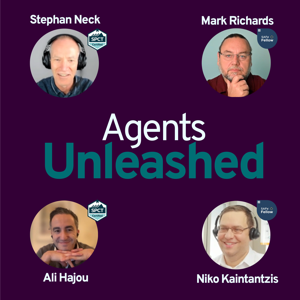
Agents Unleashed is a podcast for curious change agents building the next generation of adaptive organizations — where people and AI learn, work, and evolve together.
Hosted by Mark Richards, Ali Hajou, Stephan Neck, and Nikolaos Kaintantzis, the show blends stories from the field with experiments in agility, leadership, and technology. We explore how work is changing — from agile teams to agentic ecosystems — through honest conversation, a dash of mischief, and the occasional metaphor that gets away from us.
We’re not selling frameworks or chasing hype. We’re practitioners figuring it out in real time — curious, hopeful, and sometimes hilariously wrong.
Join us as we unpack what it really means to be adaptive in a world where intelligent agents (human and otherwise) are rewriting the rules of change.