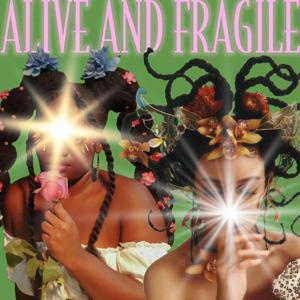
Author’s Note: This a long piece so if you usually read via email, it might get shortened. You can read the full post on my substack page. Song used can be found here, here, and here.
Summary/Blurb: This is about what it feels like to become the butterfly, soft and shimmering under the sun. Strange looking and gorgeous. I’ve felt all of my life that I was wrong, and I’m only starting to see now that I am perfectly what I am in the scheme of it all.
I had a haunting time at the Raveena concert, eyes flooded with hues of summer while she and her two dancers floated around the stage. When people ask me about it, I say it was fun first and a mind trip second.
I’m not used to being older. I’m defining what it means to be an old young person, a young old person, being a person at all. I feel plain; I wear the same clothes in different orders every week, listen to the same songs, make the same kinds of jokes. It’s not something I find shame or pride in, just stark neutrality. I am always plain during a nothingness period — the summer before moving away for school, the night before Christmas, the last thirty minutes before lunch, teeth twitching to sink into something so much that the lackluster taste becomes gold when it hits your tongue.
I have recently left the world of Raveena, cleanly concluded by a themed beach celebration. I called it Sweet Time to call in the soft loving energy of her music, her gentle acceptance, and revelling in humanity. Sitting on the beach at the mercy of the wind and soft waves grounded me into the next version of myself.
In an interview with Bobo Matjila that led me to the song “Sweet Time,” Raveena’s take on trust sat with me. To her, trust “[may not be] natural to our body because of how much we’ve been through as a species.” I’ve wavered between self-trust and self-containment for months now. I spent most of the winter in a mental cocoon of self-study, running experiments to see how far I could push myself. It’s always the easy stuff that feels like hazing — sending a message, not agreeing to a plan, voicing an opinion.
June of 2025, however, set this pursuit into hyperdrive. I needed to break out of the shelled body I had formed in my slow crawl toward self-liberation. I needed to breathe fresh air, feel lost memories, and connect with the unknown. I had to remind myself over and over that the future was not here to bite me. She is only a girl doing her best to become something.
But this did not start in June. In April of 2024, I found myself in my room sobbing hysterically in front of my computer. It was about a month after breaking up with a fling that flashed, then fizzled. The looming presence of ‘Next’ hung heavy in the air. My tears weren’t over lost love but a Coachella set performed by none other than Chappell Roan.
It was the second weekend of the festival, and I had formed the habit of poking around the livestream feeds to see if anyone could hold my attention. I knew I had to catch some of Roan’s set as she was now notorious for being a firecracker onstage. But when she emerged in that beautiful, bright pink butterfly suit, she cracked open something in me I couldn’t quite reach around to see.
Roan and I have an almost decade-long history. During the spring of 2018, I went with my friends to see Declan McKenna on his first US tour for his debut album, What Do You Think About The Car? A teeny college bar turned concert venue in Lawrence, KS, was filled to the brim with 100 or so people. Sixteen-year-old-me practically buzzed from being close enough to the stage to catch every smile, awkward laugh, or small freeze at a hiccup. McKenna even spoke to my friend halfway through his set, exchanging some classic British banter.
What my teen self couldn’t have prepared for was the powerful presence of Roan on that stage, quieting the crowd as she played. She’d pause between songs and give clumsy spiels, her nervous energy softening the crowd before delivering the most beautiful vocal performance. Something in me felt connected to her, even if I couldn’t yet piece together why.
After the show ended, my friends and I stuck around hoping to catch McKenna and Roan, the latter mentioning she’d be by her merch table after the show. We showered her with compliments, bought a signed poster, and got a picture together. All I remember was thinking it was cool that she was from just a state away.
I would listen to Raveena’s third studio album, Where Do Butterflies Go In The Rain?, on the morning of its release, two months after Chappell Roan’s Coachella set. It was a lightly anticipated album with only two music videos preceding it — “Pluto” and “Lucky”. The airy, independent work is filled with songs for lying in the grass and soaking in the sun. I wouldn’t spend that summer doing either; instead, I nearly worked myself to death at my two new jobs. It gave a false sense of security after a year of unemployment.
In October of 2024, four months after Raveena’s album release and deep into the consequences of my work commitments, I would go to see Tinashe. Already buzzing from two previous concerts we’d attended earlier in the month, I was extra excited because Raveena would be her opener, and I had every intention of watching her set.
Armed with her main collaborator and guitarist, Aaron Liao, a blooming tree set piece, and musicality to split your brain open, she delivered one of the most beautiful opening performances I have ever seen. As she floated around while covering Aaliyah’s “(At Your Best) You Are Love”, angel angel angel drummed in the back of my brain. There’s something special about an artist owning the stage when the crowd is a little resistant to them, over half of the seats empty as people slowly drift in. At the end of the set, she announced she’d be by her merch table for a small meet and greet. I could practically taste the moment of kismet. My friend and I missed the first few songs of Tinashe’s set to stand in line, exchange sweet words with her, and take a photo.
As we left the show, nearly losing each other in the crowd, I spotted a familiar head of long, flowing dark hair in a fairy-like dress. Raveena, sensing me, smiled, and we exchanged a final wave goodbye.
Butterflies, typically metaphors for change, can teach us about becoming — the process of rooting further into our true nature without leaving behind who we have been. A butterfly is a recklessly fierce creature that, despite all the chaos, chooses to be present in a world that can so easily destroy it. Butterflies work all their lives to become what they are, only to be eaten by a bird, taken out by pesticide, or some other loathsome fate that holds no greater meaning in the grand scheme of it all.
Butterflies always remind me of my ancestors, particularly my grandfather. I don’t know if he related to the butterfly as a martyr of freedom, as a symbol of surrendering to what you are. Perhaps that is why butterflies are often also a symbol of hope.
There’s chemistry to an artist clicking their way into your conscious awareness. Four years after meeting Chappell Roan and barely surviving the worst semester of my life (COVID included), I sat in my temporary apartment, throwing together a playlist of summertime songs. The season had proven itself to be heavier than its predecessors, so any efforts to shoo away the impending sense of doom were welcome. I kept up with Roan like an old friend, occasionally checking in to see how she was. Her ‘10s Tumblr-worthy aesthetic had gently departed, her brown hair tinged red. I listened to her new singles once or twice, none of them sticky enough for my indie-pop-fiend brain.
Enter “Naked in Manhattan”.
Every time I hear the tune, I still see myself prancing around my room, around the empty campus, along the beachside, letting the desire to live well return to me. It was so unlike all of her earlier work — sans Pink Pony Club — undercut with melancholy. Naked in Manhattan was fun and free and unapologetic, everything I craved to be. I was hooked and craving more.
Each new Chappell drop revealed a wider puzzle to this new version of Chappell Roan I hadn’t seen before. Old Chappell was dead and had blossomed into a sparkly, cunning version of herself. Slowly, people began to drift toward her, the name no longer another indie staple. A friend would invite me to go to a show senior year of college, but we never managed the details. A passive regret, but I might not have appreciated it for the special opportunity it was.
After months of passively re-listening to The Rise and Fall of Midwestern Princess, the presence of Chappell the Person had been lingering closer into my field of vision. It wasn’t until watching her Weekend Two Coachella performance that I understood the sudden, strong pull was the universe turning my head. Here she whispered, the sign you’ve been looking for.
I love the color pink more than most things. It’s the first color that’s felt like mine, likely because it was. I used to say blue was my favorite because my mom said she liked it once, and my child self decided I would too. Blue everything from elementary school until my junior year of college. Before that, my favorite color was hot pink, only fading when I decided it was too juvenile and complicit with the majority.
The semester after “Naked in Manhattan”, pink began to emerge in my aesthetic choices with increasing intensity. I needed a reminder that the little kid in me was hanging on despite years of quietus. The right hue of pink softens and calms my brain, becoming the visual equivalent of holding a stuffed animal — the smell of the plush mild, soft from head to toe.
Chappell Roan emerging onstage in that exact hue of pink did something for the little girl in me. I switched from the stream on my phone to the one on my laptop, dropping everything to watch the rest of the show. Halfway through Picture You, ironically one of my least favorite songs from her, I started crying. I thought of all the queer kids seeing her onstage, prancing around. The Coachella crowd, notorious for giving artists no reaction, screamed along to her lyrics with everything in them. How alive everyone seemed; I was sixteen again in that tiny bar watching a nineteen-year-old Kaleigh croon ‘Die Young’ because that’s all a queer kid in the Midwest had to think about.
The title Where Do Butterflies Go In The Rain? has an answer. As Raveena puts it for Clash,
“Butterflies are so delicate that they have to hide in leaves and flowers until the rain passes so that their wings don’t get crushed in the rain. I felt like that was kind of a metaphor for where I was in my life. I needed to go back to comfort — to deep rest — and stop weathering storms.”
The result of such a clear title and meaning was an album that deeply reflected on her softening with age, despite all the debris life throws. She discusses quite often throughout the album and touring cycle how intimately she’s sat with the message hidden within the album. It makes sense that such a project invites you to explore your own softness, too.
After seeing Raveena in October, I decided to quit my unhealthy working arrangement, at least temporarily, to retreat under my leaf and heal from the damage. My decision was supported by the star forecast, which predicted low energy and slow movement as I moved farther along through the dead of winter. I spent most of December contemplating how I had reached a point of such aggressive self-abandonment, and what anxieties about my life compelled me to push the limit. I concluded that a disconnect from self was to blame and decided to slowly document the process of reconnecting through a series of voice notes.
The process let me explore my intuition and, incidentally, my heart more closely. I would meditate in the morning and the evening when I was awake enough to do it. I found myself, with the nudging of my chosen parasocial gurus, exploring what it meant to follow my inner compass. I ran tests, learned what “yes” and “no” felt like in my body, and gave random projects a try to see what would happen when I allowed myself to have full faith.
I allowed myself to accept ease and open up to the possibility of feeling good in my life. Everything was starting to make sense until around May 2025. The air went still, the distinct feeling of waywardness settling. Mopey and slow, unsure of where to turn or if I even wanted to be turning anywhere at all. Every task became a chore, so I shut myself in, only emerging for the occasional social commitment and work.
Eventually, I sat down with my roommate and laid my frustrations bare. The pursuit of vivre had sparked something in me, soon to be soundtracked by the songs of Raveena.
The following month, I went to see Raveena live, expecting to have a spiritually shifting experience. I wasn’t entirely wrong.
I stood in line outside the venue, surrounded by college kids I had never felt so detached from, the weight of my era of life crushing me with realization. I found myself chatting with people to pass the time, emerging from my crab shell lazily — crossed arms, half smile, light small talk. Everyone was open in a way I couldn’t put words to, likely due to the act we had come to see. I felt the difference between the version of me in line or alone in the pit, and the me from over a year ago, attending the same venue by myself, hyperaware of being perceived, stressed over a boy. It was the same me who was left eviscerated by a Coachella stream.
Standing in the crowd, taking in Raveena’s dance sequences, I felt how I had shifted. I felt the pain from standing for hours wreck my body, the irritation of the kids around me muddle my mind, and the peace of good live music calming me.
And most importantly, I felt so wholly myself.
I found myself looping a lot of Raveena’s music the next few weeks in post-concert tradition, but it felt less heavy with spiritual transmission and more delightfully human. For Raveena, every song is a love song to life, and I had fallen desperately out of love with mine. Ironically, the irritation of the concert brought me so aggressively into my body that it became grounding.
My energy began opening up to possibilities around me. Every single moment became a reveal of who I was becoming and could be. A trip home, moving around in ways that used to debilitate me with anxiety. Letting go of opportunities I wanted, prospects I had already taken my fill of years ago. Playing with new experiences and eventually pursuing the idea of the beach event I had tabled two months prior out of fear, bringing it together in a week. I kept prodding the cocoon of Fear, begging it to release me.
The thing about Fear is that she is not useless. She is a voice inside of us begging to be heard clearly. “Here’s how you stay safe”, Fear says. “Here’s how we stay winners, because then we can never fail. This is how you keep the little love, money, or joy you have.” Everything is sparse with Fear, the desire to hold tight nearly instinctive.
Chappell Roan, in the last year or two, has become a symbol of fearlessness because she is unflinchingly herself to the untrained eye. The trained eye knows what it means when you go from no one caring to everyone caring very quickly. Her resistance to the phenomenon has been clever, insisting on creating boundaries with her fanbase to avoid being pigeon-holed. This doesn’t come from a lack of fear, but a well-balanced relationship with it. Fear hollers at us to protect the space we create for ourselves as we emerge into being who we are. Fear calls us under the leaves when it rains.
To release fear entirely is absurd. We need her ideas, her tendency to overthink and overplan, her caution toward the world around us. Fear, unchecked, becomes the real problem.
From June to November 2025, I experienced a period of comedown. In an effort to shed fear and force open my cocoon, I found myself injured in both the literal and metaphorical sense. I strained my back for a second time, lining up with when I confused my own boundaries with a comfort zone. The body doesn’t scorekeep, but she does like to mirror how we experience the world.
I don’t know if or when I’ll emerge into this beautiful butterfly version of myself. I’m sure there are people in my life who would argue that I have. I sense the life of a butterfly in the human realm is a cyclical one of emergence, retreat, and transformation. A couple of months back, I wrote in the Alive & Fragile newsletter information my therapist had given me:
“[...] butterflies cannot be extracted from their cocoons. The process of struggling out of it, even when it is a struggle, is the only way that they’re able to fly. This afternoon, I saw a monarch fly around our apartment gate and disappear in a flash. It felt like something. Time will tell what.”
I’ve spent the last year trying to emerge into this bright, beautiful version of myself. I can feel her near me, this unflinching force of light and potential capable of any and everything. She is me. She emerges and retreats because, as humans, we are ephemeral creatures constantly changing shape, experiencing many states in the span of a second.
When I started drafting this essay in 2024, I wrote:
I wish I could send 16-year-old me, heck 14-year-old me, a copy of The Rise and Fall of a Midwestern Princess. I think she would listen to it while writing for her blog and consider what life would be like if I stopped focusing on being understood and focused more on understanding and expressing myself.
While I have evolved many times since I started writing this, I feel I will struggle against the fear of being seen and rejected for who I am throughout my life. I have pulled myself out of the cocoon of self-protection to let my wings unfurl slowly. I have retreated under leaves until long after the storm has passed. Teenage me wanted to understand exactly who I was meant to be in the world. Now I know I am in an endless state of becoming.
This is a public episode. If you'd like to discuss this with other subscribers or get access to bonus episodes, visit catharaxia.substack.com/subscribe