
Sign up to save your podcasts
Or

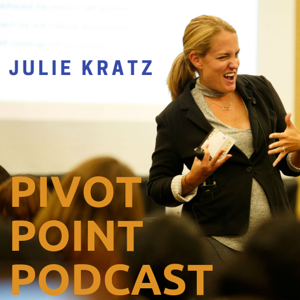


Here is my diversity story, along with tools to help you share your story. I had the opportunity to give a 5-minute talk on diversity storytelling this month – 200+ people and auto advancing slides – I was nervous! The subject was diversity storytelling. I believe everyone has a diversity story and as leaders, we all need to share them. In this episode, you will hear the live talk, and get tools to write your very own diversity story.
While we need more male allies, we also need more women to be allies for women. Denise and Eleanor personify allies for women. Through their speaking on women's empowerment, both encourage women to share their voices more.
Denise Herd, visionary leader of Herd Strategies, helps women find and own their voices. Her candid conversation highlights the role of gender in conflict, and how allies (women and men) get to the root cause of the issue. As she shares, inclusivity is key. According to Denise, we need men at the table with women to hear what they think to be truly inclusive. And, we need to do that while maintaining safe places for women to learn and share their stories.
Eleanor Beaton, North America's top women's leadership expert, shares her candid conversation about unconscious bias as a mother in the workplace. While she wished she had responded more directly in the moment, she now teaches women how to speak up and directly address conflict when it happens. She offers questions as a powerful tool to stay in the moment to be candid. As she shares, curiosity, confidence, presence, and influence are vital skills for women to smash glass ceilings in every industry and every locale around the world.
Connect with Denise at http://herdstrategies.com/ and Eleanor https://eleanorbeaton.com/
Being an ally can be lonely. In this episode, Eric Brotman and Sheryl Brown both share their candid conversation of being the one of the only men or women in a business setting. The finance industry, as with most industries, is not gender diverse, yet Eric and Sheryl have both leveraged their voices to make a positive impact on their industry.
Eric joined a women in finance organization as an early ally in the 1990's, and has since achieved gender equality in his own financial advising business with 50/50 male and female partners. While he admits to not having the secret recipe for gender equality, he attributes his firm's success to hiring for the right skill sets. As the leader, he makes sure that his team looks for strong listening skills, collaboration, and relationship-focused skill sets and hires and rewards those skills. As a firm, they also focus on unseeing gender difference in the workplace, and park their own unconscious bias.
As Eric's ally, Sheryl Brown, leader of the Females in Finance community, also shares her story. She is an accidental activist of gender neutralization. Since being one of the only women in the room, she has made it her purpose to advocate for more women in the finance space. She now provides resources to women for professional development to advance in finance.
Learn more and Connect with Sheryl
bionicsocial.com
https://www.facebook.com/groups/FemalesAndFinance/.
Learn more and connect with Eric http://www.brotmanfinancial.com/team/eric-brotman
Eric offers securities through Kestra Investment Services, LLC (Kestra IS), member FINRA/SIPC. Investment advisory services offered through Kestra Advisory Services, LLC (Kestra AS), an affiliate of Kestra IS. Kestra IS and Kestra AS are not affiliated with Brotman Financial Group or any entity referenced herein. Neither Kestra IS nor Kestra AS provide tax or legal advice. The opinions expressed in this commentary are those of the author and may not necessarily reflect those held by Kestra IS or Kestra AS. This is for general information only and is not intended to provide specific investment advice or recommendations for any individual. It is suggested that you consult your financial professional, attorney, or tax advisor with regard to your individual situation. Comments concerning the past performance are not intended to be forward looking and should not be viewed as an indication of future results.
Our allies come in all shapes and forms. They can be mentors, sponsors, advocates, champions, or sounding boards. This personal story will touch your heart as a son and his mother share how they became allies for one another, and how that influences their views of gender equality in the workplace today.
Key lessons you will learn from their ally journey:
- Be kind to others. Kindness as an ally is paramount.
- Find a way to balance gender roles, and be as blind to them as possible in the workplace.
- Assume people are coming from a good place. Most people want to be helpful.
- Find your gender role comfort zone. Flex to be more aggressive or more collaborative given the situation.
- See both sides of the situation, rather than men and women, see . others as humans.
Learn more and connect with Sean at https://www.linkedin.com/in/seansullivan110/.
In this episode, we feature two very different leaders. That is, based on gender, race, industry, and geography. Yet, their perspectives are eerily similar on diversity.
Danielle Vetter is a Diversity & Inclusion leader at a Midwest technology and engineering company. Peter Khoury was raised in the Middle East and now lives on the West Coast practicing presence and public speaking training and coaching. From their diverse vantage points, they both see gender differences in communication and leadership, offering strategies to close the gender gaps.
As Peter shares, he teaches men and women the same key attributes of effective communication: assertiveness, clarity, and being direct. Yet, he often finds women are more hesitant to take action on the coaching. They share that when they have been assertive or direct in the past, they are labelled as bossy or aggressive. Realizing that women are far more likely to get feedback on their personality vs. situations, they find themselves on this gender tightrope between being bossy vs. being weak. Conversely, when men exhibit this behavior too much, they may be called a bully. These biases do not benefit either gender.
To improve your own presence, he suggests we make two lists:
Then, open up your network and look beyond the people like you, look for allies, and focus on the attributes of these people that you want to be more like.
That is something that Danielle is really good at. She shares through her candid conversation when a man takes a woman's ideas or talks over a woman in a meeting; it can have really negative consequences. Often, women choose not to speak up as a result. Instead, at Cummins, she is leading efforts to see conflict as constructive, focused on issues rather than the person, and necessary to engage all talent. In fact, their C-Suite is 35% women. They have achieved this intentionally through long-term diversity planning where each executive is responsible for their own 5-year diversity plan. They do frequent career mapping exercises for every employee so that those otherwise underrepresented can see themselves growing into future roles.
Follow Danielle at https://www.linkedin.com/in/daniellejvetter/ and https://www.cummins.com/. Follow Peter at https://magneticspeaking.com/.
Follow us @nextpivotpoint on Instagram, Twitter, and Facebook and connect with us 1:1 at www.NextPivotPoint.com.
We post daily about leadership, equality, and career development on LinkedIn at: https://www.linkedin.com/in/juliekratz/.
Jason and Kendra Beutler are leaders of Edusource, a technology company that believes in taking advantage of young talent. As they share, young people can help solve the talent gaps in technology. And, they have a proven track record of investing in young people, which in turn, has helped them solve complex problems for their organization and clients.
Together, they share what it is like to lead as allies, and to be candid. When they hired two summer interns who were female, they wanted to be sure to have an actively inclusive culture where the new women felt supported and a sense of belonging. To do this, they facilitated a "Gender Sensitivity Training." It was an open dialogue to discuss situations that might make others feel uncomfortable, and modeled how to proactively engage in inclusive behavior like asking team members to go out to lunch. In fact, gender sensitivity training turned into playful code word to callout negative behavior in moment. It helped to make uncomfortable conversations more candid and productive.
As Kendra and Jason share, to move beyond just diversity, you have to live the values to build a culture of genuine inclusion. They choose to focus on diversity through broader recruiting, utilizing blind interviews to ensure all qualified candidates are interviewed and remove names from resumes. To strengthen their inclusive culture, they build upon their known differentiator, relationships where people are their best assets.
Together, they demonstrate how men and women lead as yin and yang. In their case, one is a visionary, and one executes on the vision. They are sounding boards to one's another's challenges and often spend more time listening than speaking as leaders.
Follow Jason and Kendra at www.edusource.us and on Twitter @jrbeutler and @edusource.
Follow us @nextpivotpoint on Instagram, Twitter, and Facebook and connect with us 1:1 at www.NextPivotPoint.com.
We post daily about leadership, equality, and career development on LinkedIn at: https://www.linkedin.com/in/juliekratz/.
Thought leaders in mentoring and networking join this episode to share stories and lessons for men as allies and those looking to diversify their networks.
Dr. David Smith, co-author of Athena Rising: How and Why Men Should Mentor Women and gender expert, shares his candid conversation giving a peer constructive feedback. In his story, he confronts benevolent sexist behavior with one of his peers in the military. Similar to chivalry, benevolent sexism refers to protecting or treating women differently. It is often done with good intentions, yet is unhelpful for women long term. While men often are socialized to be the "knights in shining armor," that is not what an ally does. Allies help those they mentor, sponsor, and/or champion to instead advocate for themselves.
Amy is the author of Networking Beyond Bias: Making Diversity a Competitive Edge in Your Career. She shares her own personal story of addressing gender bias in the moment and how she called out negative behavior, leading to positive change. As Amy describes for our listeners, diversity goes beyond just race, gender, LGBTQ, or abilities, it is how we think and how we behave. She offers a clear strategy to diversify your network – reach out to those outside of your own industry. While it feels good to be comfortable with those like us, we learn when we are uncomfortable. We learn more from others different than us.
Both Amy and David have an important message for men to engage as allies and mentors, rather than shy away, especially in a #metoo era.
Follow David at http://www.davidgsmithphd.com/.
Follow Amy at https://leadatanylevel.com/.
You can also access her complimentary eBook at https://leadatanylevel.com/pivotpoint.
Both books are also available on Amazon.
Follow us @nextpivotpoint on Instagram, Twitter, and Facebook and connect with us 1:1 at www.NextPivotPoint.com.
We post daily about leadership, equality, and career development on LinkedIn at: https://www.linkedin.com/in/juliekratz/.
Candid conversations are tough to have. It is easy to skirt around them. Maybe for the short-term, but this is detrimental for long-term success. This episode's guests share how to engage in them safely, and productively.
Caroline Dowd-Higgins outlines keys to a candid conversation through her own candid conversation story. By inserting herself into an uncomfortable situation to create a safe space for a colleague, she was able to set the tone and show the team what good allyship looks like. She chose to not be a bystander, look the other way, or avoid the conflict instead. She is an advocate for leaders to step into the discomfort by neutralizing tone and emotion and setting ground rules collaboratively. Specifically, by asking "how can I better communicate with you?" and practicing gratitude with those with negative behavior, we create safe places for sustained positive change.
Also in this episode, Zane Davis, MBA student at the Kelley School of Business at Indiana University, shares his story of initiating a male ally organization. He speaks to the challenges of leading an ally organization and strategies to continue the dialogue as allies in your organization. We discuss generational differences on gender equality, the importance of critical mass for women leaders and MBA programs, and the advantages and disadvantages of setting diversity goals.
Follow Zane on Twitter @ztdavis and email him at [email protected].
Follow Caroline at https://carolinedowdhiggins.com/.
Follow us @nextpivotpoint on Instagram, Twitter, and Facebook and connect with us 1:1 at www.NextPivotPoint.com.
We post daily about leadership, equality, and career development on LinkedIn at: https://www.linkedin.com/in/juliekratz/.
What does diversity mean to you?
Our guests this episode are leaders inside their organizations on diversity and inclusion. They describe diversity as a mindset – being open to others' ideas, listening, and asking questions.
D (diversity) is the mix & I (inclusion) is making the mix work. As Vernon describes, that means having diverse interview slates, leaders as advocates for diversity, diversity initiatives at all levels of the organization, diversity and inclusion scorecards, career maps, and leadership diversity goal plans for starters.
Maria offers questions to our listeners to engage as an ally:
- What do you need?
- What do you like? Not like?
- What is it like to be you?
- How can I help?
Park the fear and do it afraid. It is okay to not say the "right" thing. Be curious to learn and be vulnerable to ask questions you do not know the answers to. That's what allies do.
Follow Maria at https://www.linkedin.com/in/maria-caceres/ and at https://www.regions.com/.
Follow Vernon at https://www.linkedin.com/in/vernonlj/.
Follow us @nextpivotpoint on Instagram, Twitter, and Facebook and connect with us 1:1 at www.NextPivotPoint.com.
We post daily about leadership, equality, and career development on LinkedIn at: https://www.linkedin.com/in/juliekratz/.
We all seek comfort in what we do. Who we talk with, and what we talk about. Today's guests challenge that norm in a big way. They share their stories of how they have leaned into the candid conversations. A must-have for successful leaders and allies of diversity.
As a senior Human Resources leader in technology, Emily Wolfington removes obstacles for her team to do their best work. Having experienced her own obstacles wrestling with visibility in a male-dominated environment, she now focuses on engaging allies in her career to ensure she is seen and heard. Leading a culture of allies, she highlights how to engage men as allies and show them how can they be more of an ally. Simply starting the conversation with, "here's one thing I am struggling with, can you help me?" opens the door to allies to step in. Through finding her own voice and embracing self-advocacy, Emily shows women leaders what good looks like, and offers tangible tips for men to be allies.
Jason Barnaby is a former educator and senior leader in corporate America. He now is Chief Firestarter at Firestarters Inc. There, he specializes in solutions for leaders to find and tend to their tribe. His work connects and expands people's tribes beyond their own comfort zones. Through embracing curiosity, we never stop learning. He lives by the mantra, "you are the average of the five people you spend the most time with," which has been helpful as an ally. When confronted with his own ally learning of the term "mansplaining," he embraced it as a learning moment and listened to his female colleagues. As he shares, on the other side of discomfort is positive change.
Follow Emily at https://www.linkedin.com/in/emilywolfington/ and at https://www.sigstr.com/.
Follow Jason at https://www.linkedin.com/in/jason-barnaby-252a68/ and https://firestarterstribe.com/.
Follow us @nextpivotpoint on Instagram, Twitter, and Facebook and connect with us 1:1 at www.NextPivotPoint.com.
We post daily about leadership, equality, and career development on LinkedIn at: https://www.linkedin.com/in/juliekratz/.
From the publisher's feed