
Sign up to save your podcasts
Or

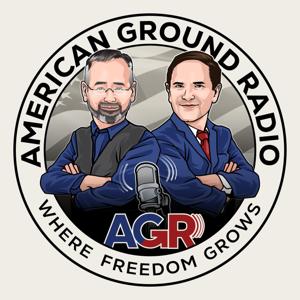


You're listening to American Ground Radio with Louis R. Avallone and Stephen Parr. This is the full show for October 5, 2026.
We open with the voter ID fight, where polling shows around 80% of Americans, including big majorities of Republicans, Democrats, and independents, support photo ID and proof of citizenship to vote. We make the case that Democratic opposition isn't backed by any grassroots movement, and we point to Seattle, where you need an ID to be a poll observer but not to cast a ballot. Then it's the Top 3 things you need to know: three University of South Alabama students arrested by the FBI over social media posts allegedly plotting to kill President Trump, former Congressman David Rivera sentenced to 10 years for secretly lobbying for Venezuela's communist government, and a new round of DOJ arrests for illegal voting across several states.
We then turn to Congressman Brandon Gill's investigation into birth tourism and his warning that a Democratic House would drop it, and we ask whether candidates will answer the question plainly. On American Mamas, Teri Netterville joins us to talk about the FlyDubai flight and the passengers and crew who saved it, from the wounded pilot who opened the cockpit door to the dentist who pulled the plane out of a dive. We also dig into questions about how an attacker got a knife on board and what it means for aviation security.
Next, a surprising story out of Stanford, where 46 adults entered the Catholic Church this Easter, and what it says about young men returning to faith. For Digging Deep, we cover Monday's Supreme Court arguments in Boulder's climate lawsuit against oil companies, including the interstate commerce questions, Justice Alito's recusal, and what a 4-4 split could mean. We also react to Senator Tommy Tuberville's warning about furries in aviation. For our Bright Spot, Chick-fil-A's CEO says hospitality will stay human even as other chains put AI in the drive-thru. Then we weigh in on President Trump's anger over coverage of his Ohio rally and his call to arrest reporters. We close with a Moment of Whoa: FBI Director Kash Patel is engaged to country music artist Alexis Wilkins.
Listen now wherever you get your podcasts, visit AmericanGroundRadio.com, and join the conversation at 866-AGR-1776.
See omnystudio.com/listener for privacy information.
You're listening to American Ground Radio with Louis R. Avallone and Stephen Parr. This is the full show for October 2, 2026.
We open with a story we think captures the American spirit: when storms grounded Marine One and Air Force One, President Trump got in the car and made the long drive from Denton, Texas, to Durant, Oklahoma, so a packed crowd wouldn't be left waiting in the rain. We talk about why that "get in the car, we're going" mentality matters, and about the difference between adapting to the world as it is and trying to control it.
In the Top 3 You Need to Know, first-time jobless claims fell to 197,000, the lowest level since 1969, and we ask why that isn't a bigger story. A Department of Energy employee from Washington state was arrested for allegedly trying to help the Houthis in Yemen improve their communications and build explosives. And the DOJ announced another round of arrests for illegal voting, including foreign nationals in Minnesota, bringing September's total to 50 nationwide.
After the break, we take on a heavier subject: a culture that seems to have lost the ability to process emotions, and the tragic stories that follow. We also share comedian Jimmy Carr's suggestion to say "I'm sad and worried" rather than defining yourself by a diagnosis.
Then it's American Mamas, where Teri Netterville joins us to weigh in on the Cornell 7 case and what the text messages and the public narrative say about it.
Next, the House has passed permanent daylight saving time, and President Trump wants the Senate to finish the job. Senator Tom Cotton is standing in the way over dark winter mornings. We debate the concerns, the health arguments for permanent standard time, and one far-fetched solution: a fifth time zone.
In Digging Deep, Gallup asked Americans which professions they consider the most and least courageous. We share the results, from first responders to politicians, and argue over where journalists, nurses, and business leaders belong.
We also discuss the Portland Trail Blazers firing their new 29-year-old play-by-play broadcaster over posts he wrote at age 15, and whether that's sound business or surrender to mob rule.
In Say What, we hear a politician with nothing to say, then Michigan Senate candidate Abdul El-Sayed's answer on connecting with Black voters.
It's Fake News Friday, and we test our own instincts on real news, fake news, and really fake news. The headlines include the Fly Dubai hijacking, Iran urging American voters to vote Democrat, ID rules in Seattle, and a pet rescue's policy on adopting kittens.
We close with a Moment of Whoa: a Leawood, Kansas, police officer follows a loyal dog back to its home and finds the owner on the floor, unable to get up.
See omnystudio.com/listener for privacy information.
You're listening to American Ground Radio with Louis R. Avallone and Stephen Parr. This is the full show for October 1, 2026.
We open by asking whether the federal government should release the classified documents surrounding 9/11. Twenty-five years later, we say yes. We talk about protecting living intelligence sources and methods still used against terrorists, and about why the Saudi financing question and the FBI's findings still matter to the families. We also weigh whether releasing the records can calm the conspiracy theories.
In the Top 3 Things You Need to Know, we cover the Texas Department of Public Safety stopping an alleged mass shooting plot at the state capitol in Austin, with a San Antonio-area man arrested by SWAT. We discuss Keith Sonderling's confirmation as Secretary of Labor after Lori Chavez-DeRemer's resignation. We also look at the Tennessee execution that failed to kill Krista Pike, which led Governor Bill Lee to halt all executions in the state.
After the break, we ask Senate Majority Leader John Thune why he sent the Senate home until after the midterms without passing the Save America Act. We also hit the blocked voter ID bill and the stalled spending bills. Then the American Mamas, Teri Netterville and Kimberly Burleson, join us to break down the Hyrox race in Beijing, where one contestant's very public digestive disaster has people talking about biohazards, lawsuits, and rule changes.
Next, we take on the price of gas. We ask why the same voices who spent years pushing away from fossil fuels are now angry that gas is expensive, and we look at what that means in oil-heavy Texas. In Digging Deep, we get into the Census Bureau's proposed rules for 2030: dropping race and ethnicity questions and excluding non-citizens from the count. We walk through how that could reshuffle House seats and Electoral College votes, why the 14th Amendment fight is headed to the Supreme Court, and why Democrats will fight it so hard.
We also look at Britain's prison overcrowding crisis, where thousands of inmates are being released after serving a third of their sentences, and why we say you can't be tough on crime without building enough jails. In the Bright Spot, we recognize President Trump for pressing Nigeria's government to stop a planned massacre of Christians in the Middle Belt, and we call out the media for barely covering it. We close with a Moment of Whoa: an Indianapolis mom who pulled a gun over a toy car in a children's resale shop. Then a feel-good finish, as Manville High School senior Mason Wisnowski, who has Down syndrome, takes a handoff and runs 30 yards into the end zone on senior night.
Listen now wherever you get your podcasts, visit AmericanGroundRadio.com, and join the conversation at 866-AGR-1776.
See omnystudio.com/listener for privacy information.
You're listening to American Ground Radio with Louis R. Avallone and Stephen Parr. This is the full show for September 30, 2026.
We open with a warning for the midterms: when politicians tell you what they plan to do, believe them. We walk through the health care and policy wish list a House Democratic working group has sent to Hakeem Jeffries, including Medicare for All, the Women's Health Protection Act, vaccine coverage, immigration enforcement limits, and a promised 100-hour blitz once they take control. We also explain why we think none of it gets past a presidential veto.
In the Top 3 Things You Need to Know, we cover a FlyDubai flight bound for Tel Aviv where a pilot stabbed a fellow pilot and sent the plane into a steep dive. Passengers and two off-duty pilots saved the day and landed the jet safely in Saudi Arabia. We also look at second-quarter GDP growth of 2.2%, which beat expectations thanks to data center construction and a two-year high in manufacturing jobs. And we note that the last U.S. troops have left Iraq, which we compare to the Afghanistan withdrawal.
Next, we dig into word that the California State University system may drop its English proficiency test for international students. Then we welcome back our American Mamas, Teri Netterville and Kimberly Burleson, to talk about the "I Once Was" signs memory care facilities are using on social media. The conversation turns to honoring the elderly, our own grandparents, and the dignity Nancy Reagan preserved for her husband.
In Digging Deep, we ask "Who is they?" and why the "what they don't want you to know" clickbait is a scam. Then we get into a University of Chicago study on how long it takes to permit and build housing from 2000 to 2025. We compare the slowest cities, like San Francisco, Miami, and New York, against the fastest, like Raleigh, Grand Rapids, and Reno. We also look at what that means for supply, costs, and the affordability crisis candidates are running on.
Then comes our Bright Spot: a federal judge has blocked the University of California's pronoun policies and its required transgender ideology quiz before class registration, in a win for the First Amendment and the right not to be compelled to speak. In our Moment of Whoa, Attorney General Todd Blanche explains why inaccurate reporting is a national security issue when our adversaries are reading it too. And we close with the story of 12-year-old Sloan from Phoenix, who started a diaper drive at age seven and just delivered 30,000 diapers to a local food bank.
Listen now wherever you get your podcasts, visit AmericanGroundRadio.com, and join the conversation at 866-AGR-1776.
See omnystudio.com/listener for privacy information.
You're listening to American Ground Radio with Louis R. Avallone and Stephen Parr. This is the full show for September 29, 2026.
We open with the Supreme Court's ruling that lets the administration keep deporting illegal immigrants to third countries while the case works its way through the courts. We ask who holds the constitutional authority to decide whether a foreign national can stay in the United States, and we also dig into the inspector general's finding that roughly 40 percent of sampled Afghan asylum files had vetting and documentation errors under the Biden administration.
In our Top 3 You Need to Know, former special counsel Jack Smith testifies before a Senate committee, and Senator Chuck Grassley calls his operation a partisan weapon. An illegal immigrant from Venezuela who was shot by ICE agents in Austin is now charged with assaulting an officer. President Trump announces America.gov, a free chatbot that searches 29,000 government websites. Then we turn to Governor Gavin Newsom and the No Kings Act, and to why we think the law won't survive a federal supremacy challenge.
On American Mamas, Teri Netterville and Kimberly Burleson answer the question: how would you feel if your church publicized what you tithed each week? They talk about Matthew 6, the widow's penny, and why the heart of the giver matters more than the dollar amount.
In Digging Deep, we look at the CDC's latest high school survey. It shows a drop in LGBT identification among younger teens, along with improvements in reported sadness, poor mental health, and suicidal thoughts. We ask whether the two trends are connected and what might have changed. We also cover a Capitol Hill hearing on the government's COVID response, where attorney Ralph Lorigio testifies about his court fights to get ivermectin and hydroxychloroquine to hospitalized patients. We discuss why doctors and medical institutions followed CDC guidance.
For our Bright Spot, we start with Speaker Mike Johnson and Governor Jeff Landry pushing back on fears about data centers. They compare the water use to golf courses and argue that the United States can't afford to let China win the AI infrastructure race. Then we get to the Protect College Sport Act, which passed the Senate 77 to 22 with sponsors from both parties. It would limit transfers, set rules for conference changes, and stop coaches from leaving mid-season, and we debate whether it's a job for the federal government.
We close with a Moment of Whoa. Secretary of State Marco Rubio's plan would let first-time passport applicants do everything online by the end of 2027.
Listen now wherever you get your podcasts, visit AmericanGroundRadio.com, and join the conversation at 866-AGR-1776.
See omnystudio.com/listener for privacy information.
You're listening to American Ground Radio with Louis R. Avallone and Stephen Parr. This is the full show for September 28, 2026.
We open by taking on a Kansas Senate candidate and former United Methodist pastor, Adam Hamilton, who preached a sermon calling for repentance over beef and cattle. We ask where that's found in Scripture, what happens when climate becomes the highest moral authority, and why the third-largest cattle state in America isn't likely to send him to Washington.
In the Top 3 Things You Need to Know, we cover an alleged Iranian-backed terror plot to blow up a U.S. air base in England, and why the suspects are already out on bail. We also look at the announcement of the largest steel mill in American history, a $15 billion project in Iowa, and at the Department of Transportation rolling back Biden-era fuel economy standards, which the administration says will lower new car prices by an average of $1,300.
Next, we break down Alexandria Ocasio-Cortez's plan to rein in private college costs by making public college tuition-free. We explain why "free" really means paid for by taxpayers, including those who never went to college, and how government involvement helped create runaway tuition in the first place.
On American Mamas, Teri Netterville and Kimberly Burleson join us to talk about the disturbing trend of "abortion announcements" that mimic pregnancy announcements, and what the language of "baby canceled" admits about the argument behind them.
Then we look at the "clock" Treasury Secretary Scott Bessent has put on Iran, with roughly two weeks before its oil revenue runs dry and the week of October 12th flagged as the one to watch, all part of Operation Economic Outcast.
In Digging Deep, we test the logic of Steny Hoyer's op-ed urging Americans to vote Democrat. We check his claims on gas prices, housing costs, and inflation against the data, and we ask what the Democratic agenda actually is.
We also share a Substack piece by an author writing as Abstract Truth, a defense of men and masculinity that asks why so many women who value the good men in their lives stay quiet about it.
In our Bright Spot, we cover Pope Leo's message in France rejecting euthanasia and "false compassion," and the reminder that what is legal is not necessarily moral.
We close with a Moment of Whoa, marking the 245th anniversary of George Washington's arrival at Yorktown, and a look at what America can do when it believes in itself.
Listen now wherever you get your podcasts, visit AmericanGroundRadio.com, and join the conversation at 866-AGR-1776.
See omnystudio.com/listener for privacy information.
You're listening to American Ground Radio with Louis R. Avallone and Stephen Parr. This is the full show for September 25th, 2026.
We open by asking whether Xi Jinping is as secure as he looks, after his visit with President Trump. We look at Peter Schweizer's warning about the expulsion of two senior Chinese military leaders, and at the Gorbachev-era Soviet Union, and we debate whether China could face a comparable transformation.
In the Top 3 Things You Need to Know, the Senate rejects a war powers resolution on Iran by a 50 to 49 vote, with Susan Collins, Lisa Murkowski, and Thom Tillis crossing the aisle. James Copenhaver, wounded in the Butler assassination attempt on President Trump, has died, making him the second fatality from that day. New Jersey Governor Mikie Sherrill also calls on Lieutenant Governor Dale Caldwell to resign after an ethics investigation.
Then we head to Oviedo, Florida, where an 11-year-old riding an electric bike 300 feet from home to go fishing was fingerprinted, cited, and had his bike impounded. We ask whether anybody is using common sense. In American Mamas, Teri Netterville and Kimberly Burleson weigh in on what to do when you know someone is talking about you: confront them, or tell your side of the story. We share stories, advice from our mothers, and a favorite line from Stephen's pastor about defending yourself.
In Digging Deep, we take on the growing number of people justifying the murder of UnitedHealthcare CEO Brian Thompson, including comedian Bill Burr's comments, and draw the line between criticizing a business and rationalizing violence. We also look at Washington, D.C.'s push for new taxes, including a pied-à-terre tax, and ask whether the city has a revenue problem or a spending problem. After that, we react to Congressman Mike Quigley's claim that America's only option in Iran is humiliating withdrawal.
It's Fake News Friday, and we play real news, fake news, or really fake news with headlines about ICE, the Babylon Bee, Canada, and even robot relations departments. In a Moment of Whoa, we reflect on New York's Medical Aid in Dying Act and the sanctity of life, then end on a lighter note with Dolly Parton Day celebrated across the country.
Listen now wherever you get your podcasts, visit AmericanGroundRadio.com, and join the conversation at 866-AGR-1776.
See omnystudio.com/listener for privacy information.
You're listening to American Ground Radio with Louis R. Avallone and Stephen Parr. This is the full show for September 24, 2026.
We open by tackling the socialism debate head-on, breaking it down with a fifth-grade-simple question about neighbors and fairness before diving into a new Gallup poll showing 43% of Americans now hold a positive view of socialism — the highest number recorded since 2010. We explore the contradiction of Americans loving free enterprise and small business while flirting with socialist ideas they don't fully understand, and we draw the line between legitimate public services like roads and schools versus actual government ownership of production.
From there we hit our Top 3 Things You Need to Know: a federal judge's temporary injunction forcing the White House to reinstate press credentials for CNN, MSNBC, and Politico. Twenty people charged with illegal voting in Florida's 2024 election, including sixteen alleged illegal aliens. And the messy vandalism scandal involving former Senator Kyrsten Sinema's ex-boyfriend and bodyguard.
We then discuss President Trump's high-profile hosting of China's Xi Jinping at the White House, weighing the optics of diplomacy against real disagreements over trade, Taiwan, and human rights, and comparing the tone of that visit to the infamous Zelensky Oval Office meeting.
Our American Mamas, Teri Netterville and Kimberly Burleson, join us to answer the question: what's a sign your church is thriving? They share how youth engagement — or the lack of it — can make or break a congregation, and why getting kids excited about church is the real key to growth.
We dig deep into the fascinating claims out of Turkey, where researchers investigating the Durupinar Formation on Mount Ararat say they've found signs of a man-made structure that could be Noah's Ark — though we remain skeptical of the "100% confirmed" headlines.
We also talk about the very different ways men and women read a story about Melania Trump's outfit at the Xi Jinping state visit, before landing on a Bright Spot: the Department of Justice reaching settlements with six major hospitals to end transgender procedures on minors. We close with the heartwarming story of 12-year-old Sadie Hudson, who repaired and donated 114 stuffed animals to the Red Cross for children who've lost everything in house fires.
Listen now wherever you get your podcasts, visit AmericanGroundRadio.com, and join the conversation at 866-AGR-1776.
See omnystudio.com/listener for privacy information.
You're listening to American Ground Radio with Louis R. Avallone and Stephen Parr. This is the full show for September 23, 2026.
We open with a troubling new survey from the Foundation for Individual Rights and Expression, which asked nearly 70,000 undergraduates at 257 schools about silencing speakers. More than a third said violence to stop a campus speech is acceptable to some degree. We ask what happened to real debate, why so many parents are going into debt for this kind of education, and share our own experience of a Hofstra University panel that was called off over safety concerns.
In the Top 3 Things You Need to Know, a federal judge lets President Trump's ban of CNN, MSNOW, and Politico from the White House briefing room stand while he weighs the case. The federal government also purges 760,000 fraudulent Obamacare enrollments, a move expected to save taxpayers $2.2 billion. And a Utah postal worker is indicted for allegedly dumping about 300 mail-in ballots in a church parking lot dumpster, which is one more reason we make the case for showing up in person on Election Day.
We then question a Texas Senate candidate's church after its pastor's Easter sermon claimed Jesus never rose from the dead. In American Mamas, Teri Netterville and Kimberly Burleson help us tackle why marriage rates are falling, from wedding-industry pressure to dating apps, politics, and fatherlessness. Next, we look at Christopher Rufo's reporting on the $11 billion California has spent on benefits for illegal immigrants.
In Digging Deep, we go to the text of the Second Amendment and a New Jersey lawsuit over the state's ban on carrying everyday objects like bats, knives, and batons for self-defense. In our Bright Spot, a Biden-appointed judge tosses Michigan's antitrust lawsuit against big oil. A Greenfield, Massachusetts lesbian bar takes heat over its mask rules, and in the Moment of Whoa, Rep. Pramila Jayapal claims women make better negotiators than men. We close with a 47-year-old pastor who walked onto a junior college football team and finally got in the game.
Listen now wherever you get your podcasts, visit AmericanGroundRadio.com, and join the conversation at 866-AGR-1776.
See omnystudio.com/listener for privacy information.
You're listening to American Ground Radio with Louis R. Avallone and Stephen Parr. This is the full show for September 22, 2026.
We open with the ICE agent shooting in North Austin, Texas, where a man who was driving for DoorDash was shot after ICE says he tried to run over an agent with his car. We look at Texas Republican Congressman Brandon Gill's charge that Democrats reflexively side with illegal immigrants, and at Austin council member Mike Siegel calling the agent the "ICE shooter" who committed a "likely crime." We also talk about why serious investigations, including a role for the Texas Rangers, should follow any shooting by law enforcement, and why officers and the people they detain should both be held to the rule of law.
In the Top 3 You Need to Know, we cover President Trump's address to the United Nations General Assembly, including his warning to Iran over nuclear weapons. We also cover the new Greenland security deal with Denmark and Greenland, and the latest twist in Missouri's congressional map fight after the Eighth Circuit's ruling, which leaves it unclear which maps will be used in November.
Next, we react to Kamala Harris and Michigan Senate candidate Abdul El-Sayed discussing maternal health care, and to Harris's use of the phrase "birthing people." We look at the CDC's maternal mortality numbers for Black women and ask whether voters care more about their bank accounts than about the language.
Then the American Mamas, Teri Netterville and Kimberly Burleson, join us to answer the question: did Sydney Sweeney break women? They weigh in on her new ad, the reaction to it, and whether the outrage is really about who is doing the posing.
After that, we take on profanity, drinking, and smoking in sports broadcasting. That includes Tom Brady's on-air slip during the Cowboys-Commanders game and Pat McAfee's antics, and we debate whether "authentic" has to mean "vulgar."
In Digging Deep, we go through a Liberal Currents poll on how Democrats say they'd feel about Trump being removed from office. The options ranged from impeachment and conviction to the 25th Amendment to a military coup, and some of the numbers are startling.
We also ask whether Tom Cruise wanting directors to read him the script is arrogance or smart leadership, and what the rest of us could learn from listening instead of reading.
Our Bright Spot is three-time Olympic gold medalist Nancy Hogshead and her petition asking the WNBA to make clear that "woman" means female for eligibility purposes. It has nearly 22,000 signatures and support from Charles Barkley and Martina Navratilova, and we read some of the comments from women athletes who signed.
We finish with Patrick Mahomes and Travis Kelce getting caught up in a $35 million Ponzi scheme, and a Moment of Whoa: a Joby Aviation Cessna Caravan flew across the country with no pilot aboard, about 3,200 miles.
Listen now wherever you get your podcasts, visit AmericanGroundRadio.com, and join the conversation at 866-AGR-1776.
See omnystudio.com/listener for privacy information.
From the publisher's feed

227,492 Listeners
25,986 Listeners
1,759 Listeners

111,799 Listeners
46,076 Listeners
1,249 Listeners
4,226 Listeners

2,196 Listeners
15,964 Listeners
55 Listeners

1,209 Listeners