
Sign up to save your podcasts
Or

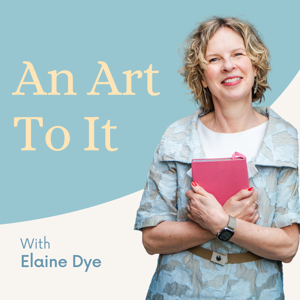


In this week's episode, I chat to visual artist Gabriella Buckingham, whose creative path has taken her from illustration, to product design, to online teaching, and finally to the richly expressive painting practice she runs today.
Gabriella reflects on her childhood desire to be an artist and how finally reaching her destination "was just what I wanted. So I'm very grateful." And how her time spent in the business side of a greetings card business left her with invaluable knowledge of trends, sales analysis and creative stamina which she could ultimately apply to her own creative business.
"I really feel that to run art as a business, you've got to be an optimist. You've got to be able to pick yourself up when you fail."
We discuss: • Our shared Lithuanian heritage - and the mystery at the centre of Gabriella's family history • Growing up obsessed with the paintings in her family home - as well as colour and ballet
Why she realised graphic design wasn't for her as she cared far more about the painting than the type.
The commercial years that gave her strong business foundations
Life as a kitchen-table business owner on Not On The High Street, https://www.notonthehighstreet.com/ and the moment she realised success was costing her more than it gave back
Creating and teaching her own online painting course, and why seven-month "live experiences" are as intense as they sound
Entering work for the Royal Academy Summer Exhibition - and the electric moment she learned she'd been selected
Brand inspiration, colour psychology, and why she thinks she's a "Spring business with an Autumn edge" inspired by Fiona Humberstone @thebrand_stylist https://www.thebrand-stylist.com/
Brands she loves: Boden https://www.boden.com/, Toast https://www.toa.st/, and Kemi Telford https://kemitelford.com/
Success, according to Gabriella: "the life I have now… just with a little more space, more painting, and more galleries."
You can enjoy Gabriella's work at - https://www.gabriellabuckingham.com/ and on instagram @gabriellabuckingham
In this final episode of my mini-series An Art to It: Unframed, we're talking about the quiet power of presentation - and why giving your digital presence a bit of a make-over can make such a difference to how your work is seen, understood, and valued.
As a gallery owner I get a lot of submissions from artists and makers asking me to consider their work, and naturally I look at their Instagram accounts and websites. Some times I'm excited by what I discover and others… well, let's just I'm left a bit confused as to what their practice actually is. So this episode explores how your online world: your Instagram grid and your website, act as your shop window. And just like any good window display, it needs a little thought, clarity, and styling to really invite people in.
In this episode we cover:
Why artists often resist "styling" - and why it matters more than we admit
What major retailers can teach us about presentation
How your Instagram grid works like a mini exhibition
Simple user-friendly and effective upgrades: profile photo, bio, pinned posts, highlights
The "mini shop window" effect and why clarity beats clutter
How to curate your website so visitors instantly understand your work
Seasonal styling and how small changes make your online presence feel fresh and current
This isn't about perfection, aesthetics for aesthetics' sake, or style over substance.
It's about helping your beautiful work shine in the way it deserves to.
If you've enjoyed this mini-series, I'd love to hear from you — and if you have topics you'd like me to explore in possible future Unframed episodes, just drop me a note.
And you can…
• Join my monthly Creative Brief newsletter: elainedye.com
• Listen to the full An Art to It interview series
• Follow along on Instagram for more tips for artists & makers @elaine_dye_ and @thebyregallery.co.uk
VA7X8M4HOWks5NMe36pA
In this episode of An Art to It, I'm joined by applied artist Amy Stringer, who has just celebrated ten years of running her creative business.
Amy's practice moves between jewellery and ceramics – think structural, architectural, process-led work that blurs the boundaries between wearable pieces and sculptural objects. Starting with body adornment and bold cement forms, she's now known for both her chain-led silver jewellery and her carved Kurinuki vessels, where jewellery sometimes lives inside the ceramic object.
Together, Elaine and Amy talk about what has changed over the last decade for makers, and what it really takes to sustain a creative career over the long term.
They discuss:
How the landscape for makers has shifted pre- and post-Covid, from material costs and gallery closures to the boom in workshops
Why Amy's teaching practice has become a vital pillar in her business, and what she loves about passing on traditional skills
Her transition from "fashion-minded" body adornment to process-led jewellery and ceramics, and the tension she's felt around the word "artist"
Working with Kurinuki - an ancient Japanese technique of carving clay- and why her ceramic pieces can take months before they even reach the kiln
Pricing, value and how ceramic audiences respond to labour-intensive work
The differences between jewellery shows and ceramics shows, and why ceramics seems to invite more play
The realities of self-employment as a maker: admin, tax, tools, rejection and the business skills that are rarely taught at art school
How Amy approaches teaching second-career makers who are thinking about going professional
The role galleries have played in her journey, and why having the confidence to approach them early on made such a difference
What success looks like for her next ten years - from multidisciplinary exhibitions to sustaining a comfortable, creatively fulfilling life
And, as always, I ask Amy the podcast's central question: Is there an art to running a successful creative business?
Amy's answer is honest, encouraging and very recognisable to anyone trying to make their creative work pay the bills: it takes a particular personality, a lot of internal drive, and a willingness to keep going through self-doubt and imposter syndrome.
You can see Amy's work @amystringerdesign and at https://www.amystringer.co.uk/
It's one thing when a friend deliberately buys the same coat as you. It's quite another when your creative work, or something very similar, turns up on someone else's instagram grid, gallery, grid, or workshop offering. Copying is personal, deeply and annoying and hurtful - but when it could undermine your carefully crafted creative identity and brand, then it's a real issue.
In this episode, we take a look at the slightly thorny subject of copying in creative business: how to spot it, what to do when it happens, and how to protect yourself going forward. From personal experience to industry advice, she explores why copying hurts, when to take action, and how to trust your own originality even when others are borrowing a little too freely.
Whether you're an artist, maker, writer or workshop teacher, if you've ever had that sinking "hang on a minute…" moment, this one's for you.
In this episode:
Why creative work feels personal
What you can protect (and how)
Why visibility invites imitation
How to respond when someone copies you
The difference between inspiration and imitation
What to do if you're worried you're too close to someone else's idea
For more tips, sign up for my monthly newsletter, Creative Brief, visit elainedye.com
What happens when the art you're known for no longer brings you joy? In this episode, mixed media artist Jane Wilson shares her journey from fashion buying to creative commercial success, and how a door closing lead to her finding her true voice as a playful, joy-filled artist.
Jane opens up about early experiences of imposter syndrome, the emotional fallout from a tough gallery break-up, and how lockdown gave her space to rediscover creativity on her own terms. We talk about the art of starting over - more than once - and why success looks different at different stages of life and career.
Jane also reflects on professional ambition, the importance of artist identity, and how she's channelling her experience into launching her first online workshop.
We talk about:
Jane's shift from fashion buyer to professional artist
Why gallery representation isn't always the dream
Imposter syndrome and reclaiming the title of 'artist'
Playing your way into a more joyful practice
The power of beginner's mind
Success, validation, and new directions after 50
Creative professionalism (and why every artist needs a delivery note!)
You can see Jane's work online at https://www.janewilsonartist.co.uk/ and on instagram @janewilsonartist
In episode three of my mini series of mini podcasts, I'm talking about something that comes up again and again - in both quiet conversations and loud frustrations. Invisibility. That creeping feeling of no longer being seen or noticed as we age, especially as women. Whether it's being ignored in a cafe queue, looked through as we walk into a gallery or walked past at a party, there's a moment many of us experience where it feels like the spotlight has quietly moved elsewhere.
And if you're an artist and maker does that make your job of getting your work seen even harder?
I believe that creativity doesn't have a shelf life, and being in your 'prime' is just the be beginning.
I talk about:
Why "a certain age" is really just your "prime"
How to show up fully and unapologetically
The power of language and how we talk about ourselves
Creative identity, visibility, and confidence
How creative passion fuels vitality
And why it's never too late to start - including a 75-year-old artist I mentored recently
Plus, I share the story that inspired the episode - about a puppy, a coffee shop, and the moment you realise no one's looking anymore… until you make them.
Whether you're 45, 55 or 75, if you've started to feel overlooked, it's time to fight back and throw off the Cloak of Invisibility.
You can get more tips and insight from my by signing up to Creative Brief my monthly newsletter at elainedye.com
In this week's episode of An Art to It, I chat to artist I talk to the multi-talented Franca Westaway - an artist, designer, educator and all-round creative force. Franca's work spans textiles, ceramics, teaching, painting, mural commissions - and a deep commitment to following her creative instincts wherever they lead.
We talked about her early love of fashion and textiles, and how she pivoted from working in the London fashion industry to teaching art and then building her own surface pattern business. She shares how creating bold work helped her resist the "invisibility cloak" that can come with middle age, and why she's not interested in following a conventional business model if it means compromising her values.
Franca opens up about the ethical challenges of mass production, the environmental questions that surface in her creative decisions, and how she's now moving into small-batch ceramics that are unapologetically personal and hand-painted — even if they aren't "convenient" to scale.
We also talk about the many hats a creative has to wear — from bookkeeper to social media manager — and how being open to possibility and saying yes has shaped her journey. As ever, it's a rich, honest, and inspiring conversation about finding your own rhythm and way of doing business in a creative life.
Franca references some fellow creatives whose work and ethos inspires her:
https://idknitthatco.com/
https://www.rachaeltaylordesigns.com/
https://annahaymandesigns.com/
You can see Franca's work on Instagram @Francawestaway23 and her website is francawestaway.com
We've all done it, a quick scroll turns into a spiral. Someone else is making more, selling more, getting that gallery show or grant… and suddenly, your own progress feels like it doesn't count.
In this episode of Unframed, I'm taking a look into the spiky topic of comparison:
- When it can actually help your creative practice - When it starts to undermine your confidence - And how to set your own pace without getting pulled off course
As a gallery owner and coach, I see this come up all the time - perhaps especially for artists and makers who are returning to creativity later in life or growing a practice alongside other demands. And I've felt it too.
Comparison can be motivating, but only when you're clear about what you're looking for. In this chat, I share some ways to be more intentional with what you absorb, how to choose a healthy 'pace-setter,' and why your timeline doesn't need to match anyone else's.
Whether you're feeling inspired or overwhelmed, I hope this helps you find your footing again.
You can find out more about me at elainedye.com and my gallery at thebyregallery.co.uk
Artist and mentor Lisa Henshall joins me from her Norfolk studio to talk about the creative spiral that underpins her practice. From a wild and free Cornish childhood to painting at the kitchen table with three small children, Lisa shares how she's built a full-time art career rooted in self-trust, sharing, and expansion.
We talk about the business of being an artist, what real gallery support looks like, and how each phase of making and mentoring loops back into the next. Lisa also reflects on the early days of balancing single parent-hood with painting, her teaching experiences, and why she's now finally returning to study to undertake a Masters at Arts University Bournemouth aub.ac.uk
We discuss:
Lisa's concept of the creative spiral
Growing up on Cornish coast with a love of painting - and being allowed to do it!
From jewellery to large-scale work and international shows
How mentoring and teaching feed into her creative practice
Showing vs selling—and why both are part of the process
What great artist-gallery relationships really look like
Building a business that feels like you
You can see Lisa's work at lisahenshall.com and on instagram @lisahenshallartwork
Lisa shows her work at Art Dog https://www.artdoglondon.co.uk/ and also now in Ireland at the Doorway Gallery in Dublin https://www.thedoorwaygallery.com/
If you're interested in my course for artists and makers: An Insider's Guide to Gallery Success you can find out more here: https://elainedye.com/an-insiders-guide-to-gallery-success/
In this first episode of An Art to It: Unframed, I'm taking a look at something that comes up again and again - in my coaching, my course, and in conversations with artists and makers: imposter syndrome.
You know that voice. The one that says you haven't studied enough. Or sold enough. Or been doing this long enough to really call yourself an artist. I hear it all the time - especially from women coming to creative work after a different career, or picking it back up after raising a family.
In this short solo episode, I talk about:
Why imposter syndrome shows up (and when it's most likely to strike)
How to spot it before it spirals
Why formal training is not the only mark of legitimacy
How to build your own "box of strength" to keep you going when doubt creeps in
Whether you're just starting out, coming back to your creative self after a break, or taking the next brave step in your career, this one's for you.
Plus: a quick reminder that my online course for artists and makers getting ready to pursue their creative passion as their profession, An Insider's Guide to Gallery Success is open for enrolment on Wednesday 15th October - and there's still time to join my free live webinar at 1:30pm that day; visit elainedye.com to sign up.
From the publisher's feed
Ranked by our users in the last 21 days