
Sign up to save your podcasts
Or

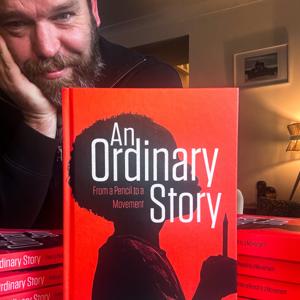


After more than ten years in the making, An Ordinary Story finally found its way into the world. In this exclusive closing chapter for hardback readers, Matthew reflects on the journey of writing the book, the people who encouraged him to keep going, and the unexpected lessons that came from looking back over two decades of the Memusi Foundation.
This isn't a chapter about achievements. It's about gratitude.
It's about recognising that none of us walk our journeys alone, that "enough" isn't a destination but a choice we make each day, and that the greatest impact often comes through the smallest acts of kindness.
Above all, it's a heartfelt thank you—to everyone who has been part of the story, and an invitation to keep writing your own.
Because the world doesn't need extraordinary people.
It simply needs ordinary people who choose to care.
It took Matthew more than ten years to find the courage to write this book—not because he doubted the journey, but because he wasn't sure his story was the one that mattered.
In this deeply personal reflection, he explains why An Ordinary Story was never intended to be a story about one person. Instead, it's a tribute to the remarkable people who shaped the Memusi Foundation: teachers, parents, children, volunteers, friends and communities who believed that a better future was possible.
It's a reminder that the greatest stories are rarely about the people standing in the spotlight. They're about the people who quietly inspire change every single day.
Because sometimes the most important thing we can do isn't to save people.
It's simply to see them.
What will you do with what you believe in?
It's easy to feel overwhelmed by the scale of the world's problems. When millions of children are out of school, it's tempting to believe that one person can't possibly make a difference.
But what if that's the wrong question?
In this powerful chapter, Matthew reflects on the faces behind the statistics, the people whose lives have shaped his own, and the simple truth that while none of us can help everyone, every one of us can help someone.
This is an invitation to move beyond good intentions and towards meaningful action. Because change doesn't begin with having all the answers—it begins with caring enough to take the first step.
You may never change the whole world.
But you could change someone's world.
For years, Matthew believed that making a difference meant finding the answers. But through remarkable people like Head Teacher Solomon Wanyonyi, he discovered that lasting change doesn't come from standing in front of others—it comes from standing beside them.
In this moving chapter, Matthew reflects on the quiet wisdom of one extraordinary educator, the importance of listening before acting, and why the most successful projects are always built with communities, not for them.
At its heart, this is a story about humility, partnership and trust. A reminder that the people closest to a problem are often the ones closest to its solution.
Because real change doesn't happen when we lead the way.
It happens when we choose to walk together.
We often think personal growth happens through courses, books and careful plans. But what if the greatest lessons come from simply saying "yes" and learning as you go?
In this reflective chapter, Matthew shares how twenty years of leading the Memusi Foundation became an unexpected masterclass in leadership, resilience and letting go. From learning to trust others and embrace vulnerability to discovering the importance of boundaries, this is an honest account of how purpose shapes the person pursuing it.
At its heart lies a simple truth: the greatest gift of serving others isn't just the difference you make—it's the person you become along the way.
Because sometimes, the journey that changes the world changes you even more.
Twenty years after a single pencil sparked an unexpected journey, Matthew reflects on the lessons that have shaped his life, the people who inspired him, and the simple truth that extraordinary change rarely begins with extraordinary people.
From chance encounters and acts of kindness to classrooms, communities and countless small decisions, this final chapter is an invitation to believe that none of us are too ordinary to matter.
You don't need to start a charity. You don't need to change the whole world.
You simply need to notice, to care, and to take the next small step.
Because every movement begins with someone who chooses not to walk on by.
What if the future of education doesn't begin with a classroom?
For years, charities have measured success by what they build. But what if we've been starting in the wrong place?
In this thought-provoking chapter, Matthew explores why sustainability should be the foundation of every education project—not an afterthought. From innovative classrooms to community-led farming, he shares a vision where schools don't just get built—they grow.
Blending personal experience with a bold challenge to rethink global education, this chapter asks what becomes possible when we stop asking, "How do we build a school?" and start asking, "How will it thrive without us?"
A compelling vision for a future where education isn't sustained by endless aid, but by empowered communities, local leadership, and ideas designed to last.
What if we've been asking the wrong question all along?
A chance conversation with an education leader leaves Matthew questioning everything he thought he knew about international development. If classrooms aren't the real problem, what is?
In this chapter, discover how one uncomfortable conversation, an inspiring mentor, and a bold challenge led to an innovative classroom design that halved construction costs, reduced carbon emissions, and created space to invest in what truly transforms education: teachers, resources and learning itself.
It's a story about challenging assumptions, embracing ambitious thinking, and discovering that lasting change often begins by asking a better question.
Because sometimes the biggest breakthrough isn't finding a new answer—it's changing the question altogether.
As COVID brought the world to a standstill, Matthew found himself facing the greatest challenge in the Memusi Foundation's history. Reports warned that half the population of the community where they worked could face starvation. Traditional aid wasn't enough, and every option seemed to lead to another dead end.
Then, during a quiet walk beside the river in his Yorkshire village, an unexpected idea began to take shape.
In this chapter, discover the story behind Smart Aid—an innovative approach that helped keep a local economy alive, reached more than 135,000 people, and proved that some of the best solutions don't come from having all the answers, but from seeing a problem differently.
A remarkable story of hope, innovation and the extraordinary impact that one idea can have when compassion meets creativity.
What does it really cost to care?
Behind every charity is a story that rarely gets told.
In this deeply personal chapter, Matthew reflects on the unseen weight of leading the Memusi Foundation for nearly two decades—the sleepless nights, impossible decisions, financial uncertainty, and the emotional burden of knowing that real lives depend on the choices you make.
From navigating economic crises and global events to waking before dawn to heartbreaking messages from Kenya, this is an honest account of the moments that tested his resilience and nearly broke him.
But it's also a story of hope, perseverance and purpose. Because when the weight feels unbearable, it's often the very people you're trying to help who remind you why you started.
A powerful reflection on leadership, responsibility and the quiet cost of caring.
From the publisher's feed