
Sign up to save your podcasts
Or

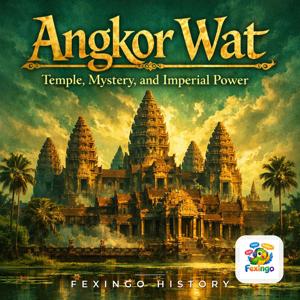


In this episode of Fexingo History, Lucas and Luna explore a persistent mystery: why was Angkor Wat seemingly abandoned in the 15th century? They challenge the popular narrative of a sudden collapse after the Ayutthaya siege of 1431, uncovering evidence from tree-ring data, Chinese accounts, and Portuguese letters. Discover how Angkor Wat was never truly forgotten—local Buddhist monks maintained it as a pilgrimage site for centuries. The conversation dives into the gradual shift of political power to Phnom Penh, the role of Theravada Buddhism, and the forest that reclaimed the temple complex. Lucas reveals how the 'rediscovery' by Henri Mouhot in 1860 was actually a European re-discovery, as the temple had remained a living site. They also touch on modern conservation efforts by the École française d'Extrême-Orient and UNESCO. This episode offers a fresh perspective on resilience and continuity in Southeast Asian history, challenging the myth of a lost civilization.
#AngkorWat #KhmerEmpire #Ayutthaya #HenriMouhot #TheravadaBuddhism #PhnomPenh #UNESCO #EFEO #ZhouDaguan #Portuguese #SiemReap #TreeRingDating #Abandonment #HistoricalMyth #SoutheastAsia #Archaeology #History #FexingoHistory
Keep every episode free: buymeacoffee.com/fexingo
In 1177, the Khmer capital of Angkor was sacked by the Cham navy in a stunning surprise attack via the Tonlé Sap river. This episode unpacks the political and military miscalculations that led to the disaster: King Tribhuvanadityavarman’s ritual focus, Cham King Jaya Indravarman IV’s strategic brilliance, and the failure of Khmer intelligence. We trace the Cham fleet’s journey from Vijaya up the Mekong, the heat of the attack, and the aftermath that paved the way for Jayavarman VII’s ascension. How did a king so invested in cosmic order lose everything? And how did Angkor rebuild from near destruction? Listen as we explore a turning point that reshaped Khmer history.
#AngkorWat #ChamInvasion1177 #Tribhuvanadityavarman #JayaIndravarmanIV #TonléSap #KhmerEmpire #Champa #Vijaya #JayavarmanVII #devaraja #AngkorSack #KhmerHistory #SoutheastAsiaHistory #MilitaryHistory #MedievalHistory #FexingoHistory #HistoryPodcast #AncientWars
Keep every episode free: buymeacoffee.com/fexingo
In 1296, a Chinese diplomat named Zhou Daguan arrived at Angkor as part of a Mongol mission from the court of Temür Khan. He spent a year at the Khmer capital and wrote a detailed account called 'The Customs of Cambodia' (Zhenla Fengtu Ji). For centuries, this was the only surviving foreign eyewitness description of Angkor at its height. But the text we have today is fragmentary—whole sections were lost, and later editors rearranged what remained. In this episode, Lucas and Luna explore what Zhou actually saw: the annual boat races on the Tonlé Sap, the king's gold-tipped spear, the silk-weaving women, the palanquin processions, and the everyday life of a city that had no parallel in medieval Europe. They also confront the puzzle of the missing chapters—especially the tantalizing references to a book on Khmer writing that Zhou claimed to have compiled, which has never been found. What did Zhou miss? And what can his words tell us about Angkor just decades before its decline?
#ZhouDaguan #CustomsOfCambodia #ZhenlaFengtuJi #AngkorWat #KhmerEmpire #TonléSap #MongolDiplomacy #TemürKhan #MedievalTravelWriting #ChineseDiplomacy #IndochinaHistory #SoutheastAsiaHistory #CambodiaHistory #YuanDynasty #EyewitnessAccount #LostManuscript #History #FexingoHistory
Keep every episode free: buymeacoffee.com/fexingo
When French archaeologist George Cœdès arrived at Angkor in the early 20th century, he found more than temples — he found over a thousand carved stone inscriptions scattered across the jungle. Known as the K. collection (for 'Khmer'), these stelae record everything from tax policies to royal genealogies to the daily rations of temple servants. In this episode of Fexingo History, Lucas and Luna explore the detective work behind the most significant of these texts — including the Sdok Kok Thom stele, which revealed the devaraja cult's origins, and the Ta Prohm stele, which listed over 12,000 people serving a single temple. They discuss how scholars like Cœdès and Louis Finot managed to piece together Khmer history from fragments, the challenges of reading Sanskrit and Old Khmer side by side, and what the inscriptions tell us about the lives of ordinary people — farmers, dancers, and even the temple's elephant keepers. Along the way, they touch on forgeries, lost stones, and a 1,200-year-old census that reads like a medieval spreadsheet. This is the story of how Angkor's history was literally carved in stone — and how we learned to read it.
#AngkorWat #KhmerInscriptions #GeorgeCoedes #SdokKokThom #TaProhmStele #Devaraja #Epigraphy #Sanskrit #OldKhmer #Archaeology #FexingoHistory #History #SoutheastAsia #Cambodia #KhmerEmpire #StoneInscriptions #LouisFinot #PrasatKhan #SuryavarmanII #JayavarmanVII
Keep every episode free: buymeacoffee.com/fexingo
In 1860, French naturalist Henri Mouhot stumbled upon Angkor Wat deep in the Cambodian jungle, launching a wave of European fascination. But Mouhot didn't 'discover' the temple—local Khmers had known it for centuries. This episode traces Mouhot's expedition, his journals, and the myths he created about a 'lost' civilization. We examine how his writings shaped Western perceptions of Angkor, the role of earlier Portuguese and Spanish visitors like Diogo do Couto, and the tension between romantic legend and historical reality. From Mouhot's death in Laos to the posthumous publication of his travelogue, we explore the man behind the myth and the enduring legacy of his encounter with Angkor Wat.
#HenriMouhot #AngkorWat #EuropeanDiscovery #19thCenturyExploration #KhmerEmpire #SiemReap #DiogodoCouto #PortugueseTraders #FrenchColonialism #CambodianHistory #LostCityMyth #Travelogue #SoutheastAsia #Archaeology #MythAndReality #FexingoHistory #History #Exploration #SuryavarmanII #JayavarmanVII
Keep every episode free: buymeacoffee.com/fexingo
In this episode, Lucas and Luna delve into a lesser-known but profound chapter of Angkor Wat's history: the theological and architectural tension between its original dedication to Vishnu and the later cult of the devaraja. They explore how Suryavarman II's temple, built as a cosmic Mount Meru for Vishnu, was slowly absorbed into the god-king tradition, culminating in the addition of the central tower's image of Jayavarman VII's father as a Vairocana Buddha, merging Mahayana Buddhism with the old devaraja cult. The conversation touches on the 12th-century inscription K. 380, which records Suryavarman II's dedication as Paramavishnuloka, and the enigmatic 'missing' central image that some believe was a portable Vishnu replaced over centuries. Lucas explains how later kings, especially Jayavarman VII, reoriented the temple's iconography toward their own divine lineage, sparking a quiet but fierce debate among scholars about whether Angkor Wat was ever truly Vaishnavite or always a political tool. Along the way, they discuss the Churning of the Ocean of Milk relief, the role of the devas and asuras, and how the temple's orientation toward the west may signal a funerary purpose. This episode offers fresh insight into the living, contested religious life of one of the world's most iconic monuments.
#AngkorWat #SuryavarmanII #JayavarmanVII #Vaishnavism #Devaraja #Paramavishnuloka #KhmerEmpire #MahayanaBuddhism #ChurningOfTheOceanOfMilk #MountMeru #Hinduism #Buddhism #Cambodia #Angkor #SoutheastAsia #ArtHistory #Archaeology #FexingoHistory #Bayon #AncientCambodia
Keep every episode free: buymeacoffee.com/fexingo
In this episode, Lucas and Luna dive into the remarkable stone inscription K. 380, discovered at Angkor Wat. This inscribed stele, dating to the reign of Suryavarman II in the mid-12th century, offers a rare firsthand account of the temple's construction and consecration. Lucas explains how the inscription describes the king's devotion to Vishnu, the temple's dedication as Paramavishnuloka ('the abode of Vishnu'), and the daily rituals that took place within its walls. They discuss the challenges of deciphering the worn Sanskrit text, the light it sheds on the devaraja cult, and the political tensions with neighbouring Champa and Dai Viet. Luna asks about the inscription's mention of a 'golden linga' and the mysterious 'black king' referred to in passing. Lucas also reveals how K. 380 provides details on the temple's water management system, including the role of the surrounding moat and barays. The episode ends with a reflection on how such inscriptions are like time capsules, preserving the voices of ancient builders and priests.
#AngkorWat #K380 #SuryavarmanII #Paramavishnuloka #KhmerInscriptions #Sanskrit #Devaraja #Champa #DaiViet #Vishnu #Linga #Baray #TonleSap #Angkor #KhmerEmpire #Archaeology #History #FexingoHistory #JayavarmanVII #Bayon
Keep every episode free: buymeacoffee.com/fexingo
Before Suryavarman II built Angkor Wat, before Jayavarman VII raised the Bayon, there was Dharanindravarman I — a Khmer king who reigned for just a few years in the early 12th century. His rule is one of the most obscure in Angkorian history, but a single inscription at the temple of Preah Vihear hints at a forgotten civil war, a usurper's ambition, and a king who may have been a blacksmith. This episode of Fexingo History explores the shadowy figure of Dharanindravarman I, his disputed genealogy, his violent overthrow by Suryavarman II, and the tantalizing clues left behind in Sanskrit verses carved on stone. We examine the Preah Vihear stele, the nature of Khmer succession crises, and the role of Hindu ritual in legitimizing power. Did Dharanindravarman really work iron? Or is that a later myth? Join Lucas and Luna as they sift through the fragments of a lost reign.
#DharanindravarmanI #PreahVihear #Angkor #KhmerEmpire #SuryavarmanII #AngkorWat #KhmerHistory #12thCentury #Hinduism #Cambodia #SoutheastAsia #Epigraphy #CivilWar #Kalinga #Sanskrit #BlacksmithKing #History #FexingoHistory #JayavarmanVII #Bayon
Keep every episode free: buymeacoffee.com/fexingo
In this episode, Lucas and Luna explore the forgotten connection between Angkor and the Tamil Chola dynasty through a single inscription at Prasat Hin Khao Phanom Rung, a Khmer temple in modern-day Thailand. The inscription records a trade agreement and military alliance between Suryavarman II and the Chola king Kulottunga I around 1115 CE. Lucas explains how this document reveals the Khmer Empire's maritime ambitions, the exchange of goods like sappanwood and cinnamon, and the political maneuvering that linked Angkor Wat's construction to Indian Ocean trade networks. They also discuss the controversial theory that Chola architects influenced Angkor Wat's design, and the debate over whether the inscription represents a client-state relationship or a peer alliance. The episode sheds light on a rarely told story of Khmer-Chola diplomacy beyond the famous 1025 raid, and how the temple itself became a node in a global medieval economy.
#AngkorWat #Chola #PrasatHinKhaoPhanomRung #SuryavarmanII #KulottungaI #KhmerEmpire #TamilInscription #IndianOceanTrade #Sappanwood #Cinnamon #1115CE #KhmerArchitecture #MedievalDiplomacy #SoutheastAsia #TamilNadu #Epigraphy #History #FexingoHistory #JayavarmanVII #Bayon
Keep every episode free: buymeacoffee.com/fexingo
When we think of Angkor Wat, we picture stone temples and jungle-choked ruins, not warships and naval battles. But the Khmer Empire was a maritime power as much as a terrestrial one. In this episode, Lucas and Luna explore the Khmer navy's origins, its peak under Suryavarman II, and its catastrophic defeat during the 1177 Cham invasion. They trace the riverine routes along the Mekong and Tonlé Sap, discuss the logistical challenges of moving armies through floodplains, and examine how Jayavarman VII rebuilt both the navy and the empire after the Cham sack of Angkor. Along the way, they touch on trade networks stretching to China and India, the role of the Tonlé Sap's unique hydrological cycle, and the naval architecture of Khmer vessels. This episode offers a fresh perspective on Angkor's power—not just as a land-based kingdom, but as a force on the water.
#KhmerNavy #AngkorWat #SuryavarmanII #JayavarmanVII #ChamInvasion #TonleSap #MekongRiver #NavalWarfare #KhmerEmpire #AngkorThom #PreahKhan #Cambodia #SoutheastAsia #MedievalHistory #NavalHistory #1177 #MaritimeTrade #FexingoHistory #Bayon #AncientCambodia
Keep every episode free: buymeacoffee.com/fexingo
From the publisher's feed