
Sign up to save your podcasts
Or

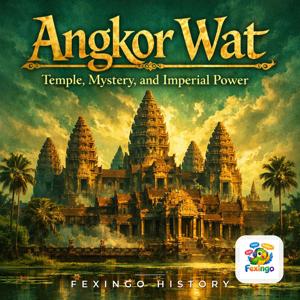


Angkor Wat is one of the world's most breathtaking monuments, but its construction came at a staggering human and environmental cost. In this episode, Lucas and Luna explore the realities behind the temple's grandeur: the forced labor of hundreds of thousands of workers, the vast deforestation that remade the landscape, and the intricate logistics of feeding and housing a workforce larger than many medieval cities. They discuss the sandstone quarries of Phnom Kulen, the massive baray reservoirs used for both irrigation and spiritual symbolism, and the dark side of the devaraja cult that justified absolute power. The conversation also touches on the tension between Hindu and Buddhist traditions at Angkor, and how modern archaeology is uncovering the lives of ordinary Khmer people through laser scanning and excavations. This is Angkor Wat not as a postcard, but as a living, breathing—and often brutal—human endeavor.
#AngkorWat #KhmerEmpire #ForcedLabor #SandstoneQuarries #PhnomKulen #Devaraja #SuryavarmanII #Hinduism #Buddhism #Baray #Deforestation #Archaeology #Lidar #SoutheastAsia #Cambodia #AncientEngineering #History #FexingoHistory #JayavarmanVII #Bayon
Keep every episode free: buymeacoffee.com/fexingo
In this episode, we dive into the reign of Jayavarman VII, the most prolific builder in Khmer history. After decades of chaos following the Cham invasion of 1177, Jayavarman VII reclaimed Angkor and launched an unprecedented building campaign. We explore his massive projects: the temple-mountain of Bayon with its eerie face-towers, the sprawling city of Angkor Thom, and the network of hospitals and rest houses that stretched across the empire. We also examine the controversies surrounding his rule — did his grand ambitions strain the empire's resources and contribute to its later decline? We discuss the shift from Hinduism to Mahayana Buddhism under his reign, the role of the state cult of the Buddha-king, and the enigmatic smiling faces of the Bayon that may represent either the Buddha or the king himself. Along the way, we touch on the daily life of commoners, the logistics of temple construction, and the enduring legacy of a king who remade the Khmer Empire in stone.
#JayavarmanVII #AngkorThom #Bayon #KhmerEmpire #MahayanaBuddhism #AngkorWat #Cambodia #12thCentury #MedievalSoutheastAsia #ChamInvasion #TempleConstruction #StateCult #BuddhaKing #SmilingFaces #HospitalsAndRestHouses #KhmerHistory #History #FexingoHistory #SuryavarmanII #AncientCambodia
Keep every episode free: buymeacoffee.com/fexingo
In this episode, Lucas and Luna explore the dramatic collapse of the Khmer Empire in the 15th century, focusing on the little-known figure of King Ponhea Yat, who fled Angkor for Phnom Penh. They delve into the role of climate change—decades of drought followed by intense monsoon flooding—that crippled the vast water management system of barays and canals. The episode also covers the devastating Ayutthaya siege of 1431, the sacking of Angkor Thom, and the gradual shift of power to the south. Lucas explains how archaeological evidence from tree rings and sediment cores reveals a perfect storm of environmental stress and military pressure, challenging the old myth of a single catastrophic battle. The conversation ends with a reflection on how empires can fade not with a bang, but with a long, quiet retreat.
#AngkorWat #KhmerEmpire #PonheaYat #Ayutthaya #ClimateChange #Hydrology #Baray #AngkorThom #PhnomPenh #15thCentury #SoutheastAsiaHistory #Collapse #Drought #Monsoon #HistoricalMystery #Archaeology #History #FexingoHistory #SuryavarmanII #JayavarmanVII
Keep every episode free: buymeacoffee.com/fexingo
Lucas and Luna step into the year 1116 CE, at the construction site of Angkor Wat under King Suryavarman II. They explore how this vast temple complex was built as a terrestrial replica of Mount Meru, the Hindu axis of the cosmos. Lucas explains the engineering marvel of the moat, the five lotus-bud towers, and the 800-meter bas-reliefs that chronicle epic battles and royal processions. The conversation touches on the shift from Hinduism to Theravada Buddhism, the decline of the Khmer Empire, and the temple's rediscovery by French naturalist Henri Mouhot in 1860. They preview future episodes covering the hydraulic city of Angkor, the reign of Jayavarman VII, and the temple's modern role as a symbol of Cambodia. No vague generalities—just the stones, the kings, and the centuries of change.
#AngkorWat #KhmerEmpire #SuryavarmanII #MountMeru #Hinduism #TheravadaBuddhism #HenriMouhot #SiemReap #TempleMountain #BasRelief #JayavarmanVII #AngkorThom #ChurningOfTheOceanOfMilk #Vishnu #12thCentury #Archaeology #History #FexingoHistory #Bayon #AncientCambodia
Keep every episode free: buymeacoffee.com/fexingo
From the publisher's feed