
Sign up to save your podcasts
Or



From 5 to 7 September, the Ars Electronica theme symposium served as a platform to explore innovative solutions to social challenges such as the climate crisis, the energy transition and the influence of artificial intelligence. Micaela Mantegna from Argentina appeared at the Prix Ars Electronica Forum on 7 September. She is a lawyer, video game enthusiast and international expert on digital ethics, XR policy and the intersection of AI, creativity and copyright. She is currently a researcher at the Berkman Klein Center for Internet & Society at Harvard University, where her research interests include the regulation of the metaverse. The metaverse describes a comprehensive, immersive digital world in which physical, virtual and augmented reality merge and in which people can interact in a variety of ways. At the Ars Electronica Festival 2024, Mantegna participated as an expert in an interactive discussion entitled ‘Building the Future of AI in Arts’. The discussion centred on the infrastructures and framework conditions required for the artistic environment to fully exploit the creative potential of AI technology.
Ö1 editor Hannah Balber spoke to Agnes Aistleitner Kisuule, who appeared at the Ars Electronica Festival as part of the S+T+ARTS (Science, Technology and Arts) Day conference. Born in Upper Austria, she is a partner and co-founder of ‘First Circle Capital’, a venture capital company that invests in African fintech start-ups.
The winners of the first S+T+ARTS Prize Africa will be on show at the Ars Electronica Festival in Linz 4 to 8 September. With this prize, the European Commission honours projects that contribute to the positive development and digital transformation of the cultural sector in Africa. South African artists Russel Hlongwane, Amy Louise Wilson and Francois Knoetze will receive an award for their artistic research project ‘Dzata: The Institute of Technological Consciousness’. The project consists of a video, written text, sculptural masks, costumes, tools and a series of workshops for young people. From the perspective of a fictional research institute and its archives, they look at centuries-old technological practices from all over Africa. In addition to fictitious artistic components, the project is based on the real research of Clapperton Chakanetsa Mavhunga, Professor of Science, Technology and Society at MIT in Boston. ‘Dzata’ takes up Mavhunga's concept of a mobile laboratory, which is based on the historical practice of African transcendentalists who travelled from kingdom to kingdom to gather knowledge. The project offers an alternative view of Africa's technological history by presenting Africa not only as a recipient of technology, but as a fertile ground for scientific innovation and invention.
Find out more about the festival here: https://ars.electronica.art/hope/en/
Follow Ars Electronica on Instagram: https://www.instagram.com/arselectronica/
Every year, the European Commission honours innovative projects at the interface of art, technology and science which contribute to economic and social innovation with the S+T+ARTS Prize. The main prize in the category ‘Artistic Exploration’ goes to Serbian scientist Vladan Joler and US researcher Kate Craword for their project ‘Calculating Empires: A Genealogy of Technology and Power Since 1500’. The large-format illustration sheds light on the complex interdependencies of technology and power over the last 500 years. The two researchers have created a detailed, densely annotated and illustrated map that traces the development and impact of colonialism, militarisation and automation. Their aim is to illustrate how empires use technology to centralise power, how these power structures persist to this day and how they could potentially be dismantled. The map can be viewed in detail during the Ars Electronica Festival from 4 to 8 September in Linz.
Find out more about the festival here: https://ars.electronica.art/hope/en/
Follow Ars Electronica on Instagram: https://www.instagram.com/arselectronica/
One of the key events on the annual Ars Electronica Festival is the presentation of the Golden Nicas of the Prix Ars Electronica, which will again be awarded to artists from all over the world. The main prize in the category ‘New Animation Art’ goes to the British conceptual artist, singer-songwriter and activist Beatie Wolfe for her video project ‘Smoke and Mirrors’. ‘Smoke and Mirrors’ is based on NASA's Blue Marble photo and visualises the increasing concentration of the greenhouse gas methane in the atmosphere with brown smoke emanating from the Earth's surface. At the same time, the video shows disinformation campaigns by large oil and gas companies since the 1970s. The topic of environmental protection and climate change has long been a recurring theme in Wolfe's interdisciplinary work. Her mission is to combine science and art, increase accessibility, make data and facts understandable and instil them with emotion. The United Nations appointed her as a role model for innovation in 2019. Her visualisation of 800,000 years of CO2 data was shown at the Nobel Prize Summit and the UN Climate Change Conference in Glasgow in 2021.
Find out more about the festival here: https://ars.electronica.art/hope/en/
Follow Ars Electronica on Instagram: https://www.instagram.com/arselectronica/
The winners of the annual Prix Ars Electronica, which honours outstanding achievements in the field of international media art, take centre stage at every Ars Electronica Festival. This year, for the first time, an award for 'AI in Art' was part of the competition. The first winner in this category, US director and video artist Paul Trillo, is known for his experimental and highly technical works of film.
Trillo was the first person to create an official music video with the AI video generator SORA from OpenAI, which produces content based on text prompts. The song that belongs to the video, ‘The Hardest Part’ by Washed Out, tells the story of leaving a lost love behind. Trillo's music video spans several decades, starting in the early 80s, and traces the relationship of a couple who meet at school. The four-minute video appears as an infinite zoom through time. The surreal mixtures of environments and impossible transitions - from cars to buildings and landscapes - create a fluid drift through dream worlds.
Find out more about the festival here: https://ars.electronica.art/hope/en/
Follow Ars Electronica on Instagram: https://www.instagram.com/arselectronica/
At the Ars Electronica Festival 2024, visitors can experience new works created within the framework of the European Media Art Platform, such as the project 'Compost as Superfood' by masharu from the Netherlands. masharu has a doctorate in mathematics and a degree in photography. One of masharu's great passions, which has also brought the native Russian artistic fame, is the consumption of earth-like substances such as clay and lime. In 2017, masharu founded the 'Museum of Edible Earth', an interdisciplinary project with a corpus of earth samples consumed by different people around the world for a variety of reasons. The touring exhibition contains more than 500 samples of edible earth, mainly clay such as kaolin and bentonite, but also chalk, limestone, volcanic rock, diatomaceous earth and topsoil.
The materials come from several continents, acquired by masharu via online platforms such as Ebay and Etsy and also while traveling. As part of the EMAP residency at Ars Electronica, masharu is currently researching the production of edible compost made from fresh vegetables. By consuming soil, masharu wants to engage in a direct dialogue with our soils and nature and also raise others' awareness of the effects of climate change and environmental pollution.
Find out more about the festival here: https://ars.electronica.art/hope/en/
Follow Ars Electronica on Instagram: https://www.instagram.com/arselectronica/
EMAP is co-funded by the Creative Europe Programme of the European Union under grant agreement 101059046. Views and opinions expressed on this page are those of the author(s) only and do not necessarily reflect those of the European Union or the European Education and Culture Executive Agency (EACEA). Neither the European Union nor the European Education and Culture Executive Agency (EACEA) can be held responsible for them.
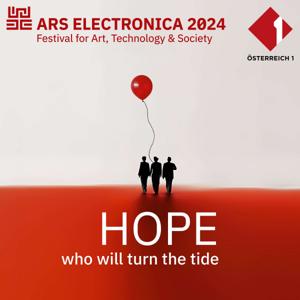
Gerfried Stocker is a media artist and an engineer for communication technology and has been artistic director and co-CEO of Ars Electronica since 1995. The title of this year's Ars Electronica festival is “HOPE - who will turn the tide”. For the artistic director, hope in this context is 'not the belief that things will somehow work out, but the trust in ourselves and in our society that we can bring about change'. Artificial intelligence, climate change, the erosion of democracy - these are just some of the themes of the festival. The program is extremely dense again this year. Several hundred different projects will be shown, with well over 1000 individual artists, speakers and activists performing. A major highlight every year is the Prix Ars Electronica, which is considered the most traditional and prestigious media art prize in the world.
Find out more about the festival here: https://ars.electronica.art/hope/en/
Follow Ars Electronica on Instagram: https://www.instagram.com/arselectronica/
In a world increasingly shaped by algorithms, artificial intelligence, and interconnected systems, the question arises how we can shape a future that places humanity, truth, and ethical responsibility at the forefront. What does a digitized and highly interconnected society look like, where each individual has access to reliable information, and where truth is not merely a subjective construct but a shared understanding?
As a nexus between art, research, and society, the current Ars Electronica Festival delves into exploring new approaches. Art serves as a platform for critical engagement, enabling us to examine and challenge existing perspectives while opening up new ones. Research offers the tools and methodologies needed, from AI-supported fact-checking to innovative educational platforms that foster critical thinking. Society plays a pivotal role as the arbiter of how we navigate the digital landscape, determining the values we uphold and shaping our collective vision of the digital future.
By embracing these multidimensional intersections, we can forge a future that upholds human values, promotes truth, and embraces ethical responsibility in the face of technological progress.
Visit our website here: https://ars.electronica.art/news/en/
Follow us on Instagram: https://www.instagram.com/arselectronica/
In einer Welt, die zunehmend von Algorithmen, künstlicher Intelligenz und vernetzten Systemen geprägt ist, stellt sich die Frage, wie wir eine Zukunft gestalten können, die Menschlichkeit, Wahrheit und ethische Verantwortung in den Vordergrund stellt. Wie kann eine digitalisierte und hochvernetzte Gesellschaft aussehen, in der jede*r Einzelne Zugang zu zuverlässigen Informationen hat, und in der Wahrheit nicht nur ein subjektives Konstrukt, sondern ein gemeinsames Verständnis ist?
Als Bindeglied zwischen Kunst, Forschung und Gesellschaft geht es auch beim diesjährigen Ars-Electronica Festival um die Erforschung neuer Herangehensweisen: Kunst als Plattform, um sich kritisch mit Aspekten auseinanderzusetzen, neue Perspektiven zu ermöglichen und herauszufordern. Forschung, um entsprechende Werkzeuge und Methoden zu liefern, - von KI-gestützten Faktenchecks bis hin zu innovativen Bildungsplattformen, die kritisches Denken fördern. Die Gesellschaft als Entscheiderin, wie wir mit den digitalen Entwicklungen umgehen, welche Werte wir verteidigen wollen und wie wir uns die digitale Zukunft vorstellen.
Besucht unsere Website: https://ars.electronica.art/news/en/
Oder folgt uns auf Instagram: https://www.instagram.com/arselectronica/
From the publisher's feed
In 2023 and 2024, Ars Electronica and Ö1 produced a podcast to go along with the Ars Electronica Festival in Linz. It featured conversations with international festival guests—artists, researchers,…
The podcast has since evolved into a year-round format: Art Is Not a Thing, the Ars Electronica podcast exploring art, technology, and society beyond the festival context.
Check it out here: https://ars.electronica.art/podcast/en/