Asian Studies Centre

Asian Studies Centre

By Oxford UniversityEducation
Download on the App Store

Asian Studies Centre episodes

  • The Naga Serpent in Malay Divination
    Farouk Yahya speaks at the Southeast Asia Seminar on 17 January 2018 The naga is a deified serpent that is a major part of the belief system of many South and Southeast Asian cultures. It is a chthonic creature, and is very strongly associated with rain and water. In Southeast Asia it plays an important role in divinatory practices for activities such as house-building, travelling and marriage. This seminar will explore the variety of texts and images relating to the naga as found in Malay divination manuscripts from the late 18th - early 20th century.
    30 min
  • Burma Studies amidst the Rohingya Crisis
    Farewell lecture for the Aung San Suu Kyi Senior Research Fellow in Modern Burmese Studies, Matthew J. Walton The field of Burma Studies has expanded rapidly in the past decade. Part of this growth has been fuelled by changes in Myanmar’s political conditions, as research opportunities have opened up on topics and in regions where the military government previously restricted access. Additionally, the historical divide between scholars and activists is gradually fading, with much innovative academic work being informed by scholars’ experience with rights groups or civil society organisations. Another welcome development has been an increase in scholars from Myanmar who are more represented in academic venues.
    At the same time, this window of openness threatens to be brief, particularly given the understandable pall cast over academic engagement with Myanmar due to the current Rohingya crisis. It is not just the unacceptable violence in Rakhine State that compels critical reflection on scholarly activities, but also the persistence of violence and political repression across the country. This violence has both increased international attention on Myanmar and decreased the productivity of discussions on the country, as it has entrenched polarised debate.
    This talk will consider dynamics within the field of Burma Studies and how recent events have affected scholarly work. Reflecting on the past five years of activities of the Programme on Modern Burmese Studies as well as the work of other scholars, I will put forward a case for principled, critical engagement. Such engagement must acknowledge and embrace the inevitable political positioning of any scholarship on Myanmar but simultaneously insist on taking seriously concerns related to intersectionality, collaboration, spaces for collective discussion, the uses of our scholarship, and persistent limitations on whose voices are included in the field of Burma Studies.

    1 hr 3 min
  • Opposition Politics in India
    Salman Khurshid speaks at St Antony's College on 28 February 2018 Speaker: Salman Khurshid
    Former Minister of External Affairs,
    Former Minister of Law and Justice, Republic of India
    Respondent: Shruti Kapila
    Fellow and Director of Studies in History, Corpus Christi College;
    Lecturer in History, University of Cambridge
    Convened by Faisal Devji and jointly organized by the Asian Studies Centre of St Antony’s College and the Oxford India Society.
    47 min
  • The Pakistan-China Corridor: Impacts on Regional Stability
    Muhammad Samrez Salik speaks at St Antony's College on 8th March 2018 Can the China Pakistan Economic Corrridor (CPEC) affect regional stability and the prospect for peace? Will Russia, Iran, and China be part of a new regional order at this crossroads of empire? This event will feature and interactive discussion of the One Belt One Road (OBOR) Initiative and its impact on geopolitics.
    34 min
  • Thailand's Post-2014 Foreign Policy: Riding on the International Trend
    Pavin Chachavalpongpun speaks at the Southeast Asia Seminar on 8 November 2017. Thai foreign policy is traditionally shaped by the changing international environment. The coup of 2014 has exacerbated the political conflict and powerfully prescribed the way in which the country pursued its relations with the outside world. This talk argues that changing international circumstances have allowed the military regime to entrench itself in the political realm and to exploit the latest global trend to achieve self-legitimization. In this new trend, China has emerged to shift the regional balance of power and contest the hegemony of the US, now with President Donald Trump at a wobbly helm. Elsewhere, democracy and regionalism is being seriously challenged, as seen in Europe and Asia. Riding on such trend, the Thai military government is steering the country closer towards not-so-democratic states in the region while moving its foreign policy away from its traditional allies in the West. The military government is taking advantage from the growing anti-democratic tendency as a way to fulfil its legitimacy on the global stage.
    52 min
  • 'God knows this is a chronic, protracted situation': The Myanmar military's war on IDPs in Kachin and northern Shan states
    David Baulk, Mandy Sadan and Kai Htang Lashi speak at St Antony's College on 2 November 2017 As the world watches the Myanmar military decimate the country's Rohingya Muslim population, in northern Myanmar the military is fighting a war by other means. Across Kachin and northern Shan state, an estimated 120,000 people displaced by conflict are lacking food, shelter, and healthcare. As the conflict has intensified, the Government of Myanmar has tightened restrictions on groups working to defend human rights and provide aid to internally displaced persons in conflict-affected areas. Access to these areas is now more limited than at any point since the conflict in northern Myanmar resumed in 2011. The Myanmar military has called for aid to displaced persons in areas controlled by ethnic armed organizations to be stopped entirely.
    In this talk, David Baulk, Myanmar human rights specialist with Fortify Rights, discusses his research in conflict-affected areas of Kachin and northern Shan states, considers the implications of restrictions on humanitarian and human rights groups in Myanmar, and discusses what the international community can do to ensure the Government of Myanmar meets its obligations under international human rights and humanitarian law.
    58 min

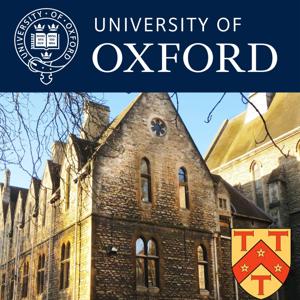
About Asian Studies Centre

From the publisher's feed

The Asian Studies Centre was founded in 1982 at St Antony's College and is primarily a co-ordinating organisation which exists to bring together specialists from a wide variety of different…

More shows like Asian Studies Centre

TED Talks Daily by TED

TED Talks Daily

10,868 Listeners

Philosophy for Beginners by Oxford University

Philosophy for Beginners

330 Listeners

Approaching Shakespeare by Oxford University

Approaching Shakespeare

331 Listeners

John Locke Lectures in Philosophy by Oxford University

John Locke Lectures in Philosophy

35 Listeners

General Philosophy by Oxford University

General Philosophy

70 Listeners

Anthropology by Oxford University

Anthropology

72 Listeners

Aesthetics and Philosophy of Art lectures by Oxford University

Aesthetics and Philosophy of Art lectures

77 Listeners

Theoretical Physics - From Outer Space to Plasma by Oxford University

Theoretical Physics - From Outer Space to Plasma

58 Listeners

Critical Reasoning: A Romp Through the Foothills of Logic by Oxford University

Critical Reasoning: A Romp Through the Foothills of Logic

37 Listeners

The Secrets of Mathematics by Oxford University

The Secrets of Mathematics

42 Listeners

Critical Reasoning for Beginners by Oxford University

Critical Reasoning for Beginners

30 Listeners